Looking to upgrade to a true 5.1 surround sound experience for your TV or home theater? The top picks below all deliver wired or wireless subwoofers, multiple channels, and modern features like app control and Dolby Atmos where available. This guide highlights models best for different spaces and use cases, from compact living rooms to dedicated home theaters. Each entry includes who it’s best for, why it stands out, and a practical caveat to consider before buying.
Buying guide at a glance:
| Product | Best For | Key Feature | Limitations |
|---|---|---|---|
| ULTIMEA Poseidon M60 | Small to medium rooms seeking Dolby Atmos without rear speakers | Dolby Atmos, 5.1ch, 300W, VoiceMX | Requires careful placement of the subwoofer for best bass |
| ULTIMEA Poseidon D50 | Movie nights with wired subwoofer and dual rear speakers | 5.1 channel with wired rear speakers, BASSMX | Cable setup more involved than wireless bundles |
| ULTIMEA Skywave F40 | Dolby Atmos experience with up-firing drivers | 5.1.2ch, up-firing Atmos, eARC-ready | Not compatible with DTS in some configurations |
| Logitech Z906 | Budget-conscious buyers needing THX-level surround | THX certified, 500W system power | Satellite design is older; no HDMI eARC |
| Amazon Fire TV Soundbar Plus | All-in-one setup for Fire TV fans | 5.1 with subwoofer and surround speakers | Best for Fire TV ecosystem; limited to system’s own apps |
ULTIMEA Poseidon M60 5.1 Surround Sound Bar

Best for: Small to medium rooms seeking a simple 5.1 setup with Dolby Atmos. What makes it stand out is the simplified 5.1ch Dolby Atmos configuration, five built-in drivers, and a dedicated subwoofer delivering up to 300W peak power. The system uses VoiceMX to improve dialogue clarity and has ultra-low latency DSP for smooth, theater-like sound.
Why selected: It consolidates 5.1 channels into a single bar with a dedicated wired sub, which minimizes wiring while delivering immersive sound. The 0.5 ms latency helps align audio with on-screen action, improving perceived timing during fast scenes.
Limitations: Placement of the subwoofer and bar can affect bass balance in very small rooms; ensure adequate clearance for best results.
ULTIMEA Poseidon Aura 7.1ch System (Difficult to Compare)

Best for: Larger rooms where you want an expansive 7.1 setup with multiple surround speakers. This model adds wireless rear speakers and a more expansive 7.1 configuration for a larger listening area, delivering a highly immersive soundstage.
Why selected: The 7.1 channel arrangement provides a broader sweet spot and deeper immersion, especially for blockbuster movies and sports events with quick directional audio cues.
Limitations: Larger footprint and more complex setup mean more cable planning and placement effort than a simple 5.1 system.
ULTIMEA Skywave F40 5.1.2ch With Dolby Atmos

Best for: Viewers seeking a true Dolby Atmos-enabled soundbar with up-firing drivers. This 5.1.2 setup adds height channels for a more enveloping sound field and an immersive overhead effect.
Why selected: The up-firing drivers and 360° SurroundX algorithm work together to create a convincing sense of space, enhancing action scenes and music with height cues.
Limitations: Not compatible with DTS in certain configurations; ensure your source material is compatible with Dolby Atmos for optimal effect.
Logitech Z906 5.1 Surround Sound System
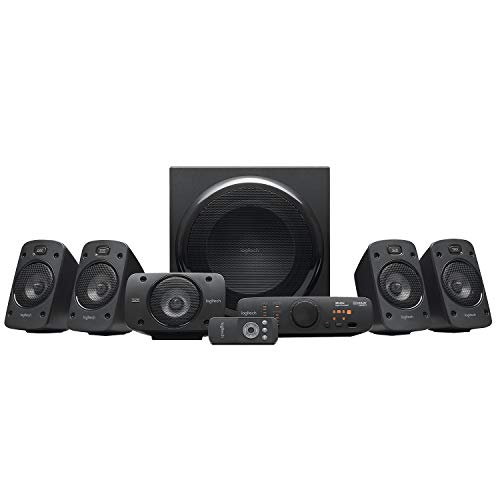
Best for: Budget-conscious buyers wanting THX-certified surround sound with strong power. The system delivers a total of 500W continuous power with a peak potential up to 1,000W, offering robust bass and clear highs across all channels.
Why selected: Its THX certification provides a benchmark for cinema-like audio performance, and the 5.1 layout with a large subwoofer makes it a reliable choice for home theaters on a budget.
Limitations: The design is more traditional; it lacks the latest wireless rear speaker options and newer HDMI eARC features found in newer models.
ULTIMEA Aura 7.1ch Surround Sound Bar (Pro)

Best for: Enthusiasts who want 7.1 channel performance with multiple surround speakers and advanced vocal separation. It uses VocalMatrix to preserve vocal clarity across the listening space and distributes dialogue accurately among rear channels.
Why selected: The 7.1 configuration with precise vocal positioning helps keep dialogue intelligible in dense action scenes, which is a common struggle for many soundbars.
Limitations: Slightly higher complexity in setup and calibration; plan room layout to maximize the rear channel effectiveness.
Amazon Fire TV Soundbar Plus

Best for: Fire TV ecosystem users seeking an all-in-one 5.1 setup. The bundle includes a subwoofer and surround speakers to create a cinematic experience without needing external components.
Why selected: It offers a straightforward path to a full 5.1 experience with convenient integration for streaming content and voice control features provided by Fire TV platforms.
Limitations: Best results come with compatible Fire TV content; may be less flexible for non-Fire TV use or advanced AVR configurations.
Buying Guide: Key Purchase Considerations
What room size should guide your choice? For smaller rooms, a compact 5.1 bar with a sub can deliver strong theater-like bass without clutter. Larger spaces benefit from additional rear speakers or a 7.1 arrangement for more even sound dispersion.
Do you prioritize dialogue clarity or surround immersion? Technologies like VoiceMX or VocalMatrix improve spoken lines, which is helpful for dialogue-heavy shows and movies. If you want the most enveloping audio, focus on setups with rear speakers and, if possible, height channels in Atmos-enabled systems.
Wired vs. wireless rear speakers: Wireless rear speakers simplify setup but may introduce latency or require regular syncing. Wired rear channels provide stability and higher potential fidelity, especially in larger rooms.
Source compatibility and formats: Dolby Atmos and SurroundX provide more spatial detail. Ensure your content and playback devices support the chosen formats to avoid mismatches.
Connectivity and future-proofing: Look for HDMI eARC or ARC compatibility for easy audio return and simplified control. App control can add convenience for calibration and updates but verify app reliability on your device ecosystem.
FAQ
- What is the main advantage of a 5.1 system over a soundbar without rear speakers?
It delivers true multi-channel surround with distinct left, center, right, and rear channels for more immersive effects and clearer dialogue in many scenes. - Is Atmos available on every 5.1 setup?
Not all 5.1 systems include Atmos; Atmos is typically found in models labeled as 5.1.2 or with Atmos-specific processing. - Do I need to connect a dedicated subwoofer for good bass?
A subwoofer is essential for deep bass, but the size and placement will influence how impactful the bass feels in your room. - Are wireless rear speakers worth it?
They offer easier setup and cleaner cables but may introduce latency or syncing considerations in some rooms. - Which brand balances price and performance well?
Brands like ULTIMEA offer feature-rich 5.1 and 5.1.2 systems with advanced DSP and multiple listening modes, often at a competitive price point. - Can I use these with non-TV devices?
Yes, most systems support gaming consoles, Blu-ray players, and streaming devices via HDMI or optical inputs, though some features may depend on the source device.