For families and group campers, a polycotton family tent can balance weather resistance with breathable comfort. This guide highlights five top options—each with a clear use case, from inflatable simplicity to sturdy canvas strength. Ideal buyers include: large families needing quick setup, groups seeking roomy living space, and campers who want a comfortable, breathable interior for warm or cool weather. Below is a concise comparison table of the chosen tents to help you compare at a glance.
| Product | Capacity | Best For |
|---|---|---|
| UNP Camping Tent 8 Person | 8 people | Families needing tall standing room and ventilation |
| VEVOR Inflatable Tent | 5-8 people | Quick setup and portability for car camping |
| WildFinder 10 Person | Up to 10 | Large groups and families with gear |
| CORE 12 Person Tent | 12 | Very large families or multi-family trips |
| TOMOUNT Canvas Bell Tent with Stove Jack | 4-6 | Glamping in all seasons with a cozy living space |
UNP Camping Tent 8 Person Waterproof Big Tunnel Tent with Screen Porch

The UNP 8-person tunnel tent offers a tall, airy interior with a front extended screen porch. Its 80″ center height allows standing and moving around comfortably. Four large mesh windows plus two doors with mesh ceilings promote cross-ventilation to curb condensation and provide wide outdoor views. The tent uses a 1500mm hydrostatic coating for water resistance and eight steel poles for stability. Best for: families who want easy access, good airflow, and a practical screen porch for buggy evenings or coffee viewing. Caution: check for heavy rain conditions as the data notes water resistance but not full immersion protection.
VEVOR Inflatable Tent for Camping 5-8 Person Blow Up Tent with Pump Green

This inflatable tent uses high-pressure air columns for a quick setup in about 10-15 minutes with a dedicated pump. It accommodates 5-8 people and maintains air for up to 48 hours without frequent reinflation. Built with water-resistant poly-cotton fabric and a thick PU5000 PVC floor for rain and mud protection. Best for: campers who want a fast setup, simple staking, and a roomy interior for a family or group in moderate climates. Limitation: not designed as a fully rigid, pole-supported structure in strong winds.
WildFinder Camping Tent 10 Person, Family Tent for Camping with Rainfly
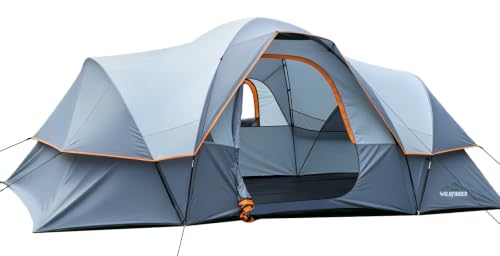
Designed for larger groups, this 10-person tent emphasizes space. With an 82.7″ center height and multiple large mesh windows, it supports airflow while keeping bugs out. The layout is intended to maximize sleeping and gear organization for family trips or campground weekends. Best for: families or groups needing ample interior living space. Caution: consider weather conditions; the listing emphasizes ventilation but does not guarantee full waterproof performance in heavy rain.
CORE 12 Person Tent | Large Multi Room Family Cabin Tent
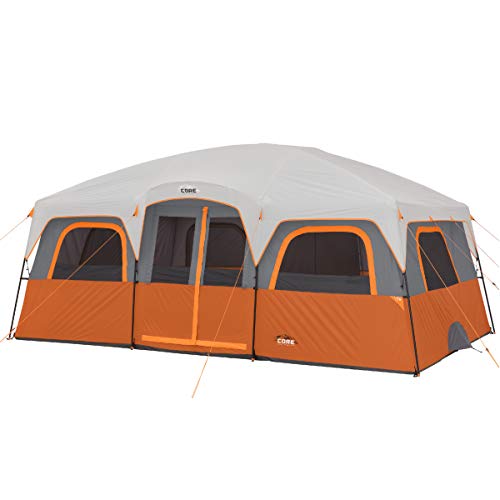
The CORE 12-person tent features a nearly straight-wall design for standing room and easy movement. With 16 by 11 feet and an 86″ center height, it fits four queen beds and gear or can accommodate 6 people with gear. H20 Block Technology, fully taped rainfly, sealed seams, and included guylines and stakes improve weather resistance and stability. Best for: families needing a large, multi-room cabin feel in steady weather. Limitation: not specified as fully waterproof against all heavy rain scenarios.
TOMOUNT Canvas Bell Tent with Stove Jack, 2-4 Person For Family Camping Glamping Yurt

This canvas bell tent uses TC cotton blend fabric for breathability and moisture management. It includes a stove jack for safe, portable heating in cooler conditions. The tent offers 15.1 feet of width, 6.6 feet peak height, and a cord-anchored, unobstructed interior for a rustic camping vibe. Best for: families seeking a glamping-style experience with the option to add a stove in all seasons. Caution: fabric lacks PU coating and is not waterproof; avoid prolonged exposure to heavy rain without a rainfly or canopy.
Buying Guide
- Seasonal performance: Canvas and poly-cotton fabrics breathe well but some may lack full waterproofing. Consider a rainfly or additional ground cover if you expect heavy rain or long exposure to wet conditions.
- Ventilation versus weather sealing: Tents with large mesh panels offer airflow but reduce rain protection. Choose models with sealed seams and robust rainflies for wet climates.
- Set-up time: Inflatable tents offer rapid setup, but traditional pole tents can be more rugged in wind. Match setup speed to your camping style and travel plan.
- Space planning: Look at center height and footprint to ensure enough standing room and gear organization. Multi-room cabins help separate sleeping areas from living spaces.
- Portability and weight: Heavier canvas tents deliver durability but require more carry capacity. Lighter poly-cotton options are easier for car camping; weigh trade-offs accordingly.
FAQ
- What is polycotton best used for in tents? Polycotton blends balance breathability with durability and offer better moisture management than pure nylon in many climates.
- Are canvas tents waterproof? Some canvas tents are not fully waterproof; check coatings and use a rainfly or canopy in wet weather.
- Which tent is easiest to set up? Inflatable tents typically set up fastest, while traditional pole tents may require more assembly but can be sturdier in wind when properly guyed.
- What should I consider for family camping? Prioritize interior space, standing height, ventilation, and ease of gear storage to support multiple occupants and activities.
- Do these tents require special maintenance? Regularly dry and store tents to prevent mildew; clean fabric according to manufacturer’s guidelines and reapply water repellents if applicable.
- Can I use a stove in a canvas bell tent? Some tents include stove jacks or allow safe heating with protective barriers; always follow manufacturer safety notes for heat sources.