Yes, a dedicated gimbal for your phone can dramatically improve stability, reduce shake, and deliver cinema-like footage. This guide highlights five top options suited for different creators, from casual vloggers to mobile filmmakers. Best for portable travelers, Solo creators, and everyday storytellers aiming for steady, trackable footage.
| Product | Brand | Best For |
|---|---|---|
| DJI Osmo Mobile 7 | DJI | Everyday creators seeking reliable 3-axis stabilization |
| DJI Osmo Mobile 8 | DJI | Content creators who want built-in tracking, light setup |
| Hohem iSteady X3 SE | Hohem | Travel vloggers needing detachable remote control |
| COMITOK L7C Pro | COMITOK | Budget-friendly with AI tracking and compact foldable design |
| AOCHUAN Smart XE 3-Axis | AOCHUAN | Filmmakers seeking versatile 3-axis stability and long battery life |
DJI Osmo Mobile 7 Gimbal Stabilizer

The Osmo Mobile 7 uses a robust 3-axis gimbal to deliver steady, cinema-like footage. Ideal for creators who want reliable stabilization with a foldable design and a built-in tripod for solo shoots. It supports tracking and smooth panning, making it a solid choice for vloggers, travel content, and casual filmmakers who value portability and quick setup.
Best for: casual to intermediate creators who want dependable stability in a compact package. The integrated tripod and ActiveTrack 7.0 help keep subjects in frame during dynamic moves. A potential limitation is that advanced features rely on the DJI Mimo app, which may require occasional updates.
DJI Osmo Mobile 8 Gimbal Stabilizer

The Osmo Mobile 8 emphasizes native tracking, audio, and lighting to elevate mobile shots. It offers seamless 360° pan rotation and intelligent tracking, with a foldable design and an included tripod for flexible setups. Connects directly to the phone for quick setup and precise tracking, making it better for creators who prioritize tracking accuracy and lighting in dynamic environments.
Best for: creators who want stronger subject tracking and lighting integration. Limitation: built-in features depend on software updates and may require regular app enhancements to maintain optimal performance.
COMITOK L7C Pro Gimbal Stabilizer

The L7C Pro focuses on a compact foldable design with a robust 3-axis stabilization system. It features AI tracking with a dedicated app and a lightweight profile that folds for travel. The device emphasizes ease of use, making it a strong choice for aspiring videographers who want professional-looking results without complex setup.
Best for: budget-conscious creators who still want advanced tracking and quick setup. Caution: ensure phone compatibility and app functionality align with your device model, as some features depend on software support.
AOCHUAN Smart XE 3-Axis Phone Gimbal
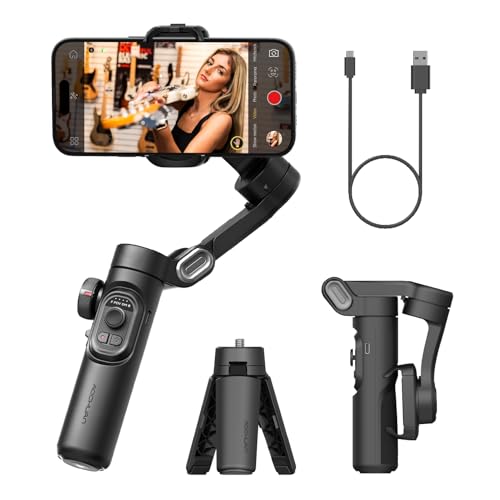
The AOCHUAN Smart XE provides a powerful 3-axis stabilization with foldable design and one-click mode switch between horizontal and vertical shots. It’s compatible with iPhone and many Android devices and includes a long battery life for extended shoots. This option suits creators who want a versatile gimbal with straightforward operation and a focus on quick portrait/landscape transitions.
Best for: filmmakers and creators who want a balance of power, portability, and simple operation. Limitation: payload and phone compatibility should be checked to ensure stable performance with larger devices.
Buying Guide
Key purchase considerations help determine which phone gimbal fits your needs. Use these questions to compare top picks:
- What type of content will you shoot most often (vlog, travel, action, short-form)?
- How important is subject tracking and lighting to your workflow?
- Do you need a detachable remote or extendable selfie stick?
- Is compact size and portability a priority for travel?
- What is your phone size and weight, and is it compatible with the gimbal’s payload?
- Do you value quick setup and one-tap modes for social media platforms?
Stabilization Quality vs. Convenience
Higher-end models generally offer smoother stabilization and more precise tracking, but may require more setup time or app dependency. For fast, on-the-go shooting, a foldable design with a built-in tripod or remote can save time and reduce effort without sacrificing stability.
Tracking and Features
Intelligent tracking, built-in lighting, and audio integration can dramatically improve footage in real-world scenarios. If you shoot in variable lighting or crowded environments, prioritize models with reliable tracking and lighting options.
Portability and Battery Life
Travelers and vloggers benefit from lightweight, compact designs and long battery life. A detachable remote or extendable selfie stick adds creative flexibility but may increase bulk.
Phone Compatibility
Check payload capacity, mounting range, and app compatibility for your particular phone model. Some features rely on specific software versions or device capabilities.
What’s Best For You?
Best for casual vloggers: DJI Osmo Mobile 7 or Coovoamae with simple controls. Best for advanced tracking: DJI Osmo Mobile 8 or AOCHUAN Smart XE 3-Axis. Best on a budget: COMITOK L7C Pro with AI tracking. Best for travel: hohem iSteady X3 SE Plus with remote control options.
FAQ
- Do phone gimbals work with both iPhone and Android?
Yes, most listed models support both platforms, but always confirm phone compatibility and weight limits. - Is there a learning curve to using a gimbal?
Basic stabilization is quick; advanced features (tracking, motion modes) may require a short setup and app usage. - Can a gimbal replace a tripod?
Gimbals with built-in tripods or foldable stands can substitute in many situations, but a dedicated tripod offers more stability for stationary shots. - Why is tracking important for mobile filming?
Tracking keeps subjects centered, reducing manual adjustments and producing smoother, professional-looking clips. - Should I buy a gimbal with an extendable selfie stick?
Extendable sticks enable new angles and group shots, but add length and weight; assess your travel needs first. - Are gimbals future-proof for new phone models?
Most modern gimbals stay compatible across several phone generations, but always verify payload and mounting compatibility when upgrading your device.