When choosing solder for electronics, this guide points to reliable tin-lead rosin core wires in common alloys 63/37 or 60/40, with 0.8–1.0 mm diameters for general boards and component work. These options are best for hobbyists, students, and professionals doing circuit-board repairs, quick prototyping, or cable work. The top five products below were selected for consistent flow, clean joints, and manageable melting points. Each entry explains who it’s best for and why, plus a practical limitation to consider.
Summary table of selected products:
| Product | Alloy | Diameter | Weight | |
|---|---|---|---|---|
| MAIYUM 63-37 Rosin Core Solder Wire 0.8mm | Sn63 Pb37 | 0.8 mm | 50 g | General electronics, small components |
| TOWOT 63-37 Rosin Core 1.0mm | Sn63 Pb37 | 1.0 mm | 50 g | Faster flow on larger joints |
| MAIYUM 63-37 Rosin Core Solder Wire 0.8mm 100g | Sn63 Pb37 | 0.8 mm | 100 g | Pocket-friendly with extra length |
| HengTianMei Tin Lead 63/37 Rosin Core 0.8mm | Sn63 Pb37 | 0.8 mm | 50 g | Low-temperature, easy flow |
| WYcYcW 63/37 Solder Wire 0.6mm | Sn63 Pb37 | 0.6 mm | 27 g | Precision work on fine-pitch boards |
MAIYUM 63-37 Rosin Core Solder Wire 0.8mm 50g
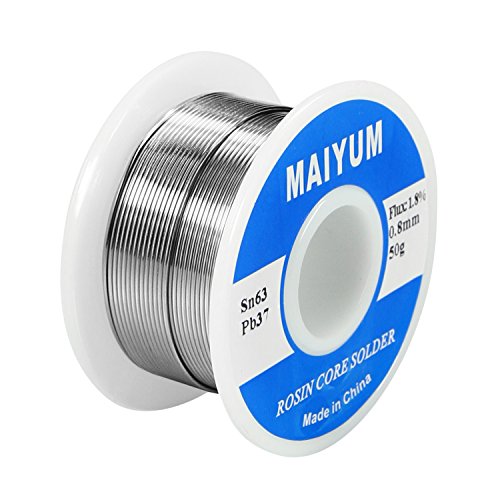
Product features indicate tin-lead composition with rosin core flux, a 0.8 mm diameter, and a 50 g package. Best for general electronics soldering on small to mid-size boards. Suitable for hobbyist projects, repair work, and educational kits.
Who this is best for: makers who want a compact, portable solder for frequent use on breadboards, PCBs, and wire jumps. Why selected: reliable Sn63 Pb37 alloy supports clean wetting and stable joints. Limitation: smaller 50 g quantity may require more frequent replacement on busy projects.
TOWOT 63-37 Rosin Core Solder Wire 1.0mm 50g

This option uses Sn63 Pb37 with rosin core flux at 1.8% content, 1.0 mm diameter, and 50 g weight. The wires are described as easy to work with, offering fast soldering and strong joints for electronics projects.
Who this is best for: users who need a slightly thicker wire for larger pads or connectors. Why selected: larger diameter can improve deposition speed on thicker traces. Limitation: is slightly less suited for very delicate small components due to thicker wire diameter.
MAIYUM 63-37 Rosin Core Solder Wire 0.8mm 100g

A larger 100 g pack of the same 63/37 tin-lead composition with rosin core flux. Best for hobbyists who solder frequently or manage ongoing repair work. The 0.8 mm diameter supports a balance between precision and effective joint filling.
Who this is best for: long-term hobbyists or small makers who prefer less frequent restocking. Why selected: extended supply reduces downtime between sessions. Limitation: heavier package may be less convenient for pocket use on-site.
HengTianMei Tin Lead 63/37 Rosin Core 0.8mm 50g

Low-melt solder wire featuring 63/37 ratio, rosin flux at 1.8%, and 0.8 mm diameter. Its low melting point enables easier handling for beginners, while still delivering robust joint strength for electronics components.
Who this is best for: beginners and intermediate hobbyists seeking forgiving flow characteristics. Why selected: smoother welding process and strong joints. Limitation: rosin flux residue may require cleaning for sensitive assemblies.
WYcYcW 3Pcs 63/37 Solder Wire 0.6mm 27g

Three-piece pack of 0.6 mm diameter solder wire in Sn63 Pb37 with flux at 1.8%. The smaller diameter supports precision work on delicate electronics and tight spaces on boards.
Who this is best for: technicians or tinkerers working on fine-pitch components and dense layouts. Why selected: best for tight shots and detailed soldering. Limitation: smaller gauge yields less solder material per length, so more frequent cuts to feed the tip may be needed.
HengTianMei 60/40 Rosin Core 1.0mm 50g

While the 60/40 alloy is a slight variation from the more common 63/37, this option provides reliable wetting with rosin core flux at 1.8% and a 1.0 mm diameter. It’s described as easy to work with and suitable for consistent joints on standard boards.
Who this is best for: users exploring a different alloy combination for specific soldering tasks. Why selected: potential compatibility with older parts that perform well with 60/40. Limitation: marginally higher melting point than 63/37, which may affect joint timing in some cases.
HGMZZQ 60/40 Tin Lead Rosin Core 0.8mm 50g

Sn60 Pb40 composition with rosin core, 0.8 mm diameter, and 50 g weight. This variant emphasizes smooth flow and a strong joint with a lower melting viscosity, facilitating faster work on boards and wires.
Who this is best for: users who need a balanced alloy with good fluidity and strong joints. Why selected: a common choice for a wide range of electronics tasks. Limitation: not the preferred option for those requiring the lowest melting point.
SRA Solder 135 Rosin Paste Flux
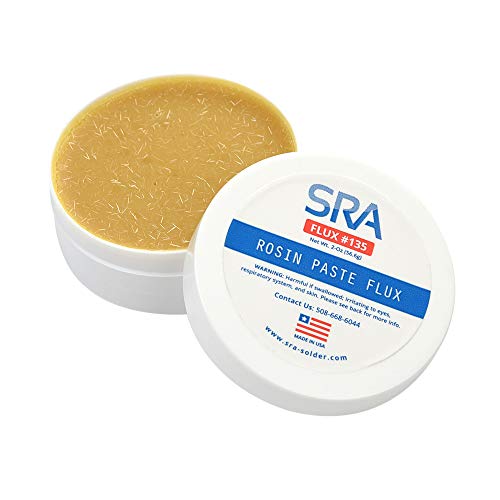
Rosin paste flux in a 2 oz jar, designed to improve solder wetting and control application. This flux is suitable for leaded and lead-free soldering when used with suitable alloys and care.
Who this is best for: users who want a dedicated flux to enhance wetting and control on PCBs and copper wires. Why selected: no-clean residues and a paste form that is easier to apply precisely. Limitation: flux alone does not replace the solder wire; use with compatible solder for best outcomes.
Buying Guide
- Alloy choice: Sn63 Pb37 (63/37) provides a low, predictable melting point and good wetting for most general electronics work. Some builders use Sn60 Pb40 (60/40) for slightly different flow characteristics.
- Flux type: Rosin core flux helps with smooth wetting and stronger joints. Flux content around 1.8% is common; ensure you’re comfortable with rosin residues or plan to clean afterward if needed.
- Diameter: 0.6–1.0 mm covers most tasks. Use 0.6–0.8 mm for fine-pitch components and 1.0 mm for connectors or larger joints.
- Package size: 50 g is a compact option for light use; 100 g suits frequent soldering. Consider your project frequency and storage space.
- Compatibility: Some boards and components may be sensitive to heat. Start with a lower heat setting and brief contact times to avoid damage.
- Storage: Keep spools in a cool, dry place to prevent flux degradation and to maintain wire quality.
FAQ
- What is the typical melting point for 63/37 solder? Answer: The 63/37 tin-lead alloy has a low melting point, facilitating easier wetting and faster work on most electronics.
- Is rosin core flux necessary? Answer: Rosin core flux improves solder flow and joint reliability, especially on copper traces and terminals.
- Why choose 0.8 mm vs 1.0 mm solder wire? Answer: 0.8 mm offers precise work on small components; 1.0 mm can deposit more solder quickly on larger joints.
- Can I use lead-free solder instead? Answer: Lead-free solders require higher temperatures and may behave differently; refer to component tolerances before switching.
- How should I store solder wire? Answer: Store in a cool, dry place away from direct heat or moisture to preserve flux and wire integrity.
- Is cleaning necessary after soldering with rosin flux? Answer: Some rosin flux residues are no-clean, but for sensitive assemblies, cleaning with appropriate flux remover is advised.