If you’re preparing for power outages, a reliable generator can keep essentials running and reduce disruption. This guide highlights five dependable options across fuel types and sizes, helping you pick the right one for home backup, RV use, or portable needs. Ideal buyers: large homes needing heavy-duty standby power, frequent campers needing portability, and budget-conscious shoppers seeking practical reliability. The table below compares key characteristics to aid quick decisions.
| Product | Fuel Type | Approx. Running Watts | Best For |
|---|---|---|---|
| Westinghouse 12500 Watt Dual Fuel | Gas/Propane | 8500–9500 (gas); 8500 (propane) | Homes with high surge needs; transfer switch ready |
| Oxseryn 4400-Watts Inverter | Gas | 3400 | RV and light-home backup; quiet operation |
| Westinghouse 6500 Watt Dual Fuel | Gas/Propane | 5300–6500 (gas); 4800–5800 (propane) | Medium homes; compact backup with CO sensor |
| Jackery Explorer 1000 v2 | Battery (Solar optional) | 1500W continuous | Off-grid camping and emergency light loads |
| Westinghouse 4650 Peak Watt Portable | Gas | 3600 | RV use and small backups; compact footprint |
Westinghouse 12500 Watt Dual Fuel – Back Up Power

Key features include 9500 running watts and 12500 peak watts on gasoline, with 8500 running and 11200 peak on propane. It offers remote electric start and a transfer switch ready configuration. A 6.6 gallon fuel tank supports up to 12 hours of operation, with a digital hour meter and VFT display showing voltage, frequency, and hours. It includes two GFCI 120V outlets, a transfer switch outlet, and an RV-ready outlet. The engine is a heavy-duty 457cc OHV with automatic low oil shutdown. This model suits buyers who need high surge capacity for home appliances and a backup for essential circuits. Caution: heavier and louder than compact inverter units; ensure proper ventilation and transfer switch compatibility for your setup.
Best for: homes with high power needs, large garages, or workshops that require substantial starting watts. Choose this if you expect frequent outages and need reliable, long-running power with transfer-switch readiness.
Oxseryn Power Equipment 4400 Watts Inverter

This inverter generator delivers 4400 peak watts and 3400 running watts, with multi-output options including two 120V ports, a 12V DC port, and an RV port. It runs up to 14 hours at 25% load on a 2-gallon tank. ECO mode helps conserve fuel, and the unit is EPA-compliant with RV readiness and overload protection. Best for light-to-moderate home backup and camping where portability and quiet operation matter. Limitation: lower continuous output compared to larger portable units, so target essential devices rather than whole-house support.
Best for: RV owners and campers needing quiet operation and reliable, portable power for small electronics. Avoid this if you require powering large appliances for extended periods.
Jackery Explorer 1000 v2 Portable Power Station

This power station provides 1500W continuous AC output with a 3000W surge, 1070Wh capacity, and a portable 23.8 lb frame with a foldable handle. It features multiple outputs: two AC outlets, a USB-C PD port, two USB-A ports, and a car port. It supports fast charging and has a long cycle life with LiFePO4 chemistry, making it well-suited for off-grid living, camping, or emergency charging. Caution: not designed to replace a full-home generator for high-wattage appliances during prolonged outages.
Best for: lightweight, mobile power for electronics, CPAP units, laptops, and small kitchen devices. Choose this if you prioritize portability and grid-independent charging rather than full-house power.
Westinghouse 4650 Peak Watt Portable Generator
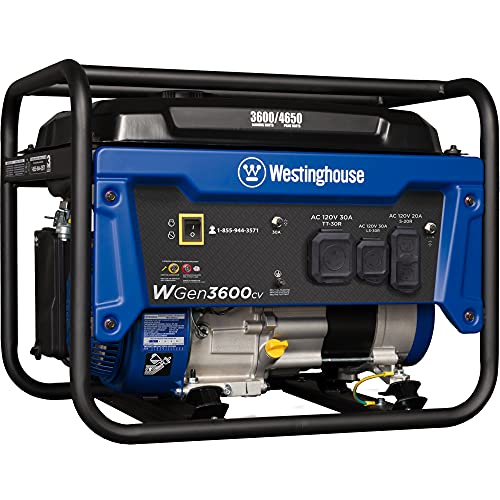
Offering 3600 running watts and 4650 peak watts, this model uses recoil start and a 4-gallon fuel tank with a fuel gauge. It provides two 120V household duplex outlets, an RV-ready 30A receptacle, and a 30A L5-30R receptacle, all with rubber outlet covers for safety. The package includes basic accessories to get you started. Best for moderate home backup and RV use when you need a compact, simple, ready-to-go option. Limitation: lower runtime per tank compared to larger dual-fuel units.
Best for: compact homes, RV enthusiasts, and users needing a reliable, straightforward backup with essential outlets. Avoid this if you require long runtimes or high-watt surge without refueling.
Buying Guide: Key Considerations For Your Power-Outage Needs
- Calculate your essential wattage, including lights, fridge, sump pump, and Wi-Fi. Choose a generator with higher running watts than your total essential load to handle startup surges.
- Gasoline units are common and inexpensive, propane offers longer shelf stability, and inverter generators deliver cleaner power with better efficiency for electronics.
- Portable units are versatile for RVs and camping, while larger dual-fuel generators suit whole-house backups and transfer-switch setups.
- More runtime is essential during outages. Look for larger tanks, efficient engines, and, for some models, ECO or idle control features to extend run time.
- Ensure the generator has essential outlets (AC, RV, USB) and safety features like GFCI, rubber outlet covers, oil shutdown, and CO sensors where applicable.
- Electric start with remote key fob beats manual recoil starts for most users, especially in cold or obstructed conditions.
- Inverter generators are generally quieter and emit cleaner power, beneficial for neighborhoods and sensitive electronics.
Frequently Asked Questions
- What size generator do I need for a small outage? For a few essential devices, a 2000–4000 watt inverter can cover lights, modem, and a fridge for several hours.
- Is a dual-fuel generator worth it? Dual-fuel units offer flexibility in fuel sources and can extend runtime when one fuel is scarce.
- Can I run a generator indoors? No. Generators emit carbon monoxide; use them outdoors in a well-ventilated area, away from doors and windows.
- Do I need a transfer switch? A transfer switch helps safely isolate your generator from the grid and automatically power critical circuits during outages.
- How long does a typical portable generator last? Engine life varies; consider models with robust engines and proper maintenance schedules to maximize longevity.
- When should I choose an inverter generator? If you value portability, fuel efficiency, and clean, stable power for electronics, an inverter is a good fit.