Answering the search for reliable off-grid power, this guide highlights five top camping power banks that balance capacity, portability, and versatility. The picks suit different outdoor needs—from ultralight backpacking to car camping and RV stays. Best for hikers who want compact, fast-charging options; best for camping trips requiring sustained device charging; best for home backup during outages; best for heavy gadget use on longer trips; and best for multi-device charging with solar readiness.
| Product | Capacity | Best For |
|---|---|---|
| MARBERO 88Wh Portable Power Station | 88Wh | Short trips, outdoor use, quick top-ups |
| DARAN Portable Power Station 89.6Wh | 89.6Wh | Compact, versatile outputs, fast charging |
| Jackery Explorer 300 | 292Wh | Balanced capacity for multi-device needs |
| MARBERO 200W Portable Power Station 148Wh | 148Wh | Higher power for more appliances |
| Anker SOLIX C300 | 288Wh | Durable LiFePO4, reliable high-output |
MARBERO 88Wh Portable Power Station
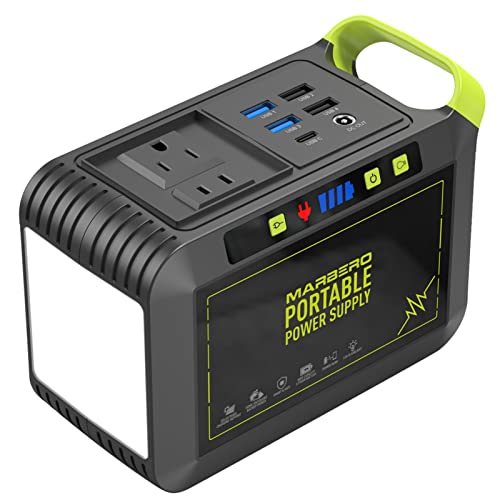
This compact power station provides 88Wh with multiple outputs. It supports fast charging and can be charged via MARBERO’s solar panel options. Best for outdoor enthusiasts who need a lightweight power source for phones, small devices, and emergency use in a palm-sized form factor.
- Best for ultralight camping and short trips
- 8 outputs available for simultaneous use
- Includes a car DC charger for vehicle use
Best for travelers who prioritize portability and quick charging back-up. Caution: Limited capacity means fewer full-device charges for laptops or larger gear.
Daran Portable Power Station 89.6Wh

This slim LiFePO4 power bank delivers 89.6Wh with seven output ports, including two AC sockets and multiple USB-C/USB-A options. It supports fast charging and has a clear LED readout for status. Best for campers needing flexible portal access and reliable LiFePO4 chemistry for longer cycle life.
- best for backpackers who want many outputs in a small package
- Fast charging via multiple inputs/outputs
- Caution: Solar panel not included
Jackery Explorer 300

The Explorer 300 weighs about 7.5 lbs and offers 292Wh capacity with LiFePO4 chemistry. It includes two AC outlets, USB-C PD, USB-A ports, and a car port for diverse devices. Best for campers who want robust, reliable off-grid power with long cycle life and light portability.
- Best for multi-device charging on longer trips
- LiFePO4 chemistry ensures durability
- Caution: Heavier than ultra-light options; not the lowest price point
MARBERO 200W Portable Power Station 148Wh

This larger MARBERO unit provides 148Wh with a 200W continuous inverter. It includes a broad mix of USB, USB-C PD, DC, and two AC outlets. Best for campers who need more wattage for higher-draw devices like small appliances or power tools during trips.
- Best for higher-power needs on-site
- Pass-through charging supports simultaneous use and charging
- Caution: Larger and heavier than ultra-compact models
Anker SOLIX C300 DC Power Bank Station

The Anker SOLIX C300 features a 288Wh LiFePO4 battery and a 300W output, designed for reliable outdoor power. It includes two-way USB-C ports and a robust BMS for safety. Best for travelers who want a durable, high-output option with easy recharging and long life.
- Best for durable, long-term outdoor use
- LiFePO4 chemistry with a 3-year guarantee
- Caution: Some users may prefer split charging across multiple panels for off-grid days
Buying Guide
What capacity do you need?
Choose based on how many devices you plan to charge and how long you’ll be away from power. For basic phones and small devices, under 100Wh may suffice. For laptops, cameras, and multiple devices, 200–300Wh offers generous headroom.
What outputs are essential?
Look for a mix of AC outlets, USB-C PD, and multiple USB-A ports. If you rely on a laptop or CPAP, ensure a high-wattage AC outlet and PD charging are included.
Is LiFePO4 worth it?
LiFePO4 chemistry provides longer cycle life and better thermal stability. If you need cycle durability for years of trips, prioritize LiFePO4 models like Anker SOLIX C300 or Jackery Explorer 300.
How portable should it be?
Portability combines weight, size, and handle design. Ultralight models fit in a daypack, while larger units suit car or RV camping where you can transport heavier gear.
Solar readiness and charging options
Some units are solar panel compatible. If you expect to rely on sun, verify solar input limits and whether panels are sold separately. Efficient charging from wall outlets or car adapters can also influence trip planning.
Safety and usability
Check for built-in protection like short-circuit, overcharge, and thermal safeguards. A clear LED display helps monitor remaining power and status during use.
Buying considerations at a glance
- Capacity versus weight: balance energy needs with portability
- Output versatility: number and type of ports
- Battery chemistry: LiFePO4 for longevity, Li-ion for lighter weight
- Price-to-performance: higher upfront cost may yield longer-term value
Frequently Asked Questions
- How many devices can a camping power bank charge at once?
- Can I charge a laptop with these power banks?
- Are LiFePO4 batteries safer for camping use?
- Is solar charging necessary?
- What should I consider for CPAP or small appliances?
- Do these units have built-in safety protections?
Most models offer multiple ports; typical configurations support 4–8 devices simultaneously depending on the power draw.
Yes, if the unit provides a high-widelity USB-C PD port or an AC outlet with sufficient wattage.
Yes. LiFePO4 offers stable chemistry, longer life, and better resistance to overheating, making it well-suited for outdoor use.
Solar charging adds off-grid capability, but wall or car charging often provides faster, reliable recharges in many camping scenarios.
Check continuous wattage rating and surge capacity to ensure the unit can handle startup demands of such devices.
Most models include BMS, short-circuit, overcharge, and temperature protections to safeguard both the battery and connected gear.