Answering the demand for reliable RV power, this guide highlights five motorhome solar panel kits that suit different traveler needs. Best for full-time RVers, weekend explorers, budget-conscious buyers, and those seeking easy installation, these selections cover varied outputs, controllers, and system sizes. The table below compares core specs to help you choose quickly.
| Product | System Type | Output (Approx) | Controller | Best For |
|---|---|---|---|---|
| ECO-WORTHY 200W Starter Kit | 2x100W Panels | ~800Wh/day | 30A PWM | Newbies on a budget |
| Renogy 400W Premium Kit | 400W | ~ | MPPT 40A | Higher demand RVs |
| ECO-WORTHY 7.168kWh Complete System | 780W kit | ~3.2kWh/day | Integrated MPPT | Off-grid full-system |
| ECO-WORTHY 400W Premium 4-Panels Kit | 400W | ~1.6kWh/day | MPPT 40A | Balanced power |
| Renogy 200W N-Type RV Kit | 200W | ~800Wh/day | 30A PWM | Compact spaces |
ECO-WORTHY 200 Watts 12V/24V Solar Panel Kit
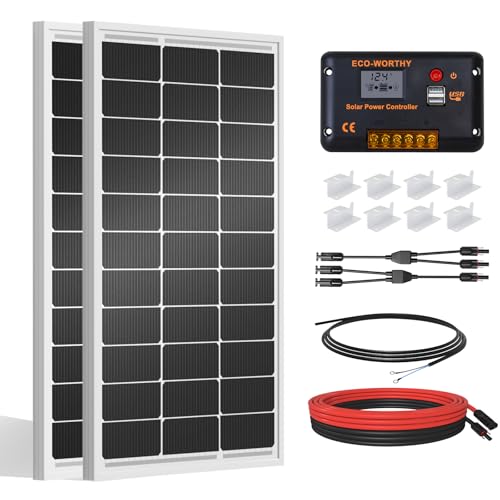
This kit uses high-efficiency monocrystalline cells to deliver up to 21.5% improved performance under adequate sunlight. It includes a 30A PWM charge controller and corrosion-resistant aluminum framing designed to withstand wind and snow loads, making it suitable for RV, camper, caravan, and other off-grid uses. Best for buyers seeking a straightforward, mid-size off-grid solution with durable components. Caution: PWM controllers are typically less efficient than MPPT in very shaded or variable conditions.
Who it’s best for: Weekend campers or RV owners needing reliable, budget-friendly power with simple setup.
Why chosen: Strong balance of panel efficiency, robust frame, and a practical 800Wh/day target under good sun.
Limitation: Not ideal for roof installations with irregular sun exposure; consider MPPT for variable conditions.
Renogy 400W Premium Solar Kit with 40A MPPT Controller

This high-output kit combines four 100W panels with a 40A MPPT controller, designed for RVs with larger power demands. The MPPT controller improves efficiency and maximum power harvest, especially in cooler or fluctuating weather. Best for RV users needing steady high power for appliances like refrigerators, air conditioning, or multiple devices. Limitation: Higher upfront cost and more complex wiring compared to PWM setups.
Who it’s best for: RVs with higher daily energy needs and users who value optimized power conversion.
Why chosen: The MPPT technology offers better efficiency and energy capture in diverse conditions.
Caution: Requires more careful installation; ensure roof space and wiring are compatible with the kit.
ECO-WORTHY 7.168KWH 800W Off-Grid Solar Panel Kit

This complete system is engineered for serious off-grid RV life. It uses four 195W bifacial panels, a 12V 3000W inverter charger, and a robust 25.2% cell efficiency with an UPS-like power transfer capability. Best for RV travelers who want nearly continuous power for multiple appliances, including high-demand devices. Limitation: The system is large and heavier, requiring solid mounting and electrical planning.
Who it’s best for: Full-time RVers or long-term off-grid adventurers needing storage and strong peak power.
Why chosen: The bifacial panels and UPS-style charging extend daytime generation into practical night-time use, with broad appliance support.
Caution: May require professional installation to ensure safe integration with existing electrical systems.
ECO-WORTHY 400 Watt 12V Premium Solar Kit

This 400W kit pairs four 100W panels with a 40A MPPT controller, offering efficient conversion and better performance in shade and varying sun. It includes a Bluetooth module and mounting brackets for straightforward installation on RV roofs or cabins. Best for buyers balancing cost with performance and wanting better efficiency than PWM options. Limitation: The larger array may require more roof space and mounting effort.
Who it’s best for: RVers who want stronger day-to-day power with easier monitoring via Bluetooth.
Why chosen: The combination of MPPT control and all-around build quality makes it a solid mid-to-high capacity option.
Caution: Ensure there is adequate space for mounting and wiring length to reach the controller location.
Renogy 200W 12V N-Type RV Solar Panel Kit
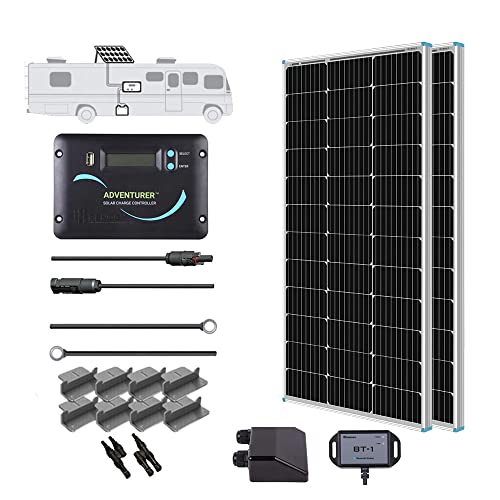
This compact 200W kit is designed for smaller RVs or limited roof space, delivering around 800Wh daily with four hours of sun. It uses a corrosion-resistant aluminum frame, supporting long outdoor life. Best for owners who need a footprint-friendly solution with reliable performance. Limitation: Lower total output compared with 400W kits, so fewer simultaneous high-energy loads.
Who it’s best for: RVers prioritizing a compact footprint and straightforward installation.
Why chosen: The durable frame and good efficiency make it versatile for smaller rigs or cabins.
Caution: May not meet very high energy demands on hot days or during frequent cloud cover.
Buying Guide: Key Purchase Considerations
- System size and daily energy needs: Calculate your typical daily consumption and pick a kit that can reliably cover it with some margin for weather variations.
- Controller type: PWM is budget-friendly and simple; MPPT improves efficiency, especially in cooler or shaded conditions, and is worth the investment for larger systems.
- Panel quality and durability: Look for corrosion-resistant frames, weatherproof J-boxes, and good wind/snow load ratings for RV roofs.
- Installation footprint: Ensure you have enough roof space for the panels and plan for wiring runs to the charge controller and inverter.
- Expandability: Some kits support adding more panels later or integrating with battery storage and inverters for full off-grid use.
- Storage compatibility: If you use lithium or lead-acid batteries, confirm the system’s voltage and charging profiles align with your storage solution.
Frequently Asked Questions
- What size solar kit do I need for my RV? Answer: It depends on daily energy use and sun availability. Start by listing appliances and typical usage, then select a kit that provides surplus energy under average conditions.
- Is MPPT worth it for RV solar? Answer: Yes, especially for higher energy needs or variable sun. MPPT optimizes voltage and current to extract more power from panels.
- Can I upgrade an RV solar kit later? Answer: Many kits are modular or expandable, but verify compatibility with existing panels, controller, and battery bank.
- How many panels fit on an RV roof? Answer: Roof space varies; measure available area and consider panel dimensions and mounting brackets for a secure fit.
- Do I need professional installation? Answer: Not always, but complex systems with high power or new inverters may benefit from professional setup to ensure safety and compliance.
- What maintenance is required? Answer: Regularly inspect wiring, clean panels, and check connections to prevent corrosion and ensure optimal performance.