Answering the search for an affordable, beginner-friendly DJ controller, these top picks blend simplicity with essential features. Each option suits different starting scenarios—from learning at home to small gigs. This guide helps you choose based on software, portability, and deck count, so you can start mixing quickly without a big upfront investment.
Summary of chosen products:
| Product | Best For | Why It Stands Out | Notes |
|---|---|---|---|
| AlphaTheta DDJ-FLX2 | First Mixers | Smart Fader beatmatching and cross-genre syncing | Great starter feel, USB-C |
| Hercules DJControl Inpulse 200 MK3 | Travel & Beginners | Compact, quick setup with tutorials | Best on-the-go learning |
| Pioneer DJ DDJ-FLX4 Graphite | All-Round Beginners | Easy layout, auto-fader beatmatching | Room to grow with 2 decks |
| Hercules DJControl Inpulse 500 | Serious Starter Kits | Two-deck control, large jogs | Built-in mixer and audio |
| Numark Party Mix II | Budget Party Starters | Serato Lite ready with built-in lighting | All-in-one lightweight option |
AlphaTheta DDJ-FLX2 Compact 2-Channel DJ Controller

The AlphaTheta DDJ-FLX2 is designed for first-time DJs who want quick learning and fun from day one. It provides a Smart Fader that automatically matches volume, BPM, and bass as you crossfade, helping you mix across genres with ease. It also supports mixing from popular music apps like Apple Music, Spotify, and Tidal through compatible software such as rekordbox and djay. Best for beginners who want guided ease with modern connectivity. Limitation: as a compact 2-channel setup, it may feel limited for more complex live transitions.
Hercules DJControl Inpulse 200 MK3
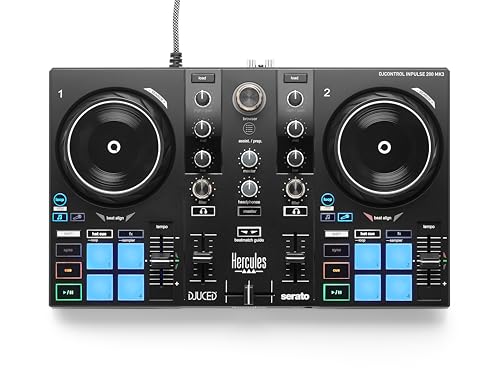
The Inpulse 200 MK3 is ideal for beginners seeking an ultra-portable, travel-friendly option. It ships with preloaded software and step-by-step DJ Academy tutorials to speed up the learning curve. Its compact design fits into a backpack, making it a strong pick for students or mobile hobbyists. Best for hands-on learners who value guided instruction. Caution: two-channel control may limit more advanced mixing later on.
Pioneer DJ DDJ-FLX4 2-Channel DJ Controller, Graphite
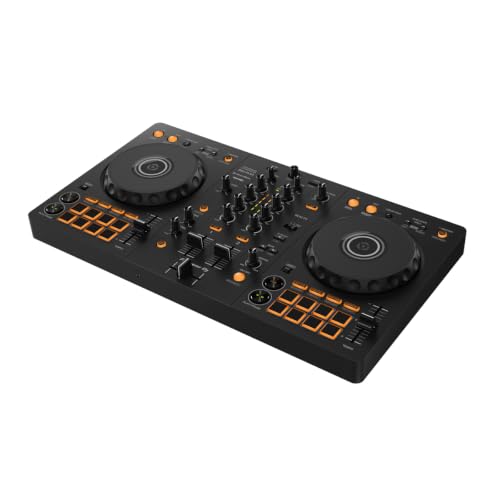
The DDJ-FLX4 Graphite serves as a versatile entry-level option with a straightforward layout inherited from professional gear. No Beatmatching skills are needed thanks to Smart Fader auto-adjusting volume, bass, and BPM, enabling seamless genre blending. It offers room to grow with two decks and 16 Performance Pads for Hot Cues, Pad FX, Beat Jump, and Sampler. Best for learners who want a reliable, expandable platform. Limitation: 2-channel design may limit more complex multi-genre performances.
Hercules DJControl Inpulse 500-2-Deck

This 2-deck controller adds built-in audio interface and hardware input mixer for added versatility. It includes 16 backlit RGB pads and vinyl-style feel with large jog wheels that detect touch for scratching. Best for buyers who want more control and a traditional DJ feel while staying within a budget. Caution: slightly larger footprint than ultra-compact models may affect portability.
Numark Party Mix II DJ Controller
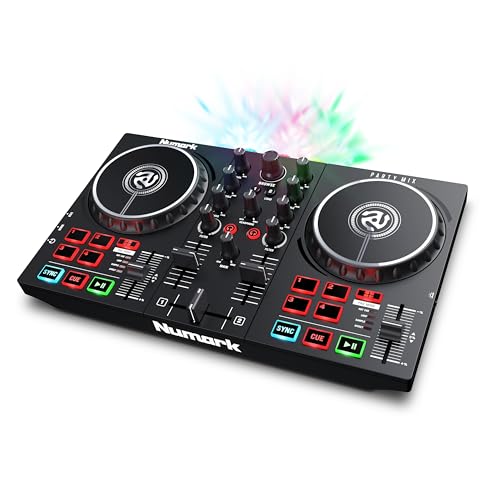
The Party Mix II is a complete beginner Serato Lite system with built-in audio, two decks, and plug-and-play USB connectivity. It features large jog wheels, performance pads with four Pad FX, and easy library controls. Best for users who want an all-in-one starter package for home practice and small parties. Caution: built-in lighting features may be less impressive in bright rooms, and the system relies on Serato Lite software.
Buying Guide
What should you consider before buying a budget DJ controller?
- Software compatibility: Do you prefer Serato, rekordbox, or DJay? Some controllers ship with basic access and need updates for full features.
- Deck count and layout: 2-deck setups are common for beginners; more decks add complexity and flexibility.
- Portability vs. features: Smaller controllers are highly portable but may have fewer controls; larger units offer more pads and performance options.
- Audio interface: Built-in sound cards simplify setup; external interfaces can provide higher quality or more inputs.
- Connectivity and power: USB-C and reliable power options matter for modern laptops and mobile setups.
- Future-proofing: Look for devices with room to grow, such as additional pads, FX options, and software support.
How to choose by use case
- Home practice: Prioritize portability and built-in software tutorials.
- Student or on-the-go DJ: Choose ultra-compact models with backpack-friendly design.
- Small gigs or parties: A two-deck setup with reliable crossfader and performance pads is ideal.
FAQ
- What is a budget DJ controller best for?
It’s best for beginners who want to learn basics, practice at home, and test-drive DJ software without a large investment. - Do these controllers require separate software?
Many integrate with Serato Lite, rekordbox, or DJay, with some features unlocked by software updates. - Is two decks enough for learning?
Yes, two decks cover most beginner transitions and mixing fundamentals before expanding to a larger setup. - Should I buy a controller with built-in lights?
Lights can be fun for practice and small events, but they are not essential for learning mixing fundamentals. - What about future upgrades?
Look for models with growing features like extra pads, FX, and compatibility with evolving software ecosystems. - Is portability a priority for beginners?
If you travel to parties or campus events, a compact, lightweight model is advantageous.