Answering the question “which wildlife camera trap should I buy?” this guide concentrates on durable, high-resolution models ideal for wildlife observation, property surveillance, and hunting setups. The top picks are non-cellular or simple Wi-Fi capable options that balance long battery life with clear day and night imagery. This selection targets different buyers: rugged outdoor enthusiasts, backyard security needs, and budget-conscious observers seeking reliable trail cameras. The table below compares five strong choices to help you decide quickly.
| Product | Best For | Key Benefit | Limitations |
|---|---|---|---|
| GardePro E5S | All-weather wildlife watchers | 64MP photos and 1296P video | Non-cellular, no remote alerts |
| WOSPORTS Trail Camera | Deer/cattle monitoring and property security | 0.2s trigger; 32 IR LEDs, no-glow | LCD only on device |
| MAXDONE Solar Trail Camera | Long-term outdoor use | Solar-powered with multi-charging modes | Not compatible with home WiFi or cellular |
| Meidase P70 | Wildlife and hunting cams | 64MP daytime/night clarity; 100ft night vision | Non-cellular |
| DEATTI 4K Trail Camera | Hunting and remote spot checks | 4K video, 48MP photo, TrialCam Go app | Short-range hotspot; no remote viewing beyond setup |
GardePro E5S Trail Camera, 64MP Photo & 1296P HD Video
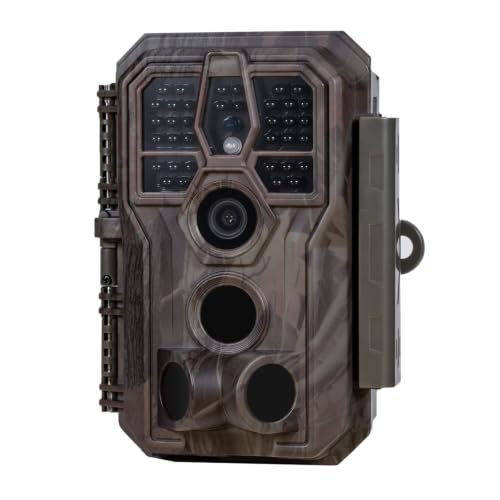
The GardePro E5S is a rugged, non-cellular trail camera designed for long-term field use. It delivers ultra-sharp 64MP photos and 1296P HD video, making it ideal for observers who prioritize image detail. Best for: wildlife enthusiasts who want high-resolution captures without the complexity of cellular alerts. This model emphasizes low power use for extended deployments, which helps reduce battery changes. Caution: no built-in cellular connectivity means you must retrieve the SD card to view content.
WOSPORTS Trail Camera (Non-Cellular Non-WiFi) 64MP 4K

The WOSPORTS model emphasizes speed and versatility. With a 0.2S trigger and 120° wide angle, it captures fast-moving animals with a reliable no-glow night vision system. Best for: deer scouting, property surveillance, and backyard security where quick action is crucial. Note: the device includes a 2-inch color LCD for on-site previews but relies on SD cards for actual storage. Limitation: no cellular or cloud connectivity means periodic card retrieval is necessary.
MAXDONE Solar Trail Camera, 4K 64MP
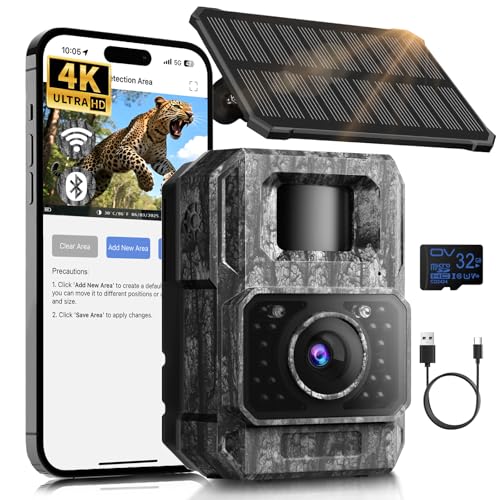
The MAXDONE Solar Trail Camera introduces a solar-assisted design that supports three charging modes, which helps extend field use. It’s built for long-term surveillance with a high-capacity battery and solar panel, making it a strong choice for remote locations. Best for: long-term outdoor monitoring where mains power is unavailable. Caution: it’s not compatible with home WiFi and does not support real-time alerts; setup uses a local hotspot for file downloads only.
Meidase P70 Trail Camera, 64MP 1296p
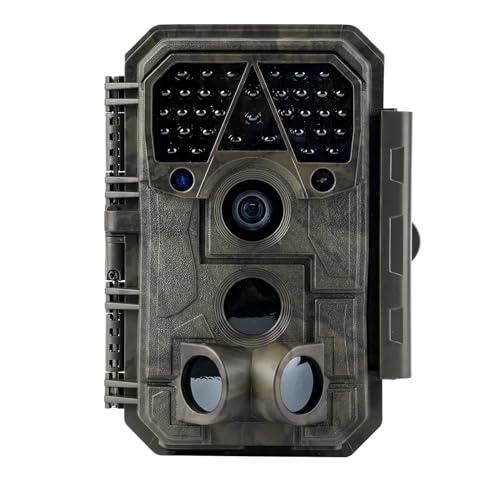
The Meidase P70 offers crystal-clear 64MP daytime and 1296p nighttime video with a fast 0.1s trigger speed. Its 100-foot No-Glow night vision helps reduce disturbance to wildlife, making it suitable for nocturnal observation and hunting. Best for: observers who need sharp images in low light while minimizing animal stress. Limitation: non-cellular, so no remote notification unless content is retrieved locally.
DEATTI 4K Trail Camera with WiFi/Bluetooth

The DEATTI T4 offers 4K video and 48MP photos, with a built-in hotspot for setup and the TrialCam Go app for local interaction within a short range. Best for: users who want quick, on-site viewing and sharing with others nearby, without ongoing remote access. Caution: cannot connect to home WiFi or provide long-range remote viewing beyond setup zone.
Buying Guide
What exactly will you use the camera for?
Define whether you mainly want high-resolution daytime photos, reliable night vision, or long-term remote monitoring. If you need crisp landscape or animal detail, prioritize cameras like the GardePro E5S or Meidase P70 with 64MP capability. For long deployments, solar-enabled models can reduce maintenance.
Non-cellular vs. cellular connectivity
Non-cellular cameras are simple, power-efficient, and private, ideal for remote sites. Cellular models provide real-time alerts but require service plans and can drain batteries faster. If real-time updates are essential, choose a model with cellular or a robust local setup that supports rapid viewing.
Trigger speed and image quality
Trigger speed affects whether fast wildlife is captured. A 0.1-0.2 second trigger is desirable for deer and birds. Combine with 64MP photos for detailed records and consider 4K video if you prioritize motion clarity in dusk or dawn conditions.
Night vision capabilities
No-glow infrared is preferred when minimizing wildlife disturbance. Cameras offering 940nm LEDs provide a discreet presence at night, which benefits nocturnal behavior studies and peaceful property surveillance.
Power and placement considerations
Battery life matters for remote setups. Solar-assisted models suit areas with sun exposure, while non-solar units require intermittent battery changes. Check IP ratings (IP66 or higher) to ensure weather resistance and stable operation in rain or snow.
Ease of setup and data retrieval
Some cameras let you preview on-device with an LCD, while others require SD card removal for viewing. If you need on-site checks, prioritize devices with a view screen or direct Bluetooth/WiFi access for quick verification without removing the card.
Compatibility and ecosystem
Consider whether you prefer a single-brand ecosystem for app control, or if you’re integrating multiple cameras. Some models support direct app connections (Live View, quick previews), while others rely solely on local storage and SD card access.
FAQ
- What is the main advantage of a non-cellular wildlife camera? Answer: Simpler setup, longer battery life, and fewer ongoing costs, with content retrieved manually.
- How important is trigger speed for wildlife cameras? Answer: Very important for capturing fast-moving animals and avoiding missed moments.
- Can a solar-powered trail camera replace battery-powered models? Answer: In sunny locations, yes, but solar may underperform in cloudy or shaded areas and in winter with low sun.
- Is night vision essential for wildlife cams? Answer: If you observe nocturnal activity or want discreet monitoring, no-glow 940nm LEDs are highly beneficial.
- Should I choose 4K video or 1080p for field use? Answer: 4K provides greater detail, but 1080p often suffices and uses less storage and power.
- Do these cameras require ongoing subscriptions? Answer: Most listed models do not require subscriptions; cloud or remote features may require service plans depending on the model.