When choosing a power pack for camping, look for portable, lightweight units with sufficient capacity, multiple output ports, and safe charging features. This guide highlights five compact, user-friendly options suited for hikers, RV travelers, and weekend campers who need reliable on-site power for phones, lights, cameras, laptops, or CPAP machines. Each product is described with who it’s best for, why it stands out, and a practical caution.
Summary table of selected products:
| Product | Capacity / Power | Best For |
|---|---|---|
| 88Wh, 120W peak | Lightweight, short trips, everyday carry | |
| 292Wh | Multi-device use, longer trips, reliability | |
| 88Wh, 120W | Compact, budget-conscious, emergency backup | |
| 296Wh | Higher output needs, CPAP or multiple devices | |
| 300W peak, 280Wh | All-in-one camping setup with included solar option |
MARBERO Portable Power Station 88Wh
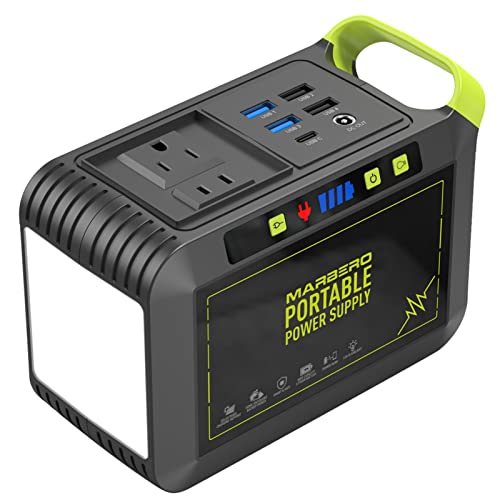
Best for ultralight hikes or quick campsite setups, this MARBERO unit weighs about 3.2 pounds and measures 6.5 x 4.6 x 3.1 inches. It includes eight output ports and a BMS for safety, with USB and USB-C PD for rapid device charging. It’s suitable for charging phones in about an hour and powering small appliances via AC outlets. A key strength is efficient simultaneous charging with MARBERO’s solar panels. Best for travelers who want a compact, simple kit with reliable backup power. Caution: 88Wh capacity limits long outages or higher-wattage devices.
Jackery Portable Power Station Explorer 300

Best for multi-device needs on longer trips, the Explorer 300 offers 292Wh with LiFePO4 chemistry, boasting over 4,000 charge cycles. It provides two AC outlets, a 100W USB-C PD port, multiple USB-A ports, and a 120W car port. It’s a sturdy, durable option for campers who may also power laptops, drones, or CPAP devices. Caution: Heavier than some ultralight packs at around 7.5 pounds, which may affect portability for extreme hikers.
HOWEASY Portable Power Station 88Wh

Best for budget-conscious campers who still want reliable ports, the HOWEASY unit provides 8 outputs, including two AC sockets (110V) and USB-C plus Quick Charge ports. It features an LED display for status and supports three charging methods: AC outlet, solar panel, and car socket. It’s a compact option suitable for powering lighting, fans, and small devices. Caution: Solar panel compatibility is optional, and total wattage should be kept under 120W to avoid overloading.
EnginStar Portable Power Station 300W

Best for devices with higher power needs, EnginStar offers 296Wh and a 300W AC output with eight ports, including DC outputs for 12V/24V appliances. Its battery management and safety features support multiple devices concurrently. It’s well-suited for campers who run laptops, cameras, or CPAP devices. Caution: Heavier build (about 6.5 pounds) reduces portability for very light backpackers.
ZeroKor Portable Solar Generator

Best all-in-one option for mobile setups,ZeroKor bundles 300W peak output with a 280Wh battery and a foldable 60W solar panel. It offers two AC outlets, a DC port, multiple USB ports, and a built-in SOS flashlight. This choice suits campers who want easy solar recharging and reliable performance for phones, tablets, and small appliances. Caution: Be mindful of total wattage usage on devices that demand high power, such as hair dryers or coffee makers, to avoid trips and overloads.
Buying Guide
What capacity do you truly need? For light camping and emergency backup, 80–300Wh units are often sufficient for phones, lights, and small fans. For longer trips or greater device variety, 292–296Wh with multiple ports or higher AC output is more versatile. Consider LiFePO4 chemistry for longer life and safety. Do you want solar charging? Look for panels compatible with the unit and check charging speeds. How portable must the unit be? Weighs and dimensions affect backpacking usability. Do you need CPAP or laptop support? Ensure the device provides enough continuous wattage and stable sine-wave output.
FAQ
- What is a camping power pack best used for? It provides portable power for phones, lights, cameras, laptops, CPAP machines, and small appliances when outdoors or off-grid.
- What capacity should I choose? For basic charging and lighting, 80–120Wh may suffice. For longer outings with multiple devices, 200–300Wh provides more flexibility.
- Is solar charging necessary? Not strictly necessary, but solar compatibility expands off-grid options and reduces the need to find outlets.
- What safety features matter? Look for battery management systems, overcharge protection, short-circuit protection, and proper venting for heat management.
- Can these units power a CPAP device? Some models deliver enough continuous output for CPAP devices, but check exact wattage and inverter specifications before use.
- Are LiFePO4 batteries better? Yes, they generally offer longer life cycles and better stability in temperature fluctuations, making them appealing for frequent use.