When choosing a dash cam, look for clarity, reliable night vision, wide coverage, and easy app access. This guide highlights five strong options suited for different drivers, from rideshare professionals to daily commuters. Whether you need front-and-rear recording, interior monitoring, or 4K detail, these picks focus on dependable performance and practical features that are easy to verify in reviews and listings.
| Product | Brand | Key Strengths | Best For |
|---|---|---|---|
| ROVE R2-4K Dual Dash Cam | ROVE | Upscaled 4K front, 1080p rear; Sony STARVIS 2 sensor; strong night vision; dual-band WiFi | Everyday drivers who want sharp front footage and clear rear view |
| galphi 4K Dash Cam Front | galphi | 4K 2160P, 160° front angle; 5GHz WiFi; included 32GB card | Budget-conscious buyers needing strong 4K with easy wireless transfers |
| 70mai A810 Lite 4K Dash Cam | 70mai | 4K front, 1080P rear; Wi-Fi 6; GPS; HDR night vision | Riders and families needing robust night vision and smart connectivity |
| REDTIGER F7NP 4K Dash Cam | REDTIGER | STARVIS 2 sensor, 4K front; built-in 5.8GHz WiFi; GPS | Drivers who want fast wireless sharing and reliable day/night footage |
| REDTIGER 4K STARVIS 2 Dash Cam | REDTIGER | 4K+1080P dual; STARVIS 2; 5GHz WiFi; free 128GB card | Users needing dual-channel high detail and quick app access |
The table above targets buyers who want proactive evidence in all driving conditions. The selections emphasize night clarity, easy app handling, and strong front coverage, with some options also offering interior or rear views for broader protection.
ROVE R2-4K Dual Dash Cam Front and Rear

The ROVE R2-4K Dual records front at 2.5K with upscaling to 4K and rear at 1080P. This yields sharper daytime details and improved license plate readability. The Sony STARVIS 2 IMX675 sensor enhances low-light performance, and HDR helps balance night scenes. Best for drivers who want high-detail front footage and reliable rear recording, including rideshare operators and daily commuters. A limitation is upscaling rather than native 4K, which may impact some fine detail on extremely close reads.
galphi 4K Dash Cam Front, 5GHz WiFi

Galphi’s dash cam shoots in 4K (2160P) with a wide 160-degree front lens and includes a 32GB memory card. Its 5GHz WiFi enables faster video transfers via the companion app, reducing wait times when reviewing footage. Best for new drivers and families who want clear daytime footage and quick downloads. Note that the included card may be smaller than some users prefer; consider upgrading to a larger card for longer trips and loop recording.
70mai A810 Lite 4K Dash Cam Front and Rear

This model provides 4K front and 1080P rear, with HDR night vision and a wide feature set that includes GPS tracking and 24H parking mode. Wi-Fi 6 enables faster transfers, and the device supports voice control. Best for rideshare drivers and family cars needing robust evidence with easy sharing. Caution: double-check that the 24H parking mode aligns with your vehicle’s power setup to avoid battery drain in some installations.
REDTIGER F7NP 4K Dash Cam Front Rear

This REDTIGER model pairs a STARVIS 2 sensor with 4K front recording and 1080P rear, offering strong daylight detail and good night performance. Built-in 5.8GHz WiFi supports quick video sharing via the app, and GPS helps log location data. Choose this if you want a solid, reliable dual-camera setup with straightforward app control. Limitation: like many 4K dual setups, energy consumption and storage management should be planned for longer trips.
REDTIGER 4K STARVIS 2 Dash Cam
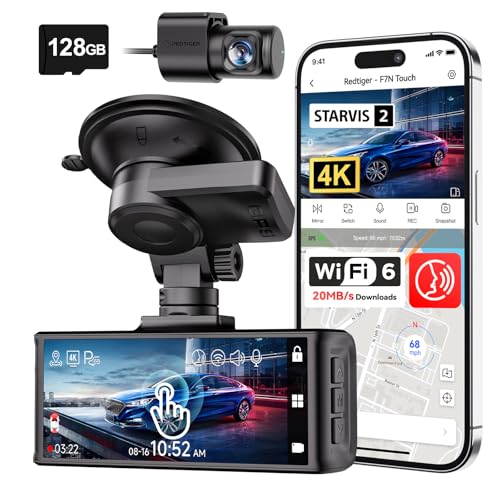
This REDTIGER option offers 4K front and 1080P rear with a STARVIS 2 sensor, 5GHz WiFi, and a free 128GB card. It emphasizes balanced exposure with WDR and HDR for improved day/night captures. Best for users who want a robust, feature-rich dual-channel dash cam with generous storage. A potential constraint is heavier file sizes, which require larger memory cards and careful management of storage space.
Buying Guide
What should I look for in a dash cam?
Key features include front and rear recording, sensor quality (STARVIS helps in low light), night vision performance, WiFi/app ease, GPS, and parking mode. Decide whether you need interior cinema-like coverage or exterior-facing only, and ensure the device supports your vehicle’s power system for continuous recording.
Which resolution is best for license plates?
4K front cameras generally offer sharper license plate capture in daylight. For night driving, a high-quality sensor with HDR and WDR is equally important to reveal details in low-light conditions.
Is WiFi important for daily use?
Yes, 5GHz or WiFi 6 transfers make it faster to download clips to your phone, review evidence, and update firmware. If you mostly review footage after trips, consider models with strong app ecosystems and straightforward sharing options.
How much storage do I need?
4K footage consumes more space. A larger microSD card (128GB or more) is recommended for longer trips, frequent looping, and high-resolution recordings. Check if the camera supports loop recording and automatic overwrites.
What about parking mode and power?
Parking modes provide security when the vehicle is off. Some cameras require continuous power or an ACC hardwire kit. Verify compatibility with your vehicle’s electrical system and any wiring requirements before installation.
Which camera should rideshare drivers pick?
Drivers should prioritize front and rear coverage with night vision, reliable GPS, and fast file transfer. A model with easy app access and sustained recording reliability during long shifts is ideal. Consider a setup that includes a memory card and robust customer support.
Summary of key considerations
- Resolution: front 4K is strongest for details; rear may stay at 1080P.
- Sensor: STARVIS 2 improves low-light performance.
- Connectivity: 5GHz WiFi or Wi-Fi 6 speeds up transfers.
- Storage: 128GB or larger cards help with longer trips.
- Parking: ensure power compatibility for continuous recording.
Frequently Asked Questions
- What is a dash cam’s main purpose?
To capture video evidence of driving events, lane departures, and incidents for safety and insurance claims.
- Should I buy a 4K dash cam if it ups the file size?
Yes for clearer daytime detail; ensure you have adequate storage and a fast transfer path for reviews.
- Is a rear dash cam necessary?
Not always, but it adds protection by recording tailing events and rear collisions.
- What is parking mode and why does it matter?
P parking mode records while the car is parked, offering evidence of hit-and-runs or vandalism.
- How important is the app experience?
Very important for quick video access, settings control, and firmware updates.