Answering the common buyer question: which studio headphones deliver reliable, flat-ish sound for tracking, mixing, and mastering? This guide highlights five options that balance comfort, tone, and feature sets. They’re suited for different buyers: engineers needing accurate monitoring, musicians tracking in home studios, DJs seeking portable monitoring, and newcomers building a starter studio with reliable clarity. Below is a quick summary table of the recommended models.
| Product | Best For | Key Strength | Notes |
|---|---|---|---|
| OneOdio Wired DJ Hi-Res | Home studio, DJs | Single-side monitoring | Wide compatibility with amps and instruments |
| Audio-Technica ATH-M20x | Budget tracking | Solid build, clear lows | Entry-level studio monitor |
| Sony MDR7506 | Professional workflow | Detail retrieval | Classic closed-back bias for accuracy |
| Audio-Technica ATH-M50X | Critical listening | Extended bass and clarity | Pro-grade with detachable cable |
| TASCAM TH-02 | Portable studio | Compact foldable design | Clean, balanced sound on the go |
OneOdio Wired DJ Hi-Res Over-Ear Headphones

Reference features: Bass sound with large 50mm drivers, neodymium magnets, and a balanced stereo presentation. Built for comfort with soft ear cushions and an adjustable headband. The 90° swiveling ear cups support single-side monitoring, which is useful for DJing or mixing. Best for: home studios or practice spaces where you need robust bass response and flexible monitoring during sessions.
- Best for: DJing, home studios, and beginners needing versatile connectivity.
- Why selected: Strong bass and wide compatibility support practical monitoring workflows.
- Limitation: Not a purely neutral reference sound; bass emphasis can color mixes if used as the sole monitoring tool.
Audio-Technica ATH-M20x Professional Studio Monitor Headphones

Reference features: 40 mm drivers with rare earth magnets and copper clad aluminum wire voice coils. Designed for studio tracking and mixing with tuned low-frequency performance. Best for: entry-level studios and students needing dependable, affordable monitoring with clear utility.
- Best for: Budget-conscious producers and beginners.
- Why selected: Reliable sound with a clear low end suitable for basic mixing tasks.
- Limitation: Lacks some of the extended high-frequency detail found in higher-end models.
Audio-Technica ATH-M50X Professional Studio Monitor Headphones

Reference features: Critically acclaimed sonic performance with 45 mm drivers and rare earth magnets, offering deep, accurate bass and extended clarity. Detachable cable adds convenience for studio setups. Best for: engineers and musicians who need a more neutral, professional listening experience during tracking and mixing.
- Best for: Critical listening and professional-grade monitoring.
- Why selected: Widely recognized for a balanced, accurate sound signature and durability.
- Limitation: Design is less foldable than some travel-oriented models; cable management is heavier without a single-bail system.
Wired Headphones Over Ear Studio Monitor & Mixing DJ

Reference features: 50mm dynamic drivers with wide frequency response, single-side monitoring via 90° swiveling earcups, and light 260 g construction with soft protein leather and memory foam. Best for: DJs and home studios seeking portable, accurate monitoring with comfort for long sessions.
- Best for: DJs and mobile studios needing extended comfort and single-ear monitoring.
- Why selected: Combines good bass response with fatigue-free wear and portability.
- Limitation: Might be less renowned for ultimate studio-grade neutrality compared with premium brands.
TASCAM TH-02 Professional Studio Monitor Headphones
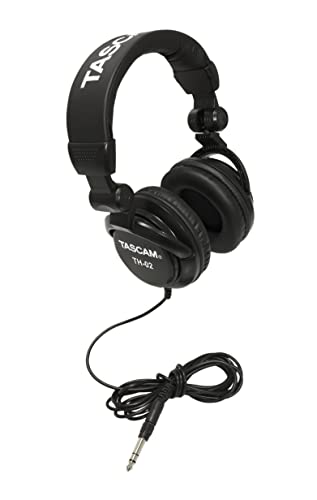
Reference features: Foldable design for transport, tightly-stitched padded headband and ear pads for comfort, closed-back dynamic design with clean sound and rich bass. Best for: portable studios, podcasters, and field recording setups where space and mobility matter.
- Best for: On-the-go monitoring and compact studios.
- Why selected: Foldability and comfortable fit support travel and quick sessions.
- Limitation: Closure and isolation are good, but not on par with some premium studio models in sheer neutrality.
OneOdio A71 Hi-Res Wired Over-Ear Studio Headphones

Reference features: 40 mm drivers deliver hi-res sound with deep bass, clear mids, and crisp highs. Includes a long-style coiled cord with 6.6-9.8 ft length and dual-plug options (6.35 mm and 3.5 mm). Best for: studios needing versatile connectivity and flexible monitoring for DJing, mixing, and recording.
- Best for: Those who require a broad connectivity range without adapters.
- Why selected: The long cable and plug options reduce setup friction in varied gear setups.
- Limitation: Bass and treble emphasis can vary with different source gear; neutral listening might require additional EQ in some rooms.
Buying Guide
What should I look for in studio headphones?
Key factors include driver size, frequency response, impedance, and fit. Larger drivers (40–50 mm) tend to deliver more impactful bass and lower end detail, which helps in tracking and mixing but may color sound. A closed-back design reduces bleed and provides focus in noisy environments. Comfort matters for long sessions, with padded headbands and plush earpads helping prevent fatigue.
Are there headphones better for monitoring than for mixing?
Yes. For accurate monitoring, look for a neutral or flat-ish response with minimal bass boost. Some models emphasize bass or highs for consumer listening; these are less ideal for precise mixing. If you need both, consider a model with a reputation for reliable midrange clarity and controlled low end.
What about single-sided monitoring?
Single-sided monitoring (90° swiveling ear cups) allows you to listen to one side while the other channels stay open. This is particularly useful when you need to cue tracks or focus on a specific element during a session.
Wired versus wireless?
Studio environments typically benefit from wired headphones to avoid latency and signal compression. The models here are wired; they ensure stable connections and predictable behavior in DAW workflows.
Which model should a beginner start with?
Start with a budget-friendly yet reliable option like the Audio-Technica ATH-M20x for learning the basics, then consider upgrading to ATH-M50X or Sony MDR7506 as you refine your monitoring needs and room acoustics.
What about comfort for long sessions?
Look for soft, replaceable ear cushions and an adjustable headband. Lightweight designs and memory foam padding reduce fatigue during extended sessions.
Frequently Asked Questions
- What are the most important features in studio headphones?
Driver size, impedance, frequency response, and comfort determine how accurately you hear your mix and how long you can work without fatigue.
- Are closed-back headphones better for recording?
Yes, closed-back designs reduce sound bleed, which helps when recording vocals or instruments in close proximity to a microphone.
- Should I choose neutral sound or bass-boosted headphones for mixing?
Neutral sound is generally preferred for mixing, while bass-boosted models can be useful for tracking certain genres if compensated in the mix later.
- Is single-side monitoring necessary for DJs?
It can be helpful for cueing and beatmatching, but it is optional depending on workflow and gear setup.
- Do I need detachable cables?
Detachable cables simplify replacement and setup, especially in professional studios with multiple devices.
- Are the listed models suitable for podcasting?
Yes, several models provide clear vocal reproduction and comfort for extended recording sessions.