Looking for a reliable solar panel kit to power a shed, workshop, or small outbuilding? This guide highlights five solid options that balance efficiency, durability, and ease of use. Each product is suited to different shed sizes and energy needs—from a compact 100W setup to a robust 400W system. The top picks are chosen for straightforward installation, steady performance under daytime sun, and compatibility with common off-grid applications such as lighting, small appliances, and power tools. The buyer types addressed include budget-conscious hobbyists, frequent crafters, and remote shed owners seeking dependable solar backup.
| Product | Approximate Power | Best For | |
|---|---|---|---|
| Eco-Worthy 200W Kit | 200W | Smaller sheds or limited daily use | Good balance of price and efficiency; PWM controller |
| Renogy 400W Premium Kit | 400W | Medium sheds with higher power needs | MPPT controller, higher output |
| Eco-Worthy 1.6KWh Complete 400W Kit | 400W | RV, shed, or cabin backup | Daily ~1.6kWh ideal; 12BB cells, higher efficiency |
| Renogy 100W Starter Kit | 100W | Small sheds or first-time buyers | Starter friendly; solid documentation |
| Eco-Worthy 400W Premium Kit | 400W | Full shed power with MPPT | Includes Bluetooth module; robust kit |
Eco-Worthy 200W Solar Kit With PWM Controller
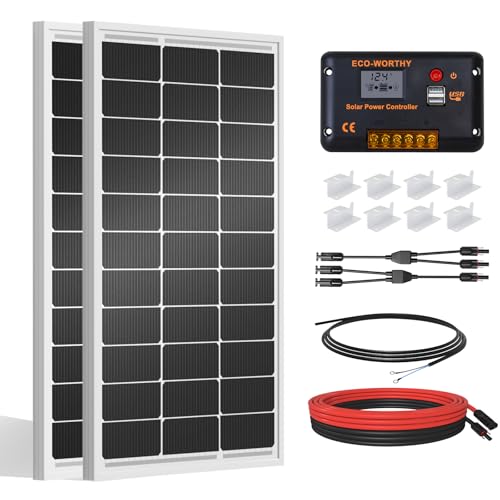
The Eco-Worthy 200W kit uses high-efficiency monocrystalline panels and a 30A PWM charge controller. It’s positioned for RVs, small cabins, or sheds that require dependable daily output under favorable sun conditions. The kit lists a robust 21.5% efficiency potential and a corrosion-resistant frame designed to endure wind and snow loads. Best for: compact shed spaces, limited daily demand, and users who want a straightforward, reliable solar setup. Caution: PWM systems can be less efficient than MPPT in variable conditions, which may slightly reduce daily output under overcast days.
Renogy 400W Premium Solar Kit

This premium Renogy kit pairs 400W of solar panels with a 40A MPPT controller, offering higher efficiency and better performance in hot or variable conditions. It’s suitable for sheds with medium to high daily energy needs, such as running lighting, small appliances, and tools. Best for: shed owners who want improved efficiency and steady output, even when sun is less than optimal. Caution: MPPT systems require a bit more setup and monitoring to maximize gains compared to simpler PWM kits.
Renogy 400W Premium Kit With MPPT Controller

This kit highlights N-Type cells with higher efficiency, delivering 1.6–2.5kWh of daily output under good sun. The 16BB cell architecture supports durability and higher power retention, while a higher temperature tolerance helps in hot sheds. Best for: sheds in sunny climates needing dependable daily power for multiple devices. Caution: higher efficiency panels may come at a higher upfront cost and require proper mounting for best results in wind-prone areas.
Eco-Worthy 400W Premium Kit With Bluetooth Module

This 400W Eco-Worthy premium kit includes four 100W panels, a 40A MPPT controller, a Bluetooth module, and mounting hardware. It emphasizes high efficiency with 21% panel cells and heavy-duty framing to withstand wind and snow loads. Best for: sheds with higher energy needs and users who want advanced monitoring via Bluetooth. Caution: ensure mounting area can accommodate four panels and proper cable routing for optimal performance.
Solperk 20W Solar Panel Kit With Controller

Solperk offers a compact 20W panel with a smart 8A controller, suited for maintenance charging and trickle power for sheds with light needs. It uses high-efficiency A+ cells and a corrosion-resistant frame. Best for: tiny sheds, seasonal use, or as a supplementary charger for larger systems. Caution: this kit provides limited daily power and should not be relied on for continuous high-demand usage.
Buying Guide
What shed size and energy need does your project require? For small sheds with minimal loads, a 100–200W PWM setup can suffice and keep costs down. For moderate to higher daily use, a 400W kit with an MPPT controller offers better efficiency, faster charging, and more headroom for devices like lights, fans, and small appliances. Organize a plan around daily energy goals and reasonable sun exposure.
Key considerations
- System type: PWM vs MPPT. MPPT captures more energy, especially in variable sunlight, but can be pricier and require proper installation.
- Power needs: Estimate daily usage in watt-hours (Wh) to pick a kit that exceeds peak daytime consumption.
- Climate and location: Hot climates benefit from higher-temperature tolerance panels; windy/snowy areas require robust framing and strong mounting.
- Expansion: If you anticipate growing shed needs, choose a modular kit that allows adding panels later.
- Monitoring: Bluetooth or app-based monitoring helps track charging performance and energy flow.
Installation tips
- Mount panels to maximize sun exposure; avoid shading from nearby structures or trees.
- Use proper weather-rated hardware and protective junction boxes to ensure longevity.
- Plan for cable routing and a safe, weather-sealed battery or storage setup if required.
FAQ
- What size shed can a 400W solar kit power? — It can support lighting, small appliances, and tool charging in many sheds, depending on daily sun and usage.
- Is MPPT worth it for a shed? — Generally yes for better efficiency and faster charging, especially in variable weather.
- Do PWM kits work in cloudy conditions? — They work but have reduced efficiency; MPPT handles overcast days better.
- Can I upgrade later? — Many kits are modular; add panels or upgrade controllers as needed.
- What maintenance is needed? — Periodic cleaning of panels and checking connections; ensure mounting hardware remains secure after weather events.
In summary, the best solar panel kit for shed use balances your daily energy needs, climate, and budget. The 200W and 400W options cover a broad range of shed sizes, while the 100W starter kit helps first-time buyers test the setup. For higher energy demands or future expansion, MPPT-based kits provide enhanced efficiency and reliability, especially in challenging weather. The right choice provides dependable shed power and helps maintain essential lights, tools, and equipment with confidence.