Find the right wireless microphone for singers with dependable range, low latency, and easy setup. This guide highlights five top options suited for solo performers, church musicians, karaoke hosts, and small-stage setups. Each pick offers different strengths, from long-range transmission to multi-microphone versatility. Use this overview to compare features and choose the best fit for your voice, venue, and budget.
Buyer types at a glance:
– Best for large rooms and outdoor use: models with long-range, stable signals
– Best for duets and group performances: multi-microphone systems
– Best for video creators and on-the-go recording: compact lavalier options
– Best for plug-and-play simplicity: straightforward, quick setup
– Best for entertainment venues and parties: reliability and clear vocal output
Quick Comparison Table
| Product | Best For | Key Benefit | Approximate Range |
|---|---|---|---|
| HUACAM Wireless Microphone | Singers and performers needing long range | 200 ft range, stable signal, plug-and-play | Up to 200 ft |
| JBL Wireless Two Microphone System | Duets and small groups | Dual-channel, quick setup, JBL Original Pro Sound | Up to several hours of playtime |
| Phenyx Pro Dual UHF Auto Scan PTU-71-2H | Multiple transmitters, low interference | Auto Scan, multiple frequencies, long range | ~290–328 ft |
| ECHOMUSSY Wireless Metal Dynamic | Durable, reliable handheld mics | All-metal, DSP noise reduction, clear vocals | Up to 200 ft |
| JBL PartyBox Wireless Mic | Live events and parties | Two mics, stable 2.4GHz, easy plug-in | Long battery life; party-ready |
HUACAM Wireless Microphone

The HUACAM wireless microphone provides a long operating range and reliable signal suitable for indoor and outdoor performances. Best for solo singers, church services, weddings, or small-stage events where movement is necessary. It offers straightforward plug-and-play setup with a receiver that connects to 6.35mm or 3.5mm mic inputs and automatic pairing.
Who it’s best for: solo singers, pastors, or emcees who need freedom of movement without signal dropouts. Choose this if you perform in venues where range matters and you want a simple, reliable wireless option.
Limitation: AUX interfaces are not applicable for this system, so ensure your main device has a compatible mic input.
JBL Wireless Two Microphone System
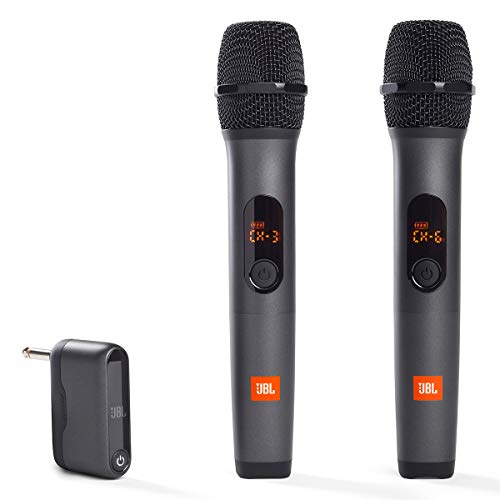
This dual-channel system delivers clear vocal quality with JBL Original Pro Sound and seamless two-mic mixing. It’s plug-and-play, letting two wireless microphones connect to a single receiver for synchronized performances up to six hours of playback. It’s ideal for duets, small ensembles, or hosts needing reliable, easy setup.
Who it’s best for: duets or small group performances where consistent, high-quality vocal output matters. Better for venues that require quick setup with minimal configuration.
Caution: While easy to set up, ensure you have a compatible speaker or PA with appropriate mic inputs for optimal results.
KUKIHO 2 Pack Wireless Lavalier Microphone

This compact lavalier set is designed for mobile recording, interviews, and live streaming. It uses plug-and-play pairing without Bluetooth apps and provides a stable range suitable for on-camera performances. Best used by creators who need a hands-free option or a discreet mic for stage performers who prefer a clip-on microphone.
Who it’s best for: singers who also record videos or need a discreet mic option for performances off the mic stand. Choose this if you require hands-free mobility and clear vocal capture in video contexts.
Limitation: Not ideal for use with standard PA systems as the kit is optimized for phones and cameras rather than room amplification.
Phenyx Pro Dual UHF Auto Scan PTU-71-2H

The PTU-71-2H system uses auto-scan to locate the least-interference frequency for each channel, minimizing dropouts. It supports up to 2 transmitters with 4 selectable UHF frequencies each, and a long-range line-of-sight operation. It includes a memory switch for quick setup and clear vocal pickup with reduced ambient noise.
Who it’s best for: performers who rotate between multiple wireless mics in live settings and need rapid, reliable channel switching. Choose this if you require robust interference management and longer-range wireless performance.
Caution: Ensure your venue has compatible receivers and that you select frequencies available in your region to avoid interference with other devices.
ECHOMUSSY Wireless Metal Dynamic Microphones

These all-metal dynamic mics deliver robust hands-on feel and reliable vocal pickup. They include a one-to-one chip connection and a rechargeable receiver with 200FT receiving range. Built-in DSP noise reduction helps maintain clear vocals in karaoke, speeches, weddings, and small events.
Who it’s best for: performers who value a durable, metal-bodied mic with strong basic vocal capture and less sensitivity to handling noise. Choose this if you want sturdy build quality for frequent stage use.
Caution: Not compatible with phones or devices lacking a dedicated mic input; verify device compatibility before buying.
JBL PartyBox Wireless Mic

Designed for PartyBox speakers, this system includes two wireless mics with a stable 2.4GHz connection and long battery life. It emphasizes clear vocal output with features to minimize handling noise and pops, making it suitable for lively performances and informal events.
Who it’s best for: party hosts, karaoke nights, and event settings where quick setup and reliable wireless mics are desired. Choose this if you need a straightforward, party-ready mic package.
Caution: It’s best paired with compatible PartyBox systems or speakers; check compatibility with your existing audio setup before purchase.
Buying Guide
What should you consider when choosing a wireless mic for singers?
Range and signal stability: Look for models offering long line-of-sight ranges and strong anti-interference performance to minimize dropouts during performances.
Channel options: If you perform with others, choose dual-channel or multi-channel systems to avoid conflicts and ensure smooth amplification.
Compatibility: Ensure the mic system matches your existing PA, mixer, or speaker inputs (6.35mm or 3.5mm mic jacks are common).
Durability and build: For frequent travel or mobile gigs, metal bodies and durable components reduce wear from handling and transport.
Power and battery life: Battery longevity matters for long events; consider rechargeable options with clear indicators for planning replacements.
Latency and audio quality: Prefer systems with low latency and clear vocal reproduction to prevent timing issues with backing tracks or live monitors.
Portability and setup time: Plug-and-play systems save time on stage and avoid technical delays during performances.
What about cables vs. wireless reliability?
Wireless systems offer greater freedom of movement but depend on clean RF environments. If you frequently perform in crowded venues with many wireless devices, prioritize auto-scan or fixed-frequency systems with DSP noise reduction to minimize interference.
FAQs
- What is the typical range for wireless mics for singers?
Most modern systems offer ranges from about 100 to 328 feet in line-of-sight, with some models indicating longer practical ranges in open spaces.
- Do I need a separate receiver for each mic?
Multi-mic systems often share a single receiver with multiple channels; check the product specifications to match your venue needs.
- Is a lavalier mic suitable for singing on stage?
Lavalier mics are versatile for hands-free use, recording, or video work, but they may not match the vocal presence of a handheld dynamic mic in loud live environments.
- What should I do if I experience interference?
Use auto-scan or fixed-frequency systems, relocate the receiver, or switch to channels with less congestion to reduce interference.
- Can I use these mics with non-traditional speakers or PA systems?
Most mics require a 6.35mm or 3.5mm mic input; confirm compatibility with your mixer or speaker before purchasing.