If you’re shopping for an acoustic guitar amplifier, you want clarity, portability, and the right features for your performance setting. This guide highlights five practical options that cover small practice rooms to open-air gigs. Each product target is noted to help you choose quickly.
Summary of top picks:
| Product | Best For | Key Feature |
|---|---|---|
| Fender Acoustasonic 15 | Beginner to intermediate gigs | Dual inputs, 15W, built-in whizzer cone |
| Flatsons Crush20 | Busking and solo performers | Rechargeable, dual channels, 20W |
| Fender Acoustasonic 40 | Small venues, practice rooms | 40W, built-in reverb |
| Fishman PRO-LBT-500 | Live sound with mic and instrument | 60W, two channels, reverb & chorus |
| Fishman Loudbox Micro | Traveling players, intimate stages | 40W, two channels, compact |
Fender Acoustasonic 15 Acoustic Guitar Amplifier
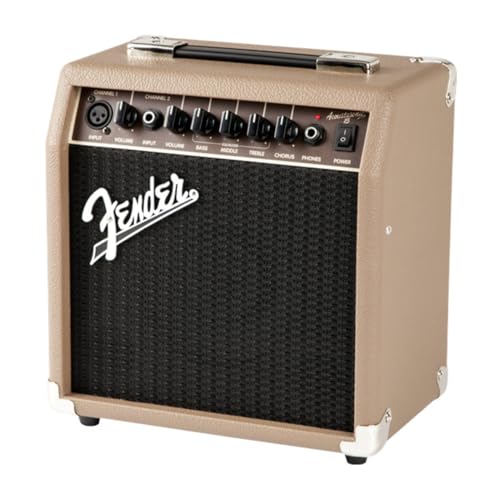
The Fender Acoustasonic 15 is a compact 15-watt acoustic guitar amplifier. It features two front-panel inputs: a standard 1/4-inch instrument jack and an XLR microphone input, enabling simple guitar-and-singer setups. A distinctive “whizzer” cone enhances the 6-inch speaker’s voice coil, delivering richer midrange for acoustic performance. Best for solo performers and small rooms who need quick, straightforward amplification with flexible input options.
Who this is best for: players seeking a lightweight, straightforward amp for practice or small gigs, with easy mic-triend and instrument routing. Why selected: its lightweight design and dual-input flexibility make it a solid starter for acoustic sets. Caution: the 15W output may be limiting in louder venues without PA support.
Flatsons Crush20 20W Rechargeable Acoustic Guitar Amp

The Flatsons Crush20 delivers 20W RMS with a dual-channel design for guitar and vocals. It uses a 5.5-inch full-range speaker and Class-D amplification for efficient power, plus built-in reverb on both channels. The amp is ideal for singer-songwriters who perform solo with accompaniment or small ensembles outdoors due to its rechargeable battery and long playtime. Best for street performances or practice sessions where cord-free operation matters.
Best for: open-air or street performance where portability and battery power are advantageous. Why selected: strong dual-channel capability with reliable output and onboard reverb for both voices and guitar. Caution: battery life varies with volume and effects use; continuous high-volume use reduces runtime.
Fender Acoustasonic 40-Watt Acoustic Guitar Amplifier

This 40-watt Fender Acoustasonic offers more headroom for small venues while retaining a dedicated instrument channel with built-in reverb. The speaker system includes a 6-inch voice-coned woofer with a whizzer cone, providing enhanced midrange and clarity for acoustic guitars. Best for practice rooms and small performances where richer reverb and more volume are required than a compact 15W model.
Best for: players who need more projection without stepping up to a larger PA system. Why selected: higher wattage and onboard reverb add versatility for live acoustic performances. Caution: larger footprint than the 15W model; consider transport options for gigs.
Fishman Acoustic Guitar Amplifier (PRO-LBT-500)

The Fishman PRO-LBT-500 is a two-channel amplifier rated at 60 watts, designed for both guitar and mic use with built-in reverb and chorus. It emphasizes clear guitar tone with a balanced output suitable for live performance and small venues. Best for players needing a robust, dedicated acoustic setup with flexible effects. Caution: heavier and larger than compact practice amps, which may impact portability.
Fishman Loudbox Micro 40-Watt Acoustic Combo Amp

The Fishman Loudbox Micro is a portable 40-watt acoustic amp with two channels for instrument and microphone. It includes digital reverb and chorus, offering a simple, transparent acoustic tone ideal for small venues or practice rooms. Best for players who value straightforward tone shaping with effective onboard effects. Caution: not the lightest option; assess weight if frequent transport is required.
Buying Guide
What should you consider when choosing an acoustic guitar amp?
- Output power and room size: For home practice, 10–20W is usually sufficient. For small venues, 30–60W with a capable speaker helps maintain presence.
- Input options: If you sing and play, look for dual inputs (instrument and mic) or combination channels to simplify setups.
- Portability and battery power: Battery-powered amps are ideal for street performances or outdoor gigs. Consider wireless convenience versus total runtime.
- Built-in effects: Reverb and lightweight delay can enhance acoustic performances. Check if effects are per-channel or shared.
- Speaker design: A whizzer cone or dedicated acoustic speaker gives better midrange clarity for acoustic guitars.
- Size and weight: Plan for transport needs. Larger amps offer more headroom but require more space.
FAQs
- Do I need a separate mic for vocals when using an acoustic guitar amp?
Answer: If your amp has a mic input or dedicated vocal channel, you can run vocals directly; otherwise, use a separate mic with a sound system or PA. - Is 60W necessary for a small venue?
Answer: Not always; it depends on venue size, audience, and PA support. Use higher headroom if you lack a PA. - Should I prioritize built-in reverb?
Answer: Built-in reverb can enhance performance, but it should not mask the guitar tone. Check controls per channel if possible. - Are battery-powered amps suitable for gigs?
Answer: Yes, for street performances or places without reliable power, but verify runtime at your typical output level. - What maintenance helps acoustic amps last longer?
Answer: Weather protection for outdoor use, proper handling during transport, and regular power supply checks. - Can I use these amps for electric guitars?
Answer: Some are designed for acoustic-electric guitars; refer to the product features to ensure compatibility with electric input signals.