Answering your search for an adjustable dress form, these models provide multi-point adjustments, stable stands, and convenient pinning surfaces to improve fit and drape. This guide highlights five strong options, suitable for hobby sewists, hobbyists with alterations, and aspiring designers. Each choice features clear dials or wheels to tailor bust, waist, hips, and height. The top picks help you achieve accurate fittings whether you’re drafting new garments or altering existing ones. Below is a quick table of the five selected forms to compare at a glance.
| Product | Size Range | Best For | Limitations |
|---|---|---|---|
| Dritz Sew You Adjustable Dress Form, Small/Medium (US 4-12) | US 4-12 | Beginner to intermediate sewers needing precise adjustments and a compact range | Max height 62.5” |
| Dritz Sew You Adjustable Dress Form, Medium/Large (US 12-18) | US 12-18 | Medium-to-large proportions; versatile for many garment types | Max height 63” |
| SINGER Female Adjustable Dress Form, Small/Medium (4-10) – Red | US 4-10 | Clear pinning surface with foam-backed flannel exterior for easy patterning | Color may show wear with frequent use |
| SINGER Female Adjustable Dress Form, Medium/Large (10-18) – Grey | US 10-18 | Professional look with a large adjustment range for bigger projects | Can feel heavy when moved frequently |
| Dritz Twin-Fit Adjustable Dress Form, Small (US 4-10) | US 4-10 | Refined top-to-bottom fit with extended torso and 12 dials | Smaller torso length extension than some larger models |
Dritz Sew You Adjustable Dress Form, Small/Medium

Reference features: 12 multi-point adjustments, height-adjustable center pole, 360-degree hem marker, 9 adjustment wheels, 2 front auto-set dials with ½” increments, neck adjustment dial. Best for sewers who want a compact form with fingertip control. Recommended for beginners or crafters focusing on standard adult sizes. Caution: Max height 62.5” may limit tall-stature users.
Dritz Sew You Adjustable Dress Form, Medium/Large
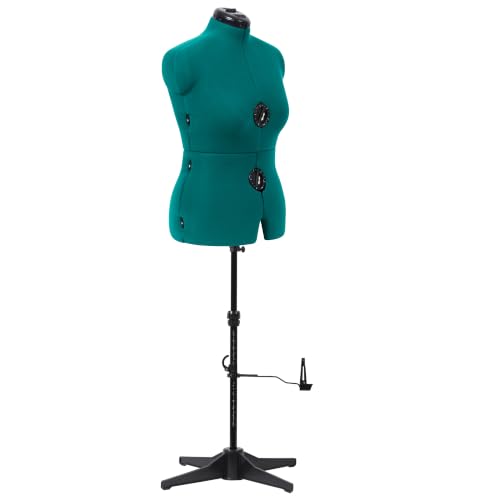
Reference features: 12-point adjustments, 360-degree hem marker, height-adjustable pole, and 9 side/back adjustment wheels plus 2 front auto-set dials with ½” increments. Best for crafters who want a generous size range and accurate draping across mid-to-large body types. Select this if you frequently work with garments across a broad size spectrum. Caution: Taller builders may approach the height limit around 63”.
SINGER Female Adjustable Dress Form, Small/Medium, Red

Reference features: 12 adjustable dials for bust, waist, hips, neck; foam-backed flannel exterior for easy pinning; adjustable neck and height for common sizes 4-10. Best for hobbyists who value a pin-friendly surface and clear dial options. Limitations: Bright red finish may show wear with frequent use over time.
SINGER Female Adjustable Dress Form, Medium/Large, Grey

Reference features: 12 dials for full custom fitting, neck, bust, waist, hips, and height adjustments; foam-backed flannel exterior supports easy pinning. Best for intermediate or advanced users who frequently work with sizes 10-18 and need a robust, easy-to-pin surface. Caution: Grey fabric shows lint more visibly than some finishes.
Dritz Twin-Fit Adjustable Dress Form, Small

Reference features: 12 auto-set dials plus neck finial, extended torso length with center pole height adjustability; foam-padded surface for secure pinning. Best for those seeking a refined, compact form with a broader torso adjustment range in a small size. Limitation: Slightly smaller torso extension compared to larger models may suit lighter or shorter projects better.
Buying Guide
What size range do you need? Start with your typical garment sizes and check whether the form covers bust, waist, hips, and height. A 12-dial system provides the broadest customization, but for most hobby projects, 8–12 dials suffice.
How important is the pinning surface? A foam-backed, flannel exterior helps keep pins in place and speeds pattern work. If you frequently pin fabrics thick or delicate, choose a form with a pin-friendly surface.
Is height adjustability required? Height alignment matters for shoulder-to-floor measurements and drape accuracy. Look for a center pole that lets you reach your shoulder-to-floor height without tilting the form.
What about portability and stability? If you move your form often, a rolling base with lockable casters improves mobility and keeps it steady during fittings. Four-legged bases with detachable casters add stability when stationary.
Which brand to trust? Dritz and SINGER are common in home studios and craft rooms. Both offer models with durable stands, clear dials, and consistent adjustability across sizes. Choose based on preferred size range and surface finish rather than brand alone.
FAQ
- What is the typical height range of adjustable dress forms?
Most forms offer a height adjustment to accommodate shoulder-to-floor measurements, commonly around 60” or higher in extended models. - Do these dress forms include pinning surfaces?
Yes, many feature foam-backed or flannel surfaces designed to hold pins securely during patterning. - Can I use these forms for displaying garments as well as sewing?
Yes, several models are multipurpose, with rolling bases for relocation and stable stands for display work. - Are there risks of instability with taller forms?
Tall configurations may require tighter stands and secure casters to prevent tipping during adjustments or draping. - Which one is best for beginners?
The Dritz Small/Medium and SINGER Small/Medium models balance ease of use with a broad adjustment range, making them suitable for beginners. - How many adjustments do I truly need?
A minimum of 8–12 dials or equivalent adjustments typically covers bust, waist, hips, neck, and height for most projects.