Answering the need for clear, musical compression, these bass compressor pedals tighten dynamics without masking your tone. They’re ideal for players seeking studio-grade transparency, whether you’re slapping, fingerpicking, or laying down clean bass lines. The top picks below cover optical and analog options, from versatile performances to compact, pedalboard-friendly units. This guide helps bassists decide which pedal fits your rig, playing style, and tone goals.
Summary table of selected products
| Product | Best For | Key Benefit | Notes |
|---|---|---|---|
| JOYO SCYLLA Bass Compressor | Studio-quality, transparent compression | Optical circuit with six controls | Great for slap and fingerstyle; versatile for bass and other instruments |
| MXR Bass Compressor | Reliable, budget-friendly compression | Constant headroom technology | Simple, effective; true bypass |
| BOSS BC-1X Bass Compressor | Professional-grade, multiband feel | Intelligent circuitry with strong headroom | Ideal for live and studio setups needing dynamic control |
| Empress Effects Bass Compressor | High-fidelity analog feel | Three ratio choices; all-analog path | Ultra-transparent with flexible ratios |
| Keeley Bassist Compressor | Studio-grade compression on a stompbox | High-fidelity THAT Corp. 4320 circuit | Excellent balance of tone and control |
Below, five selected bass compressor pedals are examined in detail to help you compare tone, response, and practicality across different setups.
JOYO SCYLLA Bass Compressor Pedal

Best for: Players seeking studio-grade transparency with comprehensive control. The SCYLLA uses an optical compressor circuit to deliver smooth, musical compression that preserves your bass’s natural character while smoothing peaks and adding sustain. Its six knobs—Attack, Release, Ratio, Tone, Input, and Output—let you dial precise dynamics for slap, fingerstyle, or pick play. Best for bassists who want a quiet, low-noise path that still responds to picking nuance. Caution: The six controls require careful setup to achieve subtle compression, especially in live noisy environments.
MXR Bass Compressor

Best for: Players needing a straightforward, dependable compressor with clear headroom. The MXR Bass Compressor features CHT (Constant Headroom Technology) for clean, uncolored compression and a true-bypass signal path. It’s a solid choice for live rigs and studio setups where reliability and simple tone shaping are priorities. Caution: It offers fewer tonal options than some more feature-rich models, so it may feel limited for advanced texture shaping.
Donner Ultimate Comp 2 Modes Compressor
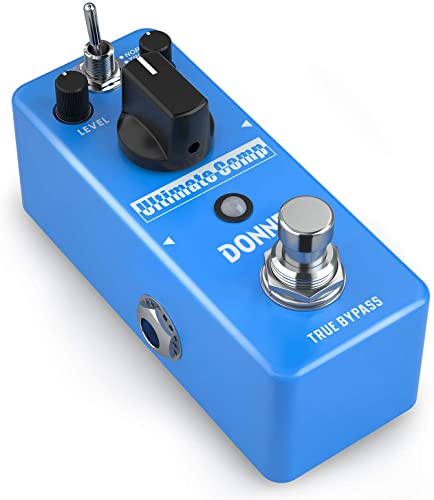
Best for: Players who want two practical modes and an all-analog signal. The Donner Ultimate Comp provides classic compression with three tone shaping controls—COMP, TONE, LEVEL—and a mode selector for NORMAL and TREBLE. It’s a good fit for guitar and bass players seeking a flexible, budget-friendly option that can adapt to different playing styles. Caution: Some users may prefer more nuanced multi-band control for complex bass lines.
BOSS BC-1X Bass Compressor

Best for: Professional players needing sophisticated, multiband compression with ample headroom. The BC-1X adapts to different registers and playing nuance, delivering natural compression that preserves fundamental bass tone. Internal processing enables easy dialing of multiband settings, while 18-V input electronics offer headroom to avoid distortion. Caution: More features mean a steeper learning curve for beginners seeking quick, simple compression.
Keeley Bassist Compressor

Best for: Bassists seeking studio-grade compression in stomp-box form, with high-fidelity sound. The Keeley Bassist Compressor uses the exotic THAT Corp. 4320 circuit to deliver true, transparent compression and limiting. It’s a strong choice for players who want a reliable, high-fidelity solution that preserves dynamics while adding control. Caution: Availability and price may vary, and it’s a more premium option compared to entry-level pedals.
Empress Effects Bass Compressor
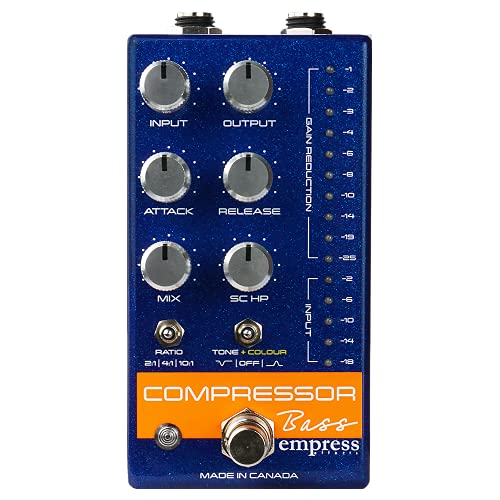
Best for: Players seeking an all-analog signal path with three ratio options (2:1, 4:1, 10:1). The Empress Bass Compressor emphasizes transparency, adding dynamic control without altering the original tone. It suits tone-purists who want precise, musical compression across a range of bass styles. Caution: The all-analog design can require careful biasing and setup to dial in ideal response for your rig.
Buying Guide: How to Choose the Right Bass Compressor Pedal
What level of transparency do you need?
Optical compressors typically offer the quietest, most natural compression, which is ideal for preserving your bass’s fundamental tone. Analog variants can add a touch of warmth or color, which some players may prefer for certain genres.
How much control do you want?
Six-knob models (Attack, Release, Ratio, Tone, Input, Output) provide precise shaping for dynamics and timbre. Fewer controls streamline setup but may limit nuanced tone shaping.
Headroom and dynamic range matter
Look for pedals with high headroom, especially for active basses or active pickups. Pedals advertising true bypass can preserve signal when disengaged, keeping your tone intact in a pedalboard chain.
Which setup matches your style?
For slap players, a compressor with fast response and good transient handling is key. For fingerstyle blues or rock, a mid-range ratio and a clear, natural tone help sustain without squashing dynamics. For live performances, reliability and ease of use are crucial.
Analog vs digital considerations
All-analog designs (like Empress) often emphasize warmth and dynamic responsiveness. Digital or hybrid designs may offer more preset options and easier recall of settings at the cost of potential tone coloring.
Practical pairing tips
- Position the compressor before effects that rely on dynamics, such as overdrive or fuzz, to maintain controlled input levels.
- Place the pedal after your bass’s volume control to avoid unexpected changes in gain.
- Test with your typical basses (passive/active) to ensure the pedal handles both clean and slap tones well.
FAQ
- What is a bass compressor pedal used for?
- A compressor evens out dynamics, controls peaks, and adds sustain, helping basses sound more polished in live and studio contexts.
- Do I need a compressor if my bass already has active electronics?
- Yes, a compressor can still shape dynamics and consistency, especially in slap or clean passages.
- What does “optical” mean in a compressor?
- Optical compression uses a light-dependent resistor (LDR) to control gain, often delivering smoother, more natural compression with high headroom.
- How do I choose between two similar pedals?
- Consider tonal character, control layout, headroom, and how the pedal interacts with your bass and other components on your board.