When shopping for a bass guitar amplifier, look for models that fit your playing style, venue needs, and portability. This guide highlights five solid choices across wattages and form factors, helping beginners, hobbyists, and gig-ready players pick the right rig. The top picks cover practice amps for quieting late-night sessions, compact practice-and-jam combos, and larger, stage-ready units with built-in overdrive options. The summary table below contrasts key points to aid quick decisions.
| Product | Best For | Wattage | Key Benefit |
|---|---|---|---|
| Fender Rumble 15 V3 | Beginner practice or small rooms | 15W | Compact with solid Fender tone |
| Fender Rumble 25 V3 | Practice and small gigs | 25W | 8″ speaker, contour overdrive |
| Demusea 20W | Travel-practice with headphones | 20W | 3-band EQ, portable and affordable |
| Fender Rumble 40 V3 | Mid-size gigs | 40W | Overdrive circuit, contour switch |
| JOYO 30W Vibe Cube | Live streams and versatile practice | 30W | Bluetooth 5.1, OTG recording, 3-band EQ |
Fender Rumble 15 V3 Bass Amplifier

The Fender Rumble 15 V3 delivers 15 watts through an 8-inch Fender Special Design speaker, offering a compact option for practice rooms, dorm spaces, or small venues. This model is best for beginners or casual players who want a simple, reliable setup with authentic bass tone. The top-mount control panel with ivory soft-touch knobs makes quick adjustment straightforward in low-light settings. A compact footprint makes it easy to transport between practice spaces. A potential limitation is that it lacks built-in effects and may not push enough volume for band rehearsals in larger rooms.
Who this is best for: players starting out or needing a portable, affordable practice amp. Why selected: proven Fender tone and a straightforward control layout suit newcomers and students who value ease of use over extensive features.
Buying note: If you anticipate practice in small venues with friends, this model pairs well with a small PA or DI for larger spaces.
Fender Rumble 25 V3 Bass Guitar Amplifier Combo

The Rumble 25 V3 brings 25 watts and an 8″ Fender Special Design speaker for a fuller, louder voice than the 15-watt model. It includes a 1/8″ auxiliary input and a 1/4″ headphone output for quiet practice and use with backing tracks. Three-band EQ and its overdrive circuit with contour switch deliver a versatile range of tones from clean to lightly driven. This makes it a good choice for players who perform in small gigs or need a compact, gig-ready practice amp. Caution: the amp may be underpowered for large rooms or loud ensembles without PA support.
Who this is best for: players who want more headroom than the 15 V3 and still value portability. Why selected: improved speaker size and tone-shaping options expand versatility for practice, small gigs, and stage jams.
Demusea 20W Electric Bass Amplifier
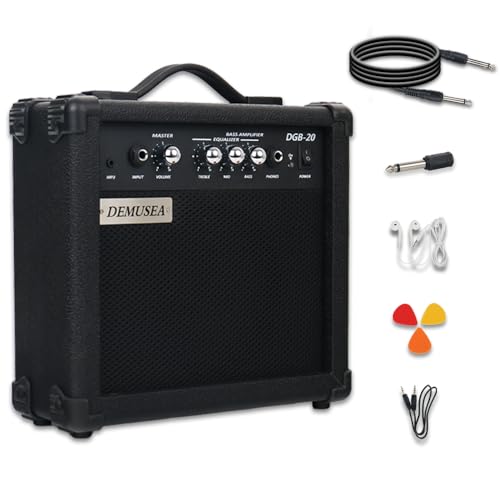
The Demusea 20W bass amp emphasizes portability with a durable build and a built-in headphone jack for silent practice. It features a full 3-band EQ to shape tone—treble, mid, and bass—allowing players to tailor sound from warm to punchy. A secondary benefit is its lightweight, travel-friendly design suitable for lessons, band practice, or on-the-go practice sessions. Limitation: it may lack the higher power needed for loud band settings.
Who this is best for: players who prioritize quiet practice, travel-friendly design, and affordable tone shaping. Why selected: strong EQ options and headphone use make it ideal for late-night practice without disturbing others.
Fender Rumble 100 V3 Bass Amp

The Rumble 100 V3 is designed for mid-size gigs with 100 watts of power and a 12″ Eminence Special Design speaker. It provides stronger stage presence and more headroom than compact models, with an overdrive circuit and contour switch for tonal versatility. It suits players who perform in small clubs or rehearsals with a band. Limitation: bulkier footprint means less portability compared to smaller models.
Who this is best for: players moving beyond practice into small-to-medium gig work. Why selected: more wattage and a larger speaker enable true bass presence on stage without external amplification.
Orange Crush Bass 25
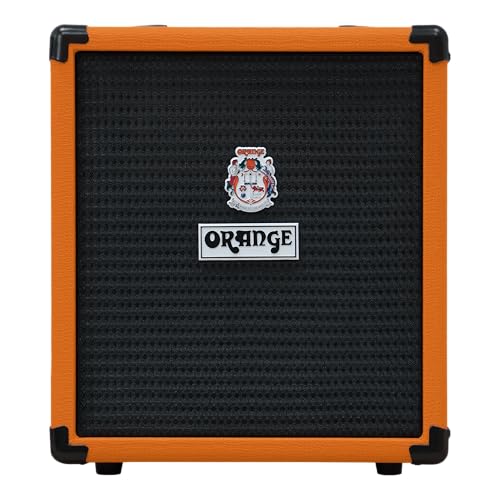
The Orange Crush Bass 25 provides a compact 25W option with active three-band EQ and a parametric mid control, focusing on punchy, responsive bass tones. It’s ideal for players who appreciate a more aggressive mid-range presence and direct-on-stage tone. Limitation: the feature set is leaner than some competitors’ larger models, so extremely two-channel versatility may be limited in this price range.
Buying Guide: Practical Considerations for Your Bass Amp Purchase
- What room size will you play in? For home practice, 15–25W units are usually sufficient; for rehearsals or small venues, 40W or more is a better fit.
- Do you need built-in effects or overdrive? If yes, prioritize models with an integrated overdrive or contour control to shape tone on the fly.
- Is portability important? Lightweight, compact combos weigh less and are easier to transport, but may offer less headroom than larger cabs.
- What connectivity do you require? Aux inputs are useful for backing tracks; headphone jacks support quiet practice; Bluetooth and USB/OTG options can aid recording and livestreaming.
- Speaker size and type matter. Larger speakers (10″–12″) deliver bigger bass presence and breakup, while smaller speakers are more portable but less headroom.
- Budget and future needs. A modestly priced 25–40W model can handle small gigs and practice, then scale up as your playing evolves.
Frequently Asked Questions
- What wattage is best for home practice? Generally, 15–25 watts is sufficient for most home spaces and small rooms.
- Should I choose a model with built-in overdrive? If you want a ready-to-go drive tone without pedals, choose a model with an overdrive circuit or contour control.
- Is a separate cabinet better than a combo? For portability and simplicity, a combo is typically best; separate head and cabinet are preferred for larger gigs and precise sound control.
- Can I use these amps with headphones? Many models include headphone jacks, which is ideal for late-night practice without disturbing others.
- Do Bluetooth-connected amps offer reliable recording? Bluetooth helps with backing tracks and demos, but consider dedicated audio interfaces for higher-fidelity recordings.
- What should I consider when upgrading later? Look for higher wattage, a larger speaker system, versatile EQ, and convenient connectivity if you anticipate larger venues or live performances.