Bitcoin mining software options range from simple educational devices to compact, low-power solo miners ideal for home setups. This guide helps buyers choose the right tool based on power use, ease of use, and learning value. The top picks here are best for beginners learning blockchain concepts, while one or two options suit hobbyists seeking quiet, energy-efficient operation. Below is a quick table summarizing the featured products to aid side-by-side comparisons.
| Product | Best For | Power Use | Key Benefit |
|---|---|---|---|
| Kakaone Bitcoin Miner | Educational learning | 1.5W | 2.8″ TFT display for real-time status |
| Bitaxe Gamma 602 | Beginners seeking higher hash with low power | 35W | Open, compact desktop miner with Web control |
| Heltec Bitcoin Lottery Miner NerdMiner V2 | Learning with real-time monitoring | 1.5W | 2.8″ display and easy WiFi setup |
| POWER MINING Bitaxe Gamma 602 | European-made, compact ASIC option | 18W | BM1370 chip, low energy, USB-C access |
| Freenove Bitcoin Miner Solo Lottery | TEst projects with ESP32 | Low power by design | 4.0″ touch display module |
| NerdQaxe++ Silent Miner | Quiet, 24/7 home mining | ~100W | 4× BM1370 chips, AxeOS open-source |
Kakaone Bitcoin Miner Solo Learn Kit

The Kakaone Bitcoin Miner offers a 1000 KH/s hash rate in a compact, educational package. Best for beginners and hobbyists who want hands-on blockchain principles and a visual status display. The device features a 2.8″ TFT screen showing mining status, hash rate, power use, and WiFi status in real time. It operates at about 1.5W, enabling 24/7 use with minimal electricity cost. A potential limitation is the need to upgrade firmware to Version V2.0.02 to prevent 80% operation stalls. This miner includes pre-installed test wallet data that should be cleared before personal configuration.
Who it’s best for: students, educators, and curious hobbyists who want a low-cost, visible learning tool without heavy electrical needs.
Why chosen: combines education with real-time monitoring and low power, making it an attractive starter for solo mining experiments.
Bitaxe Gamma 602 Open-Source Miner

The Bitaxe Gamma 602 packs 1.8 TH/s with a 35W footprint using the BM1370 chip. It’s a strong choice for beginners and enthusiasts who want solid solo mining capability without high electricity costs. The unit’s compact, desktop-friendly design and built-in WiFi allow straightforward web-based control and monitoring.
Best for: users seeking a higher hash rate than entry-level devices without a major power bump. Better for: home offices where noise and heat must stay contained. Caution: higher hash rate comes with more heat than ultra-low-power models, so ensure adequate ventilation.
Heltec NerdMiner V2 Solo Miner
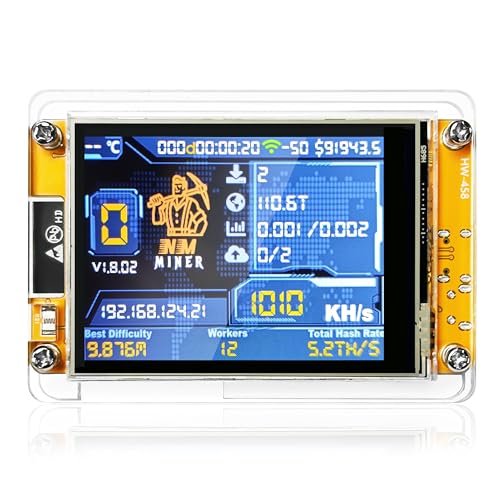
The Heltec Bitcoin Lottery Miner NerdMiner V2 uses a 1000KH/s hash rate with a compact, silent 2.8″ display for real-time status. It’s notable for its low power draw (1.5W) and fanless operation, making it suitable for quiet home or office environments. The 2.8″ screen provides live metrics, removing the need for external monitoring devices.
Best for: those who want a visually informative miner with minimal noise. Choose this if: you value straightforward on-device monitoring and energy efficiency. Limitation: slightly lower raw throughput compared to larger ASICs means slower progression on high-demand mining experiments.
POWER MINING Bitaxe Gamma 602 Pro
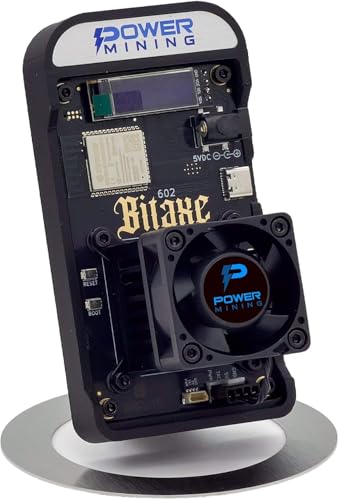
POWER MINING’s Gamma 602 leverages the BM1370 chip (the same lineage as the Antminer S21 Pro) delivering up to 1.1 TH/s at 18W. This European-built miner emphasizes reliability and open-source accessibility via AxeOS. It’s a strong option for an all-in-one home mining setup with a focus on energy efficiency.
Best for: buyers who want a European-made, professional-grade open-source miner. Better for: compact environments where power efficiency is essential. Caution: open-source firmware may require more setup knowledge for optimal configuration.
Freenove Solo Lottery Miner with ESP32

The Freenove Bitcoin Miner Solo Lottery Miner centers on the ESP32 platform with a 4.0″ touch display. It’s designed for hobbyists exploring miner software and hardware integrations. Initial setup may require a computer to install or upgrade miner software, and the device uses WiFi and Bluetooth 4.2 LE for connectivity. The device’s display and 240 MHz dual-core processor support educational experiments and code tutorials.
Best for: students and makers who want a programmable miner with a hands-on learning curve. Choose this if: you want a display-rich, programmable miner to practice firmware and software development. Caution: initial software setup may be more involved than plug-and-play devices.
NerdQaxe++ Silent Miner

The NerdQaxe++ Silent Miner provides 6 TH/s at 100W through 4 BM1370 ASIC chips, emphasizing quiet operation with a premium low-noise cooling approach. It supports AxeOS open-source firmware and offers both 2.4G Wi-Fi and Ethernet connections. This option is ideal for continuous, around-the-clock solo mining in a living space with minimal disruption.
Best for: serious hobbyists seeking high throughput in a quiet setup. Better for: users who want flexible firmware options and easy pool or solo connections. Caution: higher power draw requires adequate power supply and cooling in small spaces.
Buying Guide
Key considerations when choosing bitcoin mining software hardware for home use:
- Power consumption vs. hash rate: Balance energy use with expected mining output to avoid large utility bills.
- Noise and heat levels: Quiet designs are preferable for living spaces or shared spaces.
- On-device monitoring: Displays and web interfaces help track status without extra gear.
- Setup complexity: Some devices are plug-and-play; others require firmware updates or software installations.
- Open-source firmware: Offers customization but may require more technical knowledge.
- Hardware reliability and footprint: Compact designs suit desks or small deskside spaces.
Frequently Asked Questions
- What is solo mining versus pool mining?
Solo mining tries to mine independently; pool mining shares rewards among participants. For hobbyists, solo mining with visible status can be educational, while pool mining offers more consistent rewards. - Is a low-power miner less profitable?
Low-power devices reduce electricity costs but may have lower hash rates, potentially extending the time to profitability. - Do I need special software to run these miners?
Some devices come with pre-installed software, others require firmware upgrades or downloads. Always follow the manufacturer’s setup instructions. - Can I use these miners at home legally?
Most compact miners are allowed in residential spaces, but check local power and noise regulations before installation. - What maintenance is required?
Most devices are fanless or low-noise and require minimal upkeep; periodic firmware updates can improve stability.