Looking for an affordable wildlife camera that delivers solid day and night images without breaking the bank? This guide highlights five budget-friendly trail cameras that balance price with practical features for wildlife observation, land management, or backyard monitoring. Best for first-time buyers, small property owners, or hikers who want dependable, easy-to-use devices. Below is a concise product snapshot table to help you compare at a glance.
| Product | Key Photo Specs | Best For | Limitations |
|---|---|---|---|
| KJK Trail Camera 36MP 2.7K | 36MP Photos, 2.7K Videos, 0.1s trigger | Active monitoring at night; wildlife in daytime | SD card not included |
| Punvoe Trail Camera 36MP 2.7K | 36MP Photos, 2.7K Videos, 0.2s trigger | Beginner-friendly setup | No app required |
| CEYOMUR 36MP HD Trail Cam | 36MP, simple controls | Easy operation for beginners | Basic feature set |
| WOSPORTS Mini Trail Camera | 30MP, 1080P Video | Compact and lightweight | Moderate range |
| Cadrali Solar Trail Camera | 4G LTE, 4K live video | Remote access and real-time viewing | Higher data costs possible |
KJK Trail Camera 36MP 2.7K Review

The KJK Trail Camera 36MP 2.7K is a compact, inexpensive option designed for wildlife monitoring and property surveillance. It captures 36MP stills and 2.7K video with sound during day and night, aided by a 2.0″ color screen for quick review on site. The built-in 850nm LEDs provide low-glow night vision out to about 75 feet, helping observers capture nocturnal activity without startling animals. Best for hobbyists who want clear day-night footage and a simple, no-frills setup. Caution: the package notes that an SD card is not included, so you’ll need to add one to start recording.
Who it’s best for: Beginners and budget-conscious wildlife watchers who want reliable day/night images without extra bells and whistles. Why selected: strong base features (high-resolution stills, 2.7K video, low-glow night LEDs) at a low price point.
GardePro E5S Trail Camera
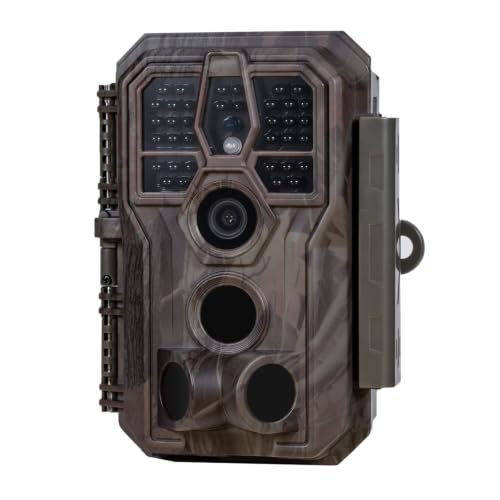
Note: The GardePro E5S is offered here for reference to similar budget-to-midrange capabilities. It captures 64MP photos and 1296P HD videos, with a rugged, weather-resistant build. This model emphasizes low-power operation and non-cellular use, which reduces disturbances and extends field life. Best for wildlife observers who want high-resolution imagery without cellular data demands. Caution: It relies on SD cards for storage, and does not feature built-in cellular connectivity in this variant.
Cadrali Solar Trail Camera 4G LTE

The Cadrali Solar Trail Camera emphasizes remote viewing with 4G LTE access, enabling live 4K footage and real-time app-based monitoring. It also supports remote setup from a mobile device and AI recognition to anticipate wildlife activity. Best for remote properties where constant on-site checking is impractical. Choose this if you want real-time monitoring and cellular connectivity; however, be aware of data plan considerations and potential extra costs for cloud storage or AI features.
CEYOMUR Trail Camera 36MP

The CEYOMUR Trail Camera targets entry-level users seeking reliable operation with straightforward controls. It features 36MP images and 850nm night vision to capture color daytime shots and clear black-and-white nighttime images. Best for beginners, homeowners, and hunters who want a simple, dependable camera that’s easy to learn. Caution: It includes 8 AA batteries and an SD card note in the description, which affects initial cost planning.
WOSPORTS Mini Trail Camera

The WOSPORTS Mini Trail Camera offers a compact footprint with 30MP photos and 1080P video. Its small, camouflaged design makes it easy to hide in natural settings, while the infrared night vision reduces wildlife disturbance. Best for hikers or property owners needing a discreet, lightweight camera for quick deployment. Limitation: range and resolution are modest compared to higher-end models, which may matter for larger properties or detailed nocturnal behavior.
Buying Guide: Key Purchase Considerations
- What will you monitor and where? For dense vegetation or longer ranges, prioritize higher trigger speed and wider detection angles (0.1–0.2 seconds; 120–130°) to capture quick wildlife movements.
- Night vision needs: Do you require color daytime images with reliable infrared night vision? Look for 850nm LEDs with adaptive illumination to reduce overexposure.
- Power and storage: Non-cellular cameras save on data costs but require regular battery changes or solar options. Confirm SD card compatibility and capacity fits your recording plan.
- Connectivity: Cellular models (4G LTE) provide remote viewing but may incur data charges and setup complexity. For remote sites, consider cameras with built-in GPS or cloud options.
- User-friendliness: Beginners benefit from models with simple interfaces, built-in screens, and clear setup guides. Avoid those that demand extensive technical steps.
- Durability: If deployed outdoors year-round, IP ratings (IP66 or higher) and rugged housings improve reliability in rain, dust, and temperature fluctuations.
Frequently Asked Questions
- What is a good budget wildlife camera for beginners? Answer: Look for models with straightforward controls, reliable night vision, and a clear stills/video balance—models like entry-level CEYOMUR or Punvoe variants fit this profile.
- Do I need cellular connectivity for wildlife cameras? Answer: Not always. Cellular models enable remote viewing, but non-cellular options offer longer battery life and lower ongoing costs.
- How important is trigger speed? Answer: Very important. A faster trigger (0.1–0.2 seconds) reduces missed shots when animals move quickly through the frame.
- Does night vision affect wildlife disturbance? Answer: Yes. Low-glow infrared LEDs (around 850nm) provide better concealment and clearer night images without startling wildlife.
- What storage do I need? Answer: Choose SD cards with enough capacity for your desired recording duration and video resolution; some models specify SD card requirements in their notes.