Answer: For interior photography, look for cameras with strong low-light performance, accurate color, and flexible framing. The top picks below cover compact point-and-shoots to feature-packed mirrorless options, all suited to capturing interiors, decor details, and mood lighting. Best for beginners: compact cameras with flip screens and simple controls. Best for vlog-friendly interiors: cameras with HDMI/webcam capability and solid autofocus. Best for serious detail: higher resolution sensors and robust lenses. The following table highlights the five most relevant products from the provided list.
| Product | Best For | Key Benefit | Limitations |
|---|---|---|---|
| Yatao 6K WiFi Flip Screen Digital Camera | Beginner vloggers | 6K video, dual lenses, flip screen | Integrated macro lens may be less optimal for deep interiors |
| LIYTIFOR 5K Digital-Cameras | Travelers and creators | 5K video, 80MP photos, dual screens | Limited official data on reliability |
| Duluvulu 4K Digital Camera | Creative shooters on the go | 4K video, 48MP photos, 3″ flip screen | Compact sensor may limit low-light performance |
| Saneen 64MP Dual Lens Camera | Selfie/Vlogging with high resolution | 64MP photos, 8K video, dual lenses | 16X zoom can reduce photo quality at full zoom |
| QUIOF 4K Autofocus Camera | Kids and beginners | 4K video, 48MP photos, 16X zoom | Basic build; not a dedicated interior specialist |
Yatao 6K WiFi Flip Screen Digital Camera

The Yatao model is designed for beginners who want high-quality content with minimal setup. It offers 6K Ultra HD video and 16x zoom, including a wide-angle lens for interiors and a macro lens for close details. A flip screen supports selfies and angled interior shots, while built‑in WiFi enables quick sharing to smartphones or use as a webcam via USB-C. This makes it a strong choice for interior spaces with mixed lighting where quick, versatile capture is valuable.
Best for: entry-level interior shooters who want simple, all-in-one capability and easy social sharing. The dual-lens setup helps cover wide rooms and close decor details. Caution: while 6K video is appealing, lighting in interiors may require additional light sources for optimal results.
LIYTIFOR 5K Digital-Cameras
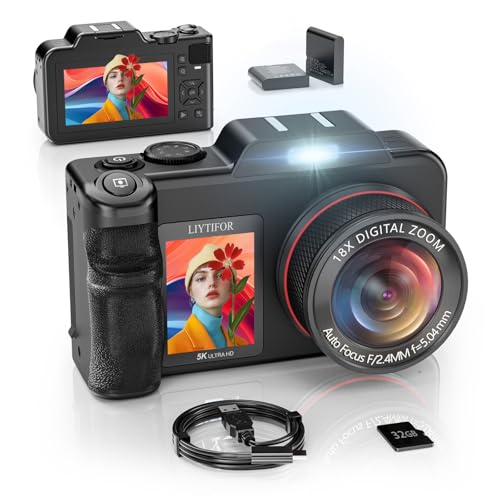
The LIYTIFOR LR1 camera emphasizes high resolution with 5K video and 80MP stills, plus a 3.5″ main screen and a front selfie screen for framing interiors without guesswork. The 18x digital zoom and a rotating filter dial offer versatility for wide rooms and close-up decor shots, making it suitable for interior designers or content creators who document spaces. Caution: the product page highlights multiple features; image quality in dark interiors will depend on lighting and sensor performance in real-world use.
Best for: interior walkthroughs and self-shot room tours where clear details matter. Choose this if you want strong resolution and easy self-framing. Caution: dual-screen convenience should be weighed against potential noise in low light.
Duluvulu 4K Digital Camera

This camera focuses on versatility for interiors with 4K video, 48MP stills, and a 3″ 180° flip screen, suited to vlog-style interior shoots and travel photography. The 16x zoom supports capturing architectural details from a distance, while features like a fill light and anti-shake stabilize shots in varying indoor lighting. Best for: interior creators who need a portable device with strong self-shot capability. Caution: Autofocus performance in dim rooms may require additional lighting.
Cameras For Photography, 64MP Dual Lens

The Saneen camera packs 64MP imagery with 8K video capability and dual lenses, plus a 4.0″ touch screen and Wi-Fi transfer. It is well suited for interior photographers who want sharp detail and the option to switch between front and rear lenses for selfies or demonstrations in a room. Best for: creators who record both interior stills and on-camera moments. Caution: 16x digital zoom can reduce image quality at maximum reach; use moderate zoom for best results in interiors.
QUIOF 4K Autofocus Camera

The QUIOF camera emphasizes user-friendly operation with 4K video, 48MP photos, and a 16x zoom. It includes an auxiliary fill light and various creative features, making it approachable for beginners who want to document interiors, rooms, or events with vibrant color. Best for: parents, students, and first-time interior photographers. Caution: build quality is basic relative to higher-end models, so handle with care in travel or on-location shoots.
Buying Guide: Interior Photo Camera Essentials
- Low-light performance: Interiors often have mixed lighting. Look for larger sensors, wide apertures, and good dynamic range.
- Resolution vs. practicality: Higher megapixels capture fine details, but require more storage and processing. Balance resolution with workflow needs.
- Autofocus and framing: For interior tours, reliable autofocus and a flip or tilt screen facilitates recording in tight spaces.
- Lens options: Wide-angle or kit lens flexibility helps capture whole rooms and architectural details.
- Connectivity: Built-in Wi-Fi, mobile apps, and webcam modes simplify sharing and on-site streaming.
- Portability vs. control: Compact cameras travel well, but larger setups or mirrorless bodies offer more manual control for consistent interiors.
What to consider by buyer type
- Beginner interior photographer: Look for easy menus, guided modes, and a flip screen for self-ops.
- Vlogger or real estate creator: Prioritize 4K/6K video, reliable autofocus, and webcam capabilities.
- Detail-focused shooter: Choose higher resolution stills and robust macro or wide lenses for decor textures.
Common interior shooting scenarios
- Bright rooms with windows: Favor cameras with good dynamic range to preserve both highlights and shadows.
- Dim interiors: Use cameras with effective high ISO performance and accessible light sources (built-in fill, external lights).
- Staged rooms: Wide-angle lenses help capture entire space, while mid-range zooms highlight furniture details.
FAQ
- What camera is best for interior photography on a budget?
– A model with a good balance of sensor size, lens options, and ease-of-use, such as compact mirrorless options, is typically most cost-effective for interiors. - Is a flip screen necessary for interior photography?
– It helps with framing in tight spaces and when shooting from a doorway or corner, making it highly convenient for interior work. - Should I prioritize high resolution or better low-light performance?
– Interior spaces often require better low-light capability; prioritize sensors with strong dynamic range and noise control, then consider resolution as a secondary factor. - Do I need 4K video for interior showcases?
– For virtual tours or social media, 4K provides crisp video, but stills quality and stabilization are equally important for interiors. - Is dual-lens versatility important for interiors?
– Dual lenses allow both wide room captures and close-up details, which is beneficial for interior storytelling. - Can these cameras be used as webcams?
– Several models support webcam via USB-C or dedicated apps, which is useful for live interior tours or streaming.