Answer: For underwater photography, you should choose a rugged, waterproof camera with good resolution, reliable autofocus, and long enough battery life to cover your dives or snorkeling sessions. This guide highlights five solid options for divers, snorkelers, families, and content creators, with clear reasons to pick each one and practical trade-offs.
Who this is for:
– Serious divers and content creators seeking high-resolution video and long-range autofocus.
– Beginners and casual snorkelers who want easy operation and safety in water.
– Families and kids who need buoyant, user-friendly models for pool or beach days.
– Adventure photographers who need rugged, multi-environment performance.
Product comparison at a glance
| Product | Best For | Key Benefit | Water Depth | Notes |
|---|---|---|---|---|
| 8K Underwater Camera (SPUNALP) | Content creators, adventurers | 8K video and 70MP photos | 33 ft / 10 m | Excellent detail; premium option |
| AKASO EK7000 4K30FPS | Casual adventurers, beginners | 4K video, EIS stabilization | 131 ft | Good value, versatile accessories |
| MUMUQ Floating Underwater Camera | Kids, family snorkelers | Floating, IP68 water protection | 5 m | Bright visibility, simple use |
| KODAK PIXPRO WPZ2 | Outdoor enthusiasts | Waterproof to 15 m, built-in Wi‑Fi | 15 m | Hardy, social sharing ready |
| YISENCE 4K Dual-Screen Underwater Camera | Active shooters, water sports | 4K with dual-screen design | 16 ft | Compact and easy to frame |
Best 8K Underwater Camera for Detail-Seeking Creators

The SPUNALP 8K Underwater Camera captures video at 8K UHD and photos at 70MP, delivering extreme detail for landscape shots and dynamic underwater scenes. Best for professional-looking vlogs, reef photography, and explorers who need maximum pixel density to crop without losing clarity. The camera is waterproof to 33 feet (10 meters) and constructed to resist dust and minor impacts, making it suitable for rugged trips. Autofocus aids sharp imagery in variable lighting.
Best for: Adventurers, travel-focused creators, and anyone who prioritizes pixel-rich footage. Better for long-form footage and large prints. Choose this if you require ultra-high resolution and can accommodate the heavier, larger setup.
Caution: The 8K workflow demands more storage and processing power; ensure your editing setup can handle 8K footage efficiently.
4K Action Power: AKASO EK7000

The AKASO EK7000 delivers solid 4K at 30fps with 20MP photos and built-in electronic image stabilization. It is designed for action and water sports enthusiasts who want smooth footage in challenging environments. With a waterproof case rated to substantial depths, this camera suits snorkeling, surfing, or pool days. The compact form and wide accessory ecosystem help you tailor it to various activities.
Best for: Beginners and casual shooters who want a budget-friendly, reliable waterproof option. Better for: low-light or fast-movement scenarios where stabilization matters. Avoid if you need native 4K60 or advanced pro features. Caution: Performance can vary in extreme depths; consider a protective housing if deeper dives are anticipated.
Floating Fun: MUMUQ Floating Underwater Camera

This kid-friendly camera floats and returns to the surface, making it an excellent pick for families and young snorkelers. It features IP68 waterproofing up to 5 meters, a bright yellow finish for visibility, and 48MP photos with 4K video. The design emphasizes ease of use, quick framing, and safety in water-centric environments.
Best for: Families and beginners seeking an accessible underwater camera for pool or shallow water. Better for: quick, light-duty capturing and teaching basic photography. Caution: Not designed for deep dives or professional-level underwater imaging.
All-Weather Adventure: KODAK PIXPRO WPZ2

The WPZ2 is built for true outdoor adventures, waterproof to 15 meters, shockproof, and dustproof. It includes built-in Wi-Fi for quick sharing and remote control of settings from a smartphone. Its rugged design makes it suitable for snorkeling, beach trips, hiking in wet conditions, and action sports where gear exposure is high.
Best for: Outdoor enthusiasts who want a dependable, share-ready underwater option. Better for: those who value easy wireless transfers and social sharing on the go. Caution: Battery life is sufficient for casual outings but may require spare power for extended trips.
Compact 4K Power: YISENCE 4K Dual-Screen

The YISENCE 4K Dual-Screen camera emphasizes quick framing with a secondary display, making underwater composition easier in bright conditions. It offers 4K video and 64MP photos, IP68-rated waterproofing to 16 feet, and a user-friendly autofocus workflow. The buoyant, compact form suits snorkel sessions, pool days, and shallow-water shoots where visibility is key.
Best for: Active shooters who want a compact option with flexible framing. Better for: social media-ready clips and fast setup. Caution: Depth rating is shallower than some diving-focused models; deeper underwater use may require additional protection.
Versatile 4K: YISENCE 4K With 16FT Depth and Dual Screen
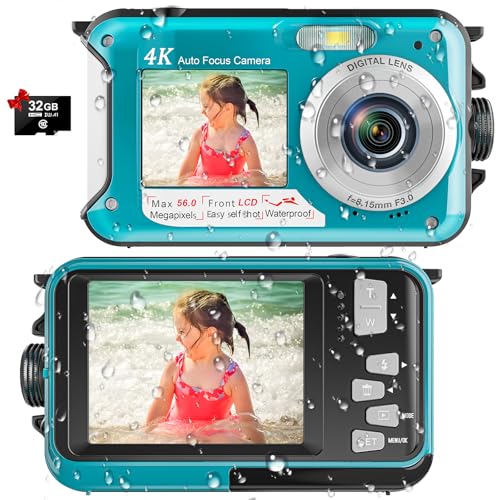
This model adds 4K video with a 64MP sensor and a practical 16-foot depth rating. The autofocus and IPS screen provide clear underwater previews, making it a solid middle-ground option for enthusiasts who want crisp images without stepping up to higher-cost, heavier setups. It remains suitable for snorkeling and shallow diving adventures.
Best for: Shallow-water photographers who want reliable autofocus and clear screens. Better for: users who want a balance of performance, size, and cost. Caution: The 16-foot depth limit may be restrictive for deeper dives.
Buying Guide: What to Consider When Choosing an Underwater Camera
- Intended use: Decide between casual pool days, snorkeling, or serious diving. Deeper-water models require robust housings or higher depth ratings.
- Resolution and video: Higher megapixels and 8K or 4K video offer more detail but demand more storage and processing power. Consider your editing workflow.
- Waterproof rating and depth: Look for IP68 or dedicated depth ratings. If you expect submersion beyond a few meters, confirm the depth and sealing standards.
- Autofocus and stabilization: Fast autofocus helps in active scenes. Electronic or optical stabilization improves handheld footage in water movement.
- Battery life and storage: Longer shoots need larger batteries and ample memory. Check if the camera supports expandable memory and what battery life to expect under water.
- Transfer and sharing: Built-in Wi‑Fi or app control can simplify quick transfers from underwater sessions to social platforms.
- Size and buoyancy: Buoyant, easy-to-handle models reduce the risk of losing gear in water. Floating designs are helpful for kids and shallow-water sessions.
- Accessories and compatibility: Check included housings, mounts, and compatibility with external mics or lenses if you plan to upgrade.
FAQ
- What is a good depth rating for casual snorkeling cameras?
For casual snorkeling, a depth rating around 10–16 feet is typically sufficient, but always verify real-world sealing and intended use.
- Is 8K underwater video worth it?
8K offers higher detail, but it requires more storage and processing power. For most casual users, 4K provides ample quality with easier handling.
- Should I buy a floating camera for water activities?
Yes. Floating designs help prevent loss and make retrieval easier, especially for kids and beginners.
- What features matter most for underwater autofocus?
Reliable autofocus in low light and fast-moving subjects helps keep marine life and action in frame. Look for cameras with responsive AF systems and good subject tracking.
- Do I need a separate underwater housing?
Many cameras come waterproof up to a rating, but deeper or professional setups may require protective housings for extended dives or higher-pressure environments.
- Which camera is best for family use?
A buoyant, easy-to-use model with 4K video and a user-friendly interface is ideal for families and kids, like the floating options or simpler point-and-shoot designs.