For parents seeking a first camera for preschoolers, these kid-friendly options balance durability, simple controls, and creative features. Best for curious children ages 3–9, each model helps young photographers explore pictures, videos, and imaginative play without fuss. The following picks are selected for ease of use, kid-safe design, and value. The table below compares key attributes at a glance.
| Product | Best For | Key Strength | Included SD Card |
|---|---|---|---|
| YEEHAO Kids Camera | Ages 3–9; beginners who want dual lenses | 48MP dual lenses, 1080p video, 16x zoom | 32GB |
| Goopow Kids Camera | Kids who like games and self-contained features | 1080p video, multiple games, self-contained fun | Includes card reader option |
| GPOSY Digital Camera | Parents seeking dual-camera design for selfies | 1080p video, 48MP, 2.0″ IPS screen | 32GB |
| Seckton Upgrade Kids Selfie Camera | Beginner photographers who want long battery life | 1080p video, auto focus, dual cameras | Includes SD card |
| VTech KidiZoom Pix Plus | Very young beginners exploring effects | 4x zoom, 40+ effects, talking photo features | Depends on package |
The following sections highlight five top options from the listed products. Each entry explains who it’s best for, why it’s a fit, and a practical caveat to keep expectations aligned with real-world use.
YEEHAO 48MP Dual Lens Kids Camera

Best for ages 3–9 who want a more capable entry camera with dual lenses. This model offers a 48MP front/rear dual lens and 1080P video, plus selfie mode and a timer for group shots. It supports fun stickers to decorate photos and includes a 32GB SD card for extra storage. The 16x digital zoom opens new photographic possibilities for kids who want to explore perspective from a distance. Best used for simple, supervised shot sessions. Caution: the complexity of 16x zoom may be challenging for younger children without guidance.
Goopow Kids Camera Toys 3-8

Best for kids who appreciate built-in games and simple video capture. This camera supports 1080P video, selfie mode, and multiple educational games plus scene options. It’s a compact, kid-friendly design with non-toxic materials and a noticeable LCD screen. It’s great for short play sessions and classroom-style activities. Caution: some features rely on internal games rather than external apps, which limits expansion for older preschoolers.
GPOSY Dual-Camera Kids Camera

Best for families who want a true selfie-friendly kid camera with a 2.0″ IPS screen and dual front/rear lenses. It records 1080P video and supports up to 48MP photos. The 32GB SD card is included, and a lanyard helps kids carry it on outings. It also offers educational games and photo filters. Caution: the device may feel small for older preschoolers with larger hands; supervision helps prevent drops.
Seckton Upgrade Kids Selfie Camera
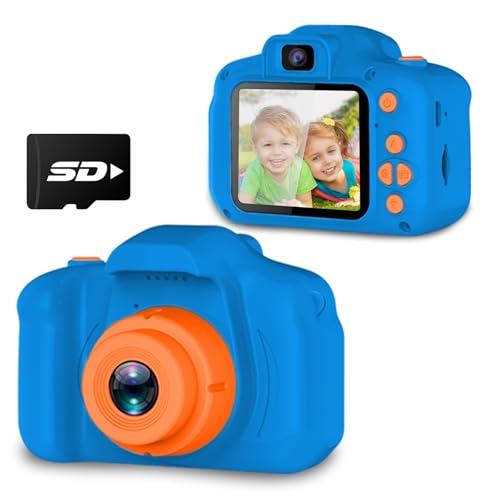
Best for aspiring selfie photographers who want a long-lasting battery. This camera features auto focus, 1080P video, dual cameras for easy selfies, and a portable lanyard. It includes a video and voice recorder for varied play modes. Caution: battery life is sufficient for 1–2 hours, so plan for shorter sessions or provide quick charging breaks during playdates.
VTech KidiZoom Camera Pix Plus

Best for very young beginners who benefit from themed effects. This 2.0-megapixel camera offers a 1.8″ screen, four built-in games, talking photo features, and over 40 camera effects including frames and stamps. It’s ideal for introducing kids to photography with simple, fun interactions. Caution: image quality is lower than higher-megapixel models, which may be noticeable in bright or detailed scenes.
Buying Guide
What should a preschool camera prioritize?
Durability, simple controls, and age-appropriate features top the list. Look for shockproof builds, easy one-button shooting, and clear LCD screens. A safe, non-toxic exterior is important for younger children.
Is higher megapixels always better for kids?
Not necessarily. For preschoolers, a camera with a bright screen and forgiving display is more important than absolute image resolution. Dual lenses or selfie modes can encourage creativity without requiring expert technique.
What about storage and battery life?
A device with a built-in rechargeable battery and a reasonably large SD card helps avoid frequent interruptions. A 32GB card is a good baseline to store photos and videos from multiple play sessions.
Which features support learning and imagination?
Photo filters, stickers, frames, and simple games stimulate creativity. Selfie modes and basic video recording enable children to tell stories through pictures and short clips.
Care and safety tips for parents
Supervise initial use to teach proper handling and basic operation. Use protective cases, keep away from water, and remind kids to return to camera-friendly environments for editing and viewing their work.
How to choose among the top picks?
Consider a child’s age, hand size, and interest in photos or videos. If they love selfies, choose models with dual cameras or front-facing lenses. If they enjoy stories, a camera with effects and games may keep them engaged longer. For very young or rough-handling environments, prioritize durable designs and a simple interface.
FAQ
- What age is best for a kid’s camera? Most models target ages 3–9, with features designed for early explorers and budding storytellers.
- Do these cameras require smartphones? No. They operate independently, saving photos to an included SD card.
- Can kids edit photos on the camera? Some models include built-in filters and frames; others require a computer or card reader for editing after transfer.
- Is 1080P video good for preschoolers? Yes, it provides clear clips without overly demanding storage needs for the kid-friendly range.
- Which is the best value for money? It depends on desired features. For selfies and dual lenses, a mid-range option with 32GB storage often balances cost and capabilities.