Answering your search for a beginner-friendly digital piano, this guide highlights five reliable options that balance playability, features, and value. Each pick is suited for new players—from kids to adults—who want authentic feel, grow-with-you features, and portability. Read on to compare which model best fits solo practice, lessons, or casual jam sessions, and discover practical buying tips to make the right choice.
| Product | Best For | Key Highlight |
|---|---|---|
| Alesis 88 Key Keyboard | Most complete beginner kit | Rich built-in sounds and 160 rhythms |
| Yamaha P71 88-Key | Authentic piano feel | Weighted action, quiet operation |
| UISCOM 88-Key Keyboard | Connectivity and practice apps | MIDI-USB, Bluetooth, multiple demos |
| Jdfdexc 88-Key Semi-Weighted | All-in-one starter bundle | Stand, pedal, and more |
| RockJam RJ761 61-Key Kit | Budget portable practice | Built-in learning features and recording |
Alesis 88 Key Keyboard Piano With 480 Sounds

The Alesis 88-key keyboard is designed for beginners who want a complete, ready-to-practice setup. It includes built-in speakers for immediate sound and a broad sound library, making it suitable for learners exploring different genres. The 88 full-size, touch-sensitive keys simulate an acoustic piano, helping players develop proper finger technique from the start.
- Best for: Beginners seeking a feature-rich first instrument with a vast sound library.
- Why selected: 480 realistic sounds and 160 rhythms provide diverse practice and experimentation options.
- Caution: Built-in speakers deliver solid audio, but external monitoring can enhance playback clarity during lessons.
Yamaha P71 88-Key Weighted Action Digital Piano

The Yamaha P71 offers an authentic acoustic piano feel with weighted action, which is a strong choice for beginners aiming to build legitimate finger strength and technique. Its dedicated functions are streamlined for focused practice, with 10 voices to explore beyond the standard piano tone. The compact design makes it a manageable entry point for small rooms or apartment living.
- Best for: Players prioritizing genuine piano touch and a straightforward learning curve.
- Why selected: Weighted keys better mimic an acoustic piano, aiding technique transfer to real pianos.
- Caution: Lacks a large built-in sound library compared to some beginner bundles; external apps can widen options.
UISCOM Digital Piano Keyboard For Beginners
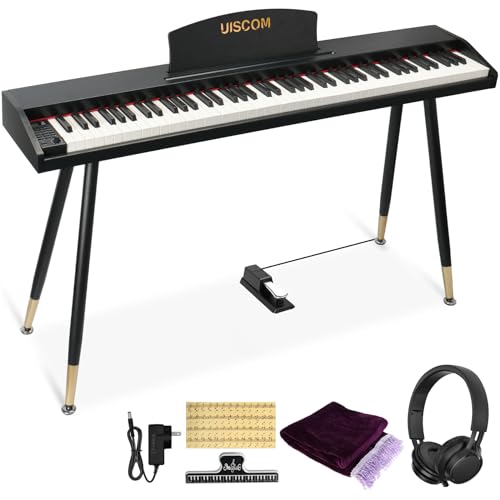
UISCOM’s full-size 88-key keyboard emphasizes connectivity and practical learning tools. It includes MIDI-USB output, Bluetooth, and compatibility with popular practice apps, making it a strong option for players who want to integrate digital practice into daily routines. The semi-weighted keys offer a balanced feel for beginners transitioning from lighter keyboards to more expressive playing.
- Best for: Beginners who want easy app integration and flexible learning options.
- Why selected: MIDI and Bluetooth connectivity expand lesson and recording opportunities.
- Caution: Some users may prefer fully weighted keys as skill progresses; consider upgrading later if needed.
61 Key Portable With Lighted Keys From JIKADA

The JIKADA 61-key keyboard is a compact option with teaching modes, lighted keys, and an onboard mic for singing along while you play. It’s designed for beginners who want a guided, interactive learning experience and the flexibility to practice late at night with headphones. The built-in speakers provide immediate sound without extra gear, while the teaching features help establish basic music theory and note reading.
- Best for: Young learners or beginners looking for guided instruction and singing along.
- Why selected: Lighted keys and teaching modes support rapid skill acquisition.
- Caution: Smaller keyboard size means fewer octave options for advanced pieces; upgrade later if needed.
Buying Guide: Digital Pianos For Beginners
What should beginners prioritize?
Key action and feel are fundamental. A semi-weighted or weighted keyboard helps build finger strength and real-piano coordination. If space or budget is limited, a 61-key model can work temporarily, but plan for 88-key upgrades as skills grow.
How important are built-in features?
Built-in lessons, demo songs, and learning modes can accelerate early progress. Look for devices with a range of rhythms and tones to practice performance and style; practice tools like recording and playback support self-assessment.
Should I focus on connectivity?
USB-MIDI and Bluetooth allow you to connect to apps and software for lessons, transcriptions, and composition. If you plan to use external speakers or headphones, verify input/output options for convenience and sound quality.
What about portability and setup?
If you intend to practice in multiple rooms or travel for lessons, consider battery or AC power options, compact stands, and included accessories like pedals and stands. Bundles that provide a stand, pedal, and headphones offer better initial value.
How to choose between 61-key and 88-key models?
Beginner players can start with 61 keys for shorter-term affordability, but 88 keys are recommended for full-tonal range and better long-term transfer to traditional pianos. If you expect to study classical pieces, prioritize 88 keys and weighted action sooner.
Frequently Asked Questions
- What is the best beginner piano for a tight budget?
Consider 61-key kits with essential accessories; they provide quick-start access at lower cost, but plan for a future 88-key upgrade as you advance.
- Do beginners need weighted keys?
Weighted or semi-weighted keys help mirror the feel of an acoustic piano, aiding technique development and dynamics.
- Is Bluetooth connectivity important for beginners?
Bluetooth or USB-MIDI enables easy connection to learning apps and recording software, enhancing practice versatility.
- Should I buy a bundle or separate parts?
Bundles that include a stand, pedal, and headphones reduce setup time and provide better upfront value for new players.
- How long should a beginner practice each day?
Short, consistent sessions (15–30 minutes) several times a week help build technique without fatigue, gradually increasing duration as skill improves.
- When is it time to upgrade to 88-key or higher-end features?
Upgrade when you consistently reach the upper end of musical pieces on your current keyboard or when you start focusing on classical repertoire requiring full range and dynamic control.