Looking for an epoxy resin glue that dries clear, sets quickly, and bonds across materials? This guide highlights five top epoxy products ideal for household repairs, automotive touch-ups, and DIY projects. Each product is best for different use cases—choose based on material compatibility, set time, and work-life. The table below compares core traits at a glance to help you decide faster.
| Product | Best For | Set Time | Notes |
|---|---|---|---|
| Gorilla 2 Part Epoxy (5 Minute) | General repairs, vertical surfaces | 5 minutes | Dries clear; gap filling |
| J-B Weld ClearWeld 5 Minute | Transparent bonds on metal, ceramic, plastic | 5 minutes | 1:1 syringe mix; clear cure |
| Limino Epoxy Glue (3.5oz) | Wide variety of materials, DIY projects | 5 minutes | 2-part syringe; heat/cold resistant |
| Gorilla 2 Part Epoxy (Pack of 2) | Multiple repairs, spare kit | 5 minutes | Dries clear; good gap filler |
| BRAMPTON Extra Strength Epoxy (8 oz) | Tile, metal, ceramic, wood; outdoor use | 20 minutes work life | Waterproof; sandable and paintable after cure |
Gorilla 2 Part Epoxy, 5 Minute Set

Best for: General repairs where a quick, strong bond is needed and you want a near-invisible finish. This kit provides a 5-minute set time and can act as a gap filler on uneven or vertical surfaces.
Why selected: The clear-drying formula helps maintain a clean look on visible repairs. The combination of a fast set and gap-filling capability makes it versatile for household and automotive tasks.
Caution: Best used on clean, dry surfaces. Repositioning is limited after initial set, so plan your alignment quickly.
J-B Weld ClearWeld 5 Minute Epoxy Syringe

Best for: Transparent bonds on metal, tile, glass, and most plastics where visibility matters. The syringe enables precise 1:1 mixing and easy re-use thanks to a resealable cap.
Why selected: It cures quickly (5 minutes) and leaves a clear appearance, making it ideal for repairs where a cosmetically clean bond is needed.
Limitation: Cure strength is substantial, but larger structural loads may require longer cure times or alternative products.
Epoxy Glue — 5 Minute Fast Repair (Limino)

Best for: A multi-purpose glue suitable for ceramic, metal, wood, plastic, and many everyday repair scenarios. The 1:1 syringe format simplifies mixing for beginners and pros alike.
Why selected: It features fast repair with 5-minute setting and a robust 24-hour full cure. The product offers relatively broad adhesion and strong resistance to temperature shifts.
Caution: While strong, it is advisable to test on porous or flexible materials first to ensure optimal bonding behavior.
Gorilla 2 Part Epoxy, Clear (Pack of 2)
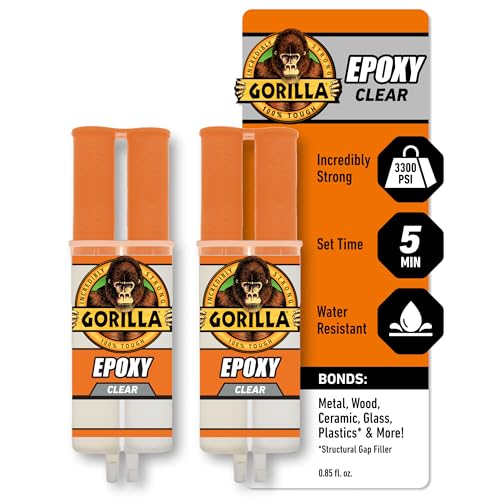
Best for: Projects needing two separate epoxy kits, offering flexibility for multiple repairs or color-matched applications.
Why selected: The clear epoxy stays visually unobtrusive and provides a durable bond with a 5-minute set time, supporting quick turnarounds.
Limitation: When using two kits, ensure you manage both sets consistently to avoid inconsistent curing across parts of a project.
BRAMPTON Extra Strength Epoxy (8 oz)

Best for: Heavy-duty, outdoor or high-moisture settings where a robust bond and weather resistance are needed. Works well for tile, metal, ceramic, glass, wood, and stone.
Why selected: It offers a generous work life (around 20 minutes) and a longer cure, with full strength suitable for outdoor use after curing. It is also sandable and paintable after cure.
Caution: Longer cure times can delay final finishing; plan projects that need longer handling times accordingly.
Buying Guide: Epoxy Resin Glue Essentials
- What surface are you bonding? Some epoxies adhere best to metal and ceramic, while others perform well on wood or plastics. Look for a formula rated for your primary materials.
- What set time do you need? Quick-setting formulas (5–10 minutes) are ideal for small repairs; longer work-life options (10–20 minutes) suit larger projects.
- Is transparency important? Clear cures are preferred for visible repairs, especially on glass, tiles, and metal components.
- Temperature and curing conditions matter. Some epoxies withstand temperature swings and outdoor exposure, while others are best for indoor use.
- Application method and packaging. Syringe-based mixes reduce mess and help achieve precise ratios; two-part syringes can be convenient for beginners.
- Strength and hardness. Check tensile strength and Shore hardness when repairing load-bearing parts or items subjected to impact.
FAQ
- Q: How long does epoxy take to cure fully? A: Most epoxies begin handling in minutes, with full cure typically ranging from 24 hours to 15 hours depending on the product and conditions.
- Q: Can epoxy be used on metal and plastic together? A: Yes, several epoxies are formulated to bond metal to plastic, but check the product’s material compatibility for best results.
- Q: Do epoxy repairs need a clamping system? A: Clamping or securing parts during the initial set improves bonding, especially for vertical surfaces or larger pieces.
- Q: Is a clear epoxy stronger than a colored one? A: Strength largely depends on the formulation, not color. Clear epoxies are often chosen for aesthetic reasons, while strength is driven by resin and hardener chemistry.
- Q: Can epoxy be sanded or painted after curing? A: Many epoxies can be sanded and painted once fully cured; verify curing levels and finishing recommendations for your product.