Answer: A GPS-enabled fitness tracker helps you map runs, rides, and daily activity with precise location data. This guide highlights five top options that balance built-in GPS, health metrics, battery life, and everyday comfort, so you can pick the right one for your activities—whether you’re a casual walker, a dedicated runner, or a multi-sport enthusiast. The top picks below suit: runners and outdoor athletes, smart-watch lovers who want coaching, and budget-conscious gym-goers seeking reliable trackers with strong health features.
Overview table of selected products:
| Product | Best For | Key Benefit |
|---|---|---|
| Fitbit Google Air | All-day health tracking with premium coaching | Lightweight, screenless comfort with advanced sensors |
| Google Fitbit Charge 6 | Advanced fitness analytics & built-in GPS | Real-time heart rate and diverse activity modes |
Note: The selected products emphasize GPS capability, health monitoring, battery life, and wearability. Each option serves different preferences—from screenless comfort to visible displays and coaching features.
Fitbit Google Air – Screenless Activity Tracker
Fitbit Google Air offers a highly comfortable, screenless design for those who prefer subtle wear. Best for users who want continuous health tracking without visual distractions, such as busy professionals or sleepers who don’t want a screen lit at night. Features include 24/7 health tracking with Google Health integration and an emphasis on comfortable, one-size-fit-all wear (130-210 mm). The device relies on advanced sensors and new algorithms to improve accuracy over time. A caution: screenless models can be harder to quickly glance at metrics during workouts.

Best for: People who want streamlined wearability and long battery life, with reliable baseline health metrics and adaptive coaching through Google Health.
Google Fitbit Charge 6 – Fitness Tracker
Google Fitbit Charge 6 is well-suited for athletes who want robust, real-time data. Best for runners, cyclists, and gym-goers who value built-in GPS, multiple exercise modes, and heart-rate monitoring around the clock. It also supports 24/7 activity tracking and smart features like stress management scores and Sleep Scores to guide recovery. A limitation to consider: real-time data can be power-intensive, affecting battery life with heavy GPS use.

Best for: Users who want precise heart-rate tracking, numerous exercise modes, and integrated coaching that adapts to daily life.
Amazfit Bip 6 Smart Watch – GPS & 1.97″ AMOLED
Amazfit Bip 6 blends style with strong outdoors features. Best for budget-conscious athletes who still need GPS and long battery life. It offers 140+ workout modes, AI coaching, and water resistance up to 50 meters. The 1.97″ AMOLED display provides clear readability in sunlight. A potential trade-off: some users may find the UI less intuitive than premium brands.

Best for: Sports enthusiasts seeking a feature-rich GPS watch at a lower price point and enduring battery life.
HUAKUA Smart Watch – Built-in GPS & Calls
HUAKUA Smart Watch emphasizes standalone GPS and direct calling from the wrist. Best for outdoor runners, hikers, and cyclists who want to travel light and stay connected without pulling out a phone. The 1.95″ full-touch display improves readability, especially in bright conditions. Limitation to consider: some users may prefer a larger ecosystem of third-party apps and watch faces.
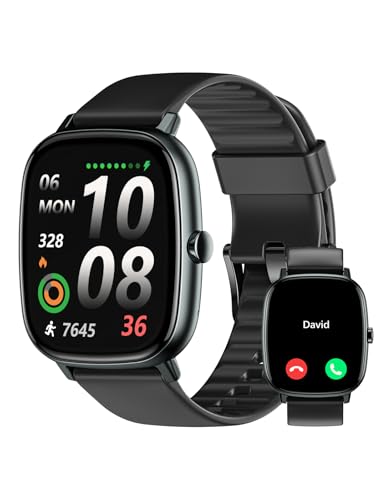
Best for: People who value independent GPS tracking and the convenience of making and answering calls from their wrist.
Garmin vívoactive 5 – Health & Fitness GPS Smartwatch
Garmin vívoactive 5 brings Garmin’s fitness-tracking heritage to a color AMOLED display and extended battery life. Best for multisport athletes who want a comprehensive health overview, including a sleep score, HRV-based insights, and energy monitoring (Body Battery). The device emphasizes a holistic view of health and performance with guided coaching and robust metrics. A caveat: Garmin’s interface can be more data-dense, which may require a learning curve for casual users.

Best for: Athletes who want a mature activity ecosystem with deep health metrics and long-term training insights.
Buying Guide
What to consider when choosing a GPS fitness tracker
- GPS quality and accuracy: Built-in GPS is essential for precise distance, pace, and route tracking during outdoor activities. Look for devices with established GPS performance and compatibility with GLONASS or Galileo where available.
- Health metrics: Evaluate which metrics matter most—heart rate, blood oxygen, sleep tracking, stress or recovery scores, and HRV. Some models include advanced sleep coaching and health trends, which can aid long-term goals.
- Display and readability: If you train outdoors or in bright light, a clear display (AMOLED often) with good brightness and legibility is important. Screenless designs can be comfortable but require phone-based data access.
- Battery life: Consider typical GPS-on usage and overall smartwatch mode. Longer battery life reduces frequent charging, especially on extended outdoor trips.
- Fitness modes and coaching: The availability of sport modes and adaptive coaching can help tailor workouts. Some devices offer daily readiness or personalized coaching based on data trends.
- Smart features and ecosystem: Notifications, music control, and third-party app compatibility enhance daily use. Some watches pair best with specific phone platforms or services.
- Comfort and form factor: Weight and strap material influence comfort during sleep and long training sessions. Screenless options can be lighter but may restrict quick data checks.
FAQ
Q: Do GPS trackers require a phone to use GPS?
A: Some models have standalone GPS, while others rely on a phone’s GPS. Standalone GPS provides location without carrying a phone, but may consume more battery.
Q: Which tracker is best for runners?
A: Devices with built-in GPS, multiple running metrics, and coaching features are ideal. The Charge 6 and Garmin vívoactive 5 are strong runner-oriented options.
Q: Can I track sleep with these devices?
A: Yes. Most listed models include sleep tracking with various sleep-stage insights and a sleep score to guide recovery.
Q: Are there waterproof options?
A: Yes. Most fitness trackers are water-resistant to at least 5 ATM or 50 meters, suitable for swimming or rain.
Q: Do these watches offer smart notifications?
A: Many provide call, message, and app notification alerts. Check each model for supported apps and notification controls.
Additional Considerations
For users who want a lighter, screenless option, Fitbit Google Air emphasizes comfort and continuous health tracking. For those who prioritize a broad feature set and coaching, Charge 6 and Garmin vívoactive 5 deliver deep analytics. If budget is a factor, Amazfit Bip 6 offers strong GPS and many modes with long battery life. HUAKUA provides independent GPS and direct wrist calls for on-the-go connectivity.