Answering the top question for guide-minded anglers: which fly-tying tools provide precision, efficiency, and portability? This guide highlights five well-rounded tool kits that suit beginners, hobbyists, and seasoned tiers alike. You’ll learn who each kit fits best, what core tools they include, and practical trade-offs to consider before buying. Use the quick buying table to compare essentials at a glance and read detailed notes to pick the right kit for your tying style and travel needs.
| Product | Best For | Key Benefit |
|---|---|---|
| Beginner to intermediate | Versatile set in retro bag | |
| Progressing tiers | Premium vise and wooden box | |
| On-the-go launches | Compact case with core tools | |
| Travel and quick fixes | Compact, multi-tool bundle | |
| Structured, frequent use | True rotary vise with robust build |
XFISHMAN Fly Tying Tools 12-in-1 Kit
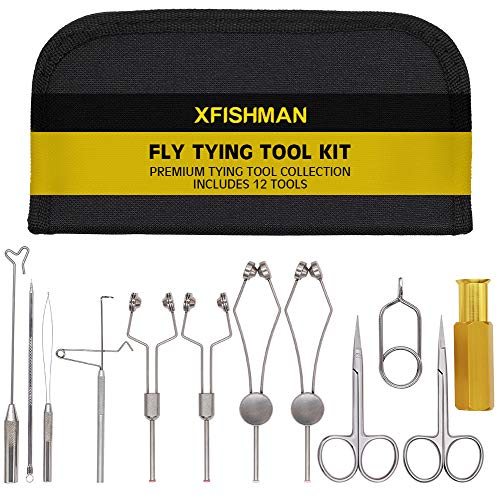
The XFISHMAN kit bundles 12 essential fly-tying tools into a single, economical package designed for both beginners and intermediates. It includes multiple bobbins to handle different thread sizes and a retro tool bag for organized transport. Best for anglers starting out who want a broad, affordable baseline set that covers common tying tasks. A limitation is that the kit emphasizes value and versatility over premium individual components, making long-term upgrades a consideration for serious tiers.
Colorado Anglers Fly Tying Standard Tool Kit

This starter-to-pro kit centers around a premium rotary vise and a wooden box for elegant storage. It includes a bobbin, scissors, whip finisher, and other essential tools. Best for tiers who value precise rotation, a durable toolkit, and a professional presentation. Choose this if you want a single, attractive setup that can scale from learning dry flies to more intricate patterns. The kit’s focus on a solid vise makes it heavier than ultra-portable options.
Kingfisher Intro Fly Tying Tool Kit Brass
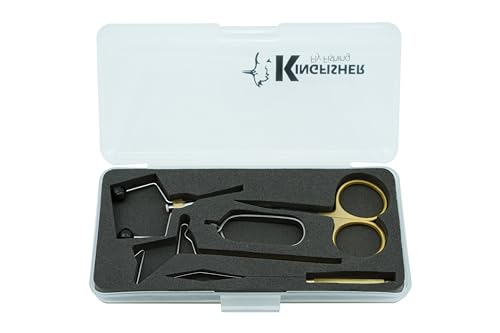
Designed for portable use, this kit provides core tying tools in a compact brass kit. It includes a hackle plier for wrapping, a stout ceramic-insert bobbin, and a bobbin threader. Best for on-the-go tying sessions, travel enthusiasts, and beginners who want a lightweight, no-fuss setup. A potential drawback is the limited number of tools; it focuses on the essentials rather than a full tool suite.
Skylety 5 Pcs Fly Tying Tools Set

This five-piece set packs a whip finisher, bobbin, scissors, disc bobbin threader, and a threader into a compact bundle. It’s ideal for casual or occasional tiers who need reliable, portable tools in a single travel-friendly kit. Best for quick field repairs and simple tying tasks. A limitation is that the kit doesn’t include a complete vise or large-scale tying hardware, which may require additional purchases for advanced patterns.
Kingfisher Clarkfork Fly Tying Vise Kit

This kit centers on a true rotary vise with two ball-bearing housings and a robust build. It supports a wide range of hook sizes (26 to 4/0) and uses hard anodized aluminum parts for durability. Best for serious hobbyists who tie frequently and want smooth operation with solid longevity. It may be heavier and pricier than basic beginner kits, but it offers superior stability for intricate patterns and longer sessions.
Buying Guide: Key Considerations
- Purpose and skill level — Beginners benefit from all-in-one starter kits; seasoned tiers may prioritize a high-quality vise and modular tools.
- Tool quality vs. value — Look for essential tools with durable materials (steel, ceramic inserts, hardened jaws) and reliable locking mechanisms.
- Portability — For travel, compact kits with protective cases are ideal; urban and field tiers may prefer larger, organized sets with a dedicated box.
- Vise type — Rotary vises offer 360-degree access and precision; non-rotary vises are simpler and often lighter for beginners.
- Thread handling — Multiple bobbins and quality threaders minimize setup time and improve consistency across flies.
- Materials and compatibility — Ensure tools accommodate common thread sizes and hook ranges used in your preferred patterns.
Fast-Compare Tips
- Best for beginners: Kits that combine a rotary vise, basic tools, and a wooden or retro bag for organization.
- Better for travel: Compact kits with a protective case and lightweight components.
- Choose this if you tie dry flies often: Look for precise scissors, whip finisher, and fine bobbin control.
- Avoid this if you need professional-grade pro features on a budget: Some entry kits lack the durability or range of a true rotary vise and premium tool materials.
Frequently Asked Questions
- What is the most essential tool in a fly tying kit?
The vise is the core component, providing secure and adjustable access for multiple patterns; without a stable vise, tying accuracy suffers. - Should I buy a multi-tool kit or individual tools?
Multi-tool kits are ideal for beginners and travelers, while individual premium tools suit experienced tiers seeking durability and precision. - Is a rotary vise worth it for beginners?
A rotary vise is advantageous for detailed work and pattern accuracy, but non-rotary vises can be sufficient for basic tying needs when starting out. - Are extra bobbins beneficial?
Yes. Additional bobbins save time when switching thread types or colors during a tying session. - What should I consider for portability?
Look for a kit that includes a protective case and organizes tools within a compact footprint for easy transport. - Can I upgrade later without replacing the entire kit?
Many kits allow adding or swapping components (vise, bobbins, scissors) as your skills grow, preserving your core setup.