Answering the common buyer question, these guitar compressor pedals help even out dynamics, add sustain, and shape attack for clean tones, blues leads, and studio-style vibes. The best options below balance classic, transparent compression with practical controls. Ideal buyers include players seeking studio-like consistency on stage, beginners aiming for controlled dynamics, and tone-first players wanting nuanced attack control. Use the comparison table to quickly see key traits and match the pedal to your rig.
| Product | Best For | Notable Feature |
|---|---|---|
| Boss CS-3 Compressor / Sustainer | All-around players seeking precise tonal shaping | Dynamic control with level, tone, attack, sustain |
| MXR Dyna Comp | Sustain-heavy blues and classic tones | In-line compression for stable dynamics |
| Keeley Compressor Plus | Players needing simple, effective knob layout | Release switch tuned for single coils or humbuckers |
| Donner Ultimate Comp | Budget-conscious players wanting versatile modes | Two modes (Normal/Treble) and tone shaping |
| Wampler EGO 76 | Studio-inspired tone with vintage vibe | 1176-style feel with tone, attack, release control |
Boss CS-3 Compressor / Sustainer Pedal

The Boss CS-3 combines a compact footprint with a dynamic signal path, offering reliable compression and sustain for a wide range of styles. The pedal governs overall compression through onboard level, tone, attack, and sustain controls, enabling precise tonal shaping. It’s well suited for players who want dependable, studio-like consistency without sacrificing dynamic feel. Best for players who need a straightforward, all-around compressor that works well in live and rehearsal contexts.
Who it’s best for: rhythm players who want even dynamics and players who value predictable performance in a compact package. Why selected: its balanced control set helps you tailor attack and sustain while preserving the natural character of your guitar signal. Caution: the pedal’s tone control can alter brightness; use it to taste with your guitar’s pickups and amp.
MXR Dyna Comp Compressor

The MXR Dyna Comp is a classic in-line compressor that smooths dynamics and adds sustain for a glassy, even tone. It’s a favorite for Nashville-style clean tones and bluesy leads, delivering a straightforward signal path with consistent results. This pedal is ideal for players who want a reliable, studio-sounding compression without extra frills.
Who it’s best for: players aiming for steady dynamics with minimal tweaking. Why selected: the Dyna Comp is known for its dependable, transparent compression that works well with various amps. Caution: it can be subtly alter brightness depending on settings; keep level and tone balanced to avoid an overly compressed feel.
Keeley Compressor Plus Pedal

The Keeley Compressor Plus emphasizes simplicity with a four-knob layout and a Release Switch tuned for single coils or humbuckers. Its tone control highlights sensitive harmonics often lost during compression, producing a warm, musical response. This pedal is particularly appealing to players who want a refined, studio-like edge without complex programming. Best for nuanced players who value preserving the natural touch of their picking.
Who it’s best for: players who want an elevated, musical compression with transparent sustain. Why selected: the release tuning helps optimize response for different pickups, while the tone control preserves harmonic richness. Caution: the switch and controls can feel petite; take a moment to set it before critical performances.
Donner Ultimate Comp Pedal
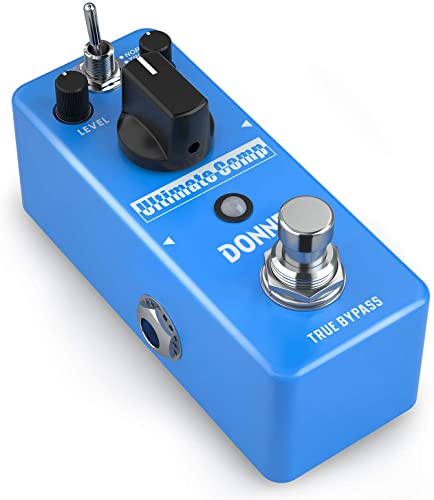
The Donner Ultimate Comp provides two practical modes (Normal and Treble) and a straightforward set of controls: COMP, TONE, and LEVEL. It smooths dynamics across frequency bands without sacrificing the original signal’s integrity. This makes it a versatile option for players who want essential compression plus a brightness option for brighter guitar voices. Best for budget-conscious players who still want flexible sound shaping.
Who it’s best for: players seeking versatility on a budget with two mode options. Why selected: the Normal vs. Treble mode helps tailor response for different guitar tones and playing styles. Caution: as an analog pedal, subtle changes in tone or attack can occur with varying supply voltages or temperatures.
Wampler EGO 76 Compressor

The Wampler EGO 76 pays homage to the classic 1176-style compression with a modern control set, including tone, attack, and release to shape dynamics and brightness. It’s aimed at players who want a studio-grade feel with more tonal texture, suitable for clean tones and punchy leads alike. This pedal stands out for players who crave a higher-end compression voice without sacrificing dynamics.
Who it’s best for: tone enthusiasts seeking a studio-like compressor with expressive control. Why selected: its tonal shaping is capable of delivering a distinctive, energetic edge reminiscent of vintage studio gear. Caution: premium build comes with a higher price point; assess whether the extended features match your playing needs.
Buying Guide: Key Considerations For Choosing A Guitar Compressor Pedal
- How transparent should the compression be? Decide between studio-style transparency and colored compression for more “character.”
- What pickup and guitar type do you use? Some pedals better suit single-coil tones; others handle humbuckers with ease.
- What controls matter most to you? Attack and sustain are crucial for dynamic playing, while level and tone influence overall balance and brightness.
- Do you need a compact pedal or a feature-rich unit? Budget options offer essential smoothing, while boutique models add nuanced tonal shaping.
- Analog vs. digital signal path: analog pedals tend to preserve natural dynamics and warmth; digital may offer additional tonal options.
- Mode versatility: two-mode pedals can adapt to different genres or guitar setups, such as treble-boosted tones for brighter cleans.
Frequently Asked Questions
- What does a guitar compressor do? It evens out dynamic range, increases sustain, and can shape tone by adjusting attack and level.
- Which compressor is best for blues players? A pedal with smooth, musical compression and a reliable sustain, like the Keeley or MXR models, is often favored.
- Should I choose an analog or a digital compressor? Analog designs typically deliver natural dynamics; digital pedals may offer more presets and features.
- Can a compressor affect my guitar’s brightness? Yes, tone controls and mode selections influence perceived brightness; match with pickup type and amp settings.
- Is a higher price of a compressor necessary for quality? Not always; many budget pedals provide excellent, musical compression suitable for many players.
- Do I need a dedicated bypass on a compressor? True bypass preserves signal when the pedal is off, which is desirable for many rigs.