The right guitar EQ pedal can dramatically refine your tone, clean up muddy lows, and lift harsh highs. This guide highlights five top options that balance versatility, stage visibility, and signal integrity. It’s ideal for players seeking clearer midrange control, studio-friendly stealth, or on-the-fly tone shaping during gigs. Best for guitarists who want precise, band-by-band adjustment to tailor their core sound across different amps, genres, and playing styles. The table below compares key details to help you choose quickly.
| Product | Band Count | Best For | Power & Notes |
|---|---|---|---|
| BOSS GE-7 Equalizer | 7 | General purpose, live rigs, studio | Compact, guitar-optimized frequencies |
| JOYO JF-11 | 6 | Precise sculpting, stage visibility | Illuminated sliders, center detent |
| MXR Ten Band | 10 | Bright headroom and stage clarity | LEDs, 18V operation |
| EX 7 Band EQ | 7 | Studio and live use | True bypass, compact |
| Donner EQ Pedal | 10 | Compact versatility for guitars and bass | True bypass, rugged build |
BOSS GE-7 Equalizer — 7-Band Guitar EQ

The BOSS GE-7 provides seven fixed-frequency bands with ±15 dB of boost or cut per band and a dedicated level control. It is a compact, guitar-optimized graphic EQ designed for quick tone shaping on stage or in the studio. Best for players who want dependable, straightforward EQ tweaks without changing drive or volume settings. A limitation is that the GE-7 has fixed frequencies, so you’ll adjust around standard vocal and guitar frequencies rather than ultra-specific tweaks.
JOYO JF-11 6-Band EQ Pedal

JOYO’s JF-11 focuses on precise tonal sculpting with six guitar-optimized bands and ±18 dB of boost/cut. The illuminated sliders and center detent improve visibility and repeatable neutral positions on stage. It employs true bypass to preserve your tone when off. Best for players needing surgical midrange control and a visible, reliable live pedal. Note that the longer signal chain on some rigs might require careful power supply management to minimize noise.
MXR Ten Band EQ Guitar Effects Pedal

The MXR Ten Band EQ offers ten frequency bands with up to ±12 dB of adjustment plus LEDs for high visibility. Its 18-volt operation provides extra headroom for clean, assertive tones, making this a solid choice for players seeking a broader EQ range and consistent performance in bright or aggressive rigs. Best for players who want a robust, high-headroom graphic EQ that remains clear under high-gain settings. A potential limitation is the slightly larger footprint for compact boards.
EX 7 Band EQ Mini Pedal
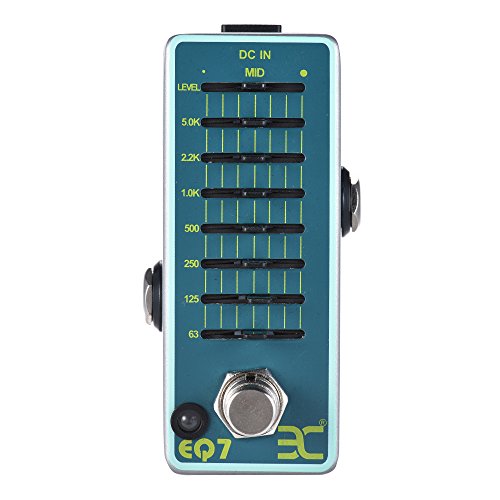
EX’s 7-Band EQ combines precision control with a compact, stage-ready design. The unit uses true bypass and features a 63 Hz–5 kHz range with ±15 dB per band. It emphasizes a low-profile footprint while preserving signal integrity, making it ideal for small pedalboards or players who want essential EQ control without extra bulk. Caution: availability and component sourcing can vary, so confirm compatibility with your board layout before purchase.
Donner EQ Pedal — 10 Band Equalizer

Donner’s EQ Seeker provides 10 bands with a ±15 dB range per band in a compact chassis. It’s designed for guitar and bass, offering true bypass to preserve your natural tone when disengaged. Best for players seeking flexible, all-around tone control in a compact form factor. Limitation: some users may prefer a dedicated bass-centric EQ if your rig emphasizes deep low-end control.
SONICAKE Tone Group 10-Band EQ

The SONICAKE 10-Band EQ delivers 11 sliders for precise tonal shaping, with ±15 dB adjustments per band. This unit is designed to be versatile across different instrument voices and playing situations, offering a straightforward analog-like response in a compact package. Best for players who want a detailed, rapid-fire EQ solution without navigating a large pedalboard. Note that setting up multiple pedals in a chain may require careful signal ordering for optimal results.
RVONE 10-Band EQ Pedal

RVONE’s 10-band EQ focuses on low-noise operation with true bypass, suitable for guitar, bass, and pedalboard setups. It covers a broad frequency range and emphasizes clean signal retention when bypassed. Best for players who need reliable, studio-friendly tone shaping with low noise on stage. However, a non-included adapter means you must ensure your existing power supply is compatible and stable.
MXR Six Band EQ
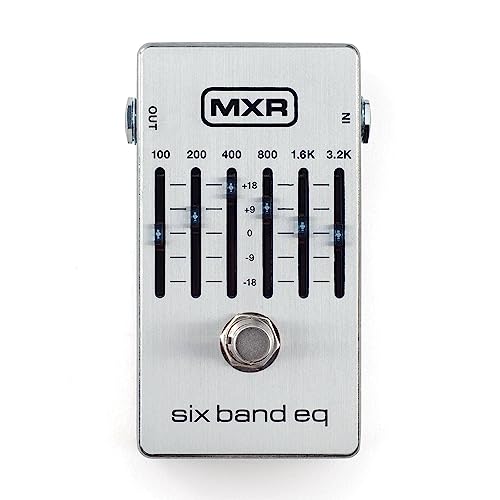
MXR’s Six Band EQ offers a compact solution with up to ±18 dB per band and high-visibility LEDs. It’s a straightforward option for players who want a lighter, six-band alternative to larger 10- or 7-band units. Best for slim boards and players who value clear, simple EQ control. The trade-off is fewer bands when needing deeper tonal sculpting across a wider range of frequencies.
Buying Guide
What should you consider when choosing a guitar EQ pedal?
- Band count and coverage: More bands allow finer control but take more space. Choose 6–10 bands for broad, versatile shaping; 7-band or fewer if you want a compact board.
- Frequency layout: Ensure the bands cover your typical problem areas (bass mud, mids, highs). Guitar-optimized sets (as listed) focus on guitar-centric frequencies.
- Headroom and power: Higher voltage (where offered, like 18V or dedicated supplies) can improve headroom and reduce noise. Check power needs and compatibility with your pedalboard power supply.
- Bypass quality: True bypass preserves tone when the pedal is off. This is important for maintaining your core signal when multiple pedals are in the chain.
- Stage visibility: Illuminated sliders help with on-the-fly adjustments in dark venues. This can be a deciding factor for live players.
- Size and build: If space is tight, prefer compact mini pedals or pedals with a narrow footprint. For touring, rugged builds and rubber feet help.
- Use case: Studio-focused players may prioritize cleaner, flatter responses; live players may want more aggressive boost/cut ranges for quick on-stage tone fixes.
What is the best way to arrange guitar EQ pedals on a board?
- Place tone-shaping pedals before overdrive/distortion when you want the pedals to color your gain structure.
- Put EQ after boosts and boosts after preamp pedals if you want to control overall level and sustain without altering preamp tones.
- Consider power isolation and cable management to reduce noise and signal bleed between pedals.
FAQ
- What does a 7-band guitar EQ do? It provides seven bands of adjustable gain to shape lows, mids, and highs for overall tonal balance or to compensate for an amp’s characteristics.
- Is a true bypass pedal necessary for live use? True bypass helps preserve your tone when the pedal is off, reducing signal coloration and noise.
- Do I need a power supply that delivers 18V for an EQ pedal? Some pedals require higher headroom; check each model’s power requirements to avoid noise or performance issues.
- Can I use an EQ pedal with bass guitar? Many 10-band or 7-band pedals can be used with bass guitars, but verify the frequency range and build for bass compatibility.
- Which band range is most important for guitar tone? The midrange bands (roughly 400 Hz to 1.6 kHz) often define body and presence, while lows add warmth and highs add sparkle.