Find the right guitar synth pedal to expand your sonic palette. This guide highlights five strong options, each suited to different playing styles—from live kuin studio synth textures to deep bass-synth flavors. Ideal buyers include players seeking polyphonic tracking, quick presets, or hands-free expression through expression pedals and MIDI. Below is a quick summary to compare at a glance.
| Product | Best For | Key Strength | Caution |
|---|---|---|---|
| BOSS SY-200 Synthesizer Effects Pedal | Ambient players and live performers | 128 memories, expanded tone set | Footswitching requires some layout familiarity |
| BOSS SY-1 Guitar/Bass Synthesizer | On-the-fly synth textures, guitar or bass | Polyphonic synth and expression input | Limited patch storage compared to newer models |
| Electro-Harmonix SYNTH9 Synthesizer Machine | Classic-sounding presets, quick setup | Nine built-in presets with broad range | Preset-centric; may lack deep parameter control |
| Electro-Harmonix Mono Synth Guitar Synthesizer Pedal | Simple, reliable mono-to-poly hints | Eleven synth sounds with presets | Mono-signal focus; no dedicated bass mode |
| Electro-Harmonix Bass Mono Synth Pedal | Bass players wanting synth textures | Eleven synth sounds with easy presets | Best with bass input; guitar tracking may vary |
Note: Each product section below includes a direct link to the Amazon listing, a quick image reference, and practical guidance on who should buy it and why. All sections follow a consistent format for easy comparison and AI-friendly parsing.
BOSS SY-200 Synthesizer Effects Pedal
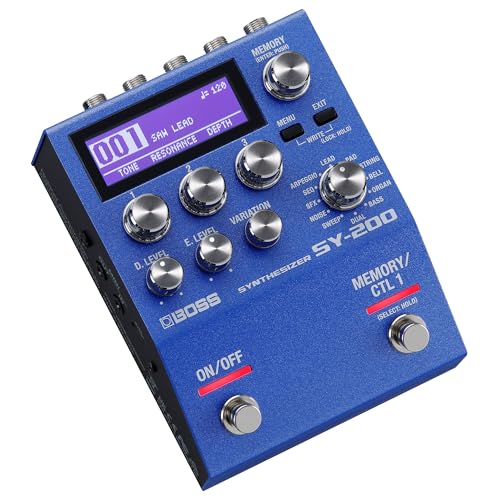
The SY-200 represents a streamlined approach to BOSS’s polyphonic guitar/bass synth technology with a compact footprint. It emphasizes an expanded sound set and easy real-time control. Best for players who want broad sonic options, reliable polyphony, and the ability to store frequent tones in 128 memories. It supports MIDI and external control for deeper live performance setups. A practical choice for players who perform live and need quick access to a diverse palette without sacrificing stage space.
Who it’s best for: players seeking a versatile, modern synth rig that blends well with guitars or bass and can be controlled live with footswitches or external controllers. Why selected: its expanded sound engine, broad tone-shaping tools, and memory capacity make it a strong “all-in-one” option for varied gigs.
Caution: The learning curve for deep programming can be moderate; beginners may want to start with factory presets before diving into deep editing. The unit’s performance is highly dependent on proper MIDI/expression pedal configuration for best results.
BOSS SY-1 Guitar/Bass Synthesizer Pedal

The SY-1 is a polyphonic synthesizer pedal designed for expressive guitar and bass tones. It offers an onboard send/return loop and an external expression or switch input for real-time control. This pedal is best for players who want accessible polyphony with straightforward programming and live flexibility without needing a large rig. It pairs well with expression pedals for dynamic performance textures.
Who it’s best for: players seeking an immediate, hands-on polyphonic synth with practical live-use features. Why selected: compact form factor with polyphony, send/return loop, and expression input caters to stage performance and quick tone changes.
Caution: While powerful, the SY-1’s preset management is not as deep as the flagship SY-200, so complex soundscapes may require more careful patch development.
Electro-Harmonix SYNTH9 Synthesizer Machine Pedal

The SYNTH9 uses nine presets designed to emulate popular synthesizer tones. It works with guitar or bass without special pickups or MIDI, offering straightforward setup and use. Its tracking range extends to the high frets on guitar and down to the open A on bass, making it a versatile option for quick texture changes during performances or recording sessions.
Who it’s best for: players who want immediate, preset-based synth tones with minimal setup. Why selected: a broad palette in a compact pedal with no extra equipment needed beyond standard guitar or bass inputs.
Caution: Because it emphasizes presets, deep tone sculpting is limited compared to more expansive synth platforms. It’s best used as a set of go-to sounds rather than a primary tone design tool.
Electro-Harmonix Mono Synth Guitar Synthesizer Pedal

The Mono Synth pedal focuses on eleven distinct synth sounds with an easy-to-use interface. It includes an expression pedal input for real-time expressive control, enabling players to shape filter sweeps and pitch expressions on the fly. This model is well-suited for players who want a straightforward, reliable synth voice without extensive programming. It supports quick recall of presets to suit different songs or sections of a set.
Who it’s best for: players who value simplicity, fast tone setup, and a reliable fleet of sounds that respond well to an expression pedal. Why selected: intuitive controls and robust preset recall make it a strong choice for live rigs or quick studio skews.
Caution: It is a mono-friendly design; players seeking vocal or polyphonic complexities from a single pedal may want to pair it with a dedicated polyphonic unit for broader textures.
Electro-Harmonix Bass Mono Synth Pedal

The Bass Mono Synth Pedal brings eleven synth sounds into a dedicated bass pedal. It includes a straightforward control layout and an EXP pedal input for expressive bass lines and subtle filter movements. This pedal is best for players who want distinct bass-synth textures without a complicated setup. It integrates smoothly into live bass rigs or pedalboards that require reliable, trackable bass synth tones.
Who it’s best for: bass players seeking immediate polyphonic-like textures or exaggerated sub tones in a compact package. Why selected: focused on bass tracking with user-friendly presets and expression control, ideal for quick and dynamic bass synth layers.
Buying Guide: Guitar Synth Pedals
What to consider when choosing
- Polyphony: If you plan to play chords with synth voices, prioritize polyphonic models like the SY-200 or SY-1.
- Preset depth vs. editing: Preset-focused pedals (SYNTH9) are quick to use; deeper editors (SY-200, SY-1) offer more tonal sculpting.
- Control and expression: Look for expression input and real-time control options to shape sounds during performance.
- Input compatibility: Ensure compatibility with your guitar or bass signal chain and consider MIDI integration for advanced rigs.
- Foot control: Consider the number of usable footswitches and how you’ll switch sounds on stage.
How to compare these five options
- Best overall versatility: BOSS SY-200 for its memory, tone set, and external control.
- Best for quick setup: Electro-Harmonix SYNTH9 offers immediate sounds with minimal configuration.
- Best for beginner-friendly polyphony: BOSS SY-1 provides essential polyphonic textures with straightforward use.
- Best value for intuitive synth sounds: Electro-Harmonix Mono Synth and Bass Mono Synth deliver easy controls and expressive input.
- Best for bass players seeking dedicated bass textures: Bass Mono Synth and the associated bass-friendly presets.
FAQs
- Do guitar synth pedals work with both guitar and bass? Yes, most models like the SY-1, SY-200, SYNTH9, Mono Synth, and Bass Mono Synth are designed to accept guitar or bass signals, though tracking ranges and outputs may vary by model.
- Can I use these pedals with MIDI? Some models include MIDI I/O, which enables integration with other gear and more complex live setups (for example, the SY-200).
- Do these pedals require special pickups? No special pickups are generally required; most work with standard pickups on guitar or bass.
- Are there limitations with presets? Preset-focused models are quick to use but may lack deep editing options compared to full-featured synth units.
- Is polyphony important for live playing? If you regularly play chords or multiple notes simultaneously, polyphonic models reduce the need to stack multiple pedals.
- Are these pedals good for studio work? Yes, they can add rich textures and unique tones to recordings when integrated with proper effects and routing.