In search of headphones for electronic drums, you want models that deliver deep bass, clear cymbal and snare detail, and long-term comfort for practice or recording sessions. This guide highlights five top picks that balance isolation, sound quality, and durability. Best for practice and studio work, these headphones help drummers hear transients and dynamics accurately. The following selections are suited for musicians who need precise drum monitoring, silent rehearsal, or on-stage monitoring with minimal bleed.
| Product | Best For | Key Benefit |
|---|---|---|
| OneOdio Wired Over Ear Headphones | Home studios and DJs | Large 50mm drivers for punchy bass and clear highs |
| Alesis DRP100 | Electronic drummers and practice | Extreme isolation for focused practice |
| HXW DMH10 Over-Ear Studio Headphones | Drummers on stage or in the studio | 50mm neodymium drivers with deep bass and closed-back isolation |
| Vic Firth SIH3 Stereo Isolation Headphones | Quiet practice and rehearsal | Significant noise isolation with comfortable padding |
| Sony MDR7506 Professional Headphones | Studio monitoring and tracking | Balanced, detailed response with reliable build |
OneOdio Wired Over Ear Headphones

Best for: home studios and mixing environments. These headphones feature large 50mm drivers and neodymium magnets to deliver strong bass and clear highs, suitable for monitoring electronic drum tracks and for mixing. They offer single-side monitoring with 90° swiveling cups for flexible setup. A potential limitation is bass-heavy tuning that may slightly overwhelm delicate cymbal details for some ears.
Alesis DRP100 – Audio-Isolation Headphones
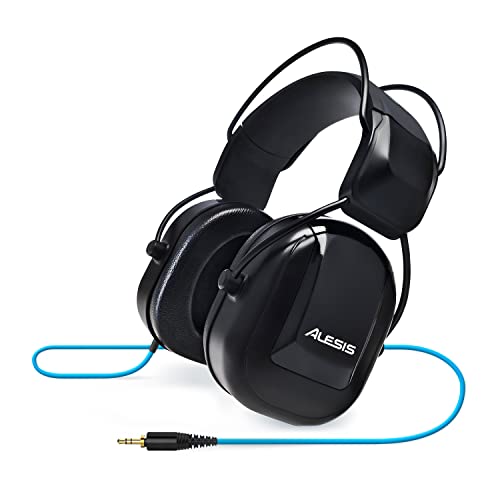
Best for: electronic drummers focused on isolation during practice or recording. The over-ear design provides extreme audio isolation, keeping external noise out and your rhythm in. A note: sweat-proof silicone is comfortable, but long sessions can depend on headband fit and personal comfort preferences.
Audio-Technica ATH-M20x

Best for: studio tracking and mixing with reliable low-frequency performance. The 40 mm drivers and tuned response make it a solid choice for drum-monitoring tasks where clear bass, mids, and hi-hats are essential. A possible limitation is its earcup size for users with smaller ears; fit may be tighter for some head shapes.
Vic Firth SIH3 Stereo Isolation Headphones

Best for: quiet practice sessions and rehearsal rooms. These headphones reduce outside noise by about 25 decibels and include a 3.5mm plug with a 1/4″ adapter. They are suited for practice rooms and quiet tracking, though some users may find the bass response less pronounced compared with bass-forward models.
Sony MDR7506

Best for: professional studio monitoring and tracking. The MDR7506 offers detailed, balanced sound with a closed-back design for isolation. A notable consideration is the longer cable that some users may need to manage, and the non-detachable cord could be less convenient for portable setups.
Buying Guide: Key Purchase Considerations
- Sound character: For electronic drums, prioritize strong bass extension, clear kick and snare transients, and good cymbal detail. Closed-back designs help with isolation and reduce bleed into microphones.
- Comfort and fit: Look for padded headbands, soft earpads, and adjustable clamping force for long practice sessions.
- Durability and build: Drummers often move and travel with gear; choose sturdy headphones with metal or reinforced plastic housings and reliable swiveling or folding mechanisms.
- Isolation level: If you record or practice in a shared space, higher isolation helps focusing on drum parts without disturbing others.
- Connection options: Decide between 3.5mm and 6.35mm plugs, or include a detachable/extendable cord. Some models include adapters for flexibility with audio interfaces and amps.
- Portability and cable management: Coiled or long cables can offer flexibility but may tangle; consider your setup and how often you’ll move between studio and stage.
Frequently Asked Questions
- What should I look for in headphones for electronic drums?
Look for strong bass response, clear transient details, closed-back isolation, and comfortable fit for long sessions. - Is isolation more important than sound quality for drumming?
Isolation helps prevent drummer bleed into microphones and improves focus, but you still need accurate drum balance and response. - Are 40mm drivers enough for drum monitoring?
Yes, many drum-focused headphones use 40mm or 50mm drivers to deliver solid low end and clear highs; your preference matters. - Should I choose wired or wireless for electronic drums?
For studio or live use, wired headphones are generally preferred due to lower latency and stable connections. - Can I use these headphones with a computer or audio interface?
Yes, most models include 3.5mm and 6.35mm compatibility or adapters, making them versatile for interfaces and amps. - Do all these headphones require an amplifier?
Some models may benefit from a dedicated headphone amp for maximum clean power, especially with high-impedance designs.