Finding the right headphones for guitar work means balancing accurate tone, comfortable wear, and reliable isolation. This guide highlights five headphones well-suited for guitarists, whether you’re recording at home, practicing quietly, or monitoring live performances. Each pick targets common needs: precise bass and mids for guitar tone, comfortable long sessions, and dependable single-ear or dual-ear monitoring when layering tracks or cueing with amps.
Who this is for:
– Home recording guitarists needing accurate monitoring and comfort.
– Live players seeking reliable isolation and ease of use.
– Practice sessions where long wear and portable design matter.
| Product | Best For | Key Benefit |
|---|---|---|
| OneOdio Wired DJ Hi-Res Over-Ear (B01N6ZJH96) | Guitarists who need solid bass and durable build | Powerful bass with clear vocals and long-wearing comfort |
| Audio-Technica ATH-M20x | Studio tracking and mixing | Reliable, neutral response for accurate guitar tone |
| PHILIPS Over Ear Wired Stereo (PHILIPS) | Home studios and all-day practice | Balanced sound with good passive isolation |
| Sony MDR7506 | Professional monitoring and detailed mix work | High-detail sound with strong isolation |
| OneOdio A71D Wired Over-Ear | DJing, mixing, and studio monitoring | Hi-Res sound with comfortable, single-cord usability |
Note: All product data referenced comes from listed features and product descriptions. This guide uses objective, buyer-focused language to help you compare practical differences for guitar work.
OneOdio Wired DJ Hi-Res Over-Ear Headphones

Best for. Guitarists who need strong bass and robust comfort for long practice sessions. The 50mm drivers and neodymium magnets deliver powerful bass and clear highs, aiding bass-heavy or rhythm guitar tracking.
Why selected. The single-side monitoring and swiveling ear cups support convenient cueing during home recording or live rehearsals, reducing fatigue during extended sessions.
Caution. The focus on bass may slightly elevate low-end balance; use with a reference guitar amp or interface to ensure tone accuracy in mixes.
Audio-Technica ATH-M20x Professional Studio Headphones

Best for. Guitarists who need a reliable, neutral monitor for tracking and mixing at home or in a small project studio.
Why selected. The 40 mm drivers and rare-earth magnets contribute to clear low end and accurate mids, helping you hear string detail and pick dynamics without coloration.
Caution. Not the lightest option for all-day wearing; consider breaks during extended sessions to maintain focus.
PHILIPS Over Ear Wired Headphones
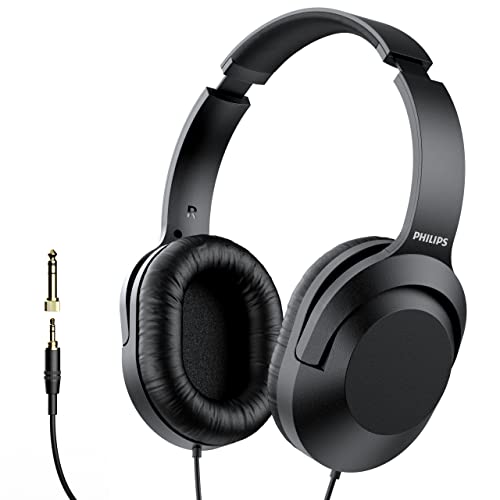
Best for. Guitarists seeking versatile wired headphones for home studios or mobile setups, with included adapters for multiple devices.
Why selected. The 40 mm drivers provide crisp, clear sound with good passive isolation, and the 1/4″ adapter adds compatibility with amps and audio interfaces.
Caution. Passive isolation is good but not as strong as some closed-back models in loud environments; use in quieter spaces for best results.
Sony MDR7506 Professional Headphones

Best for. Guitarists who require high-detail monitoring for recording and mixing in studio or home setups.
Why selected. Neodymium magnets and 40 mm drivers deliver precise detail, aiding in recognizing nuances in guitar harmonics and dynamics.
Caution. The cord is long and not detachable; ensure clean cable management and consider an extension only if needed for your workflow.
OneOdio A71D Wired Over-Ear Headphones
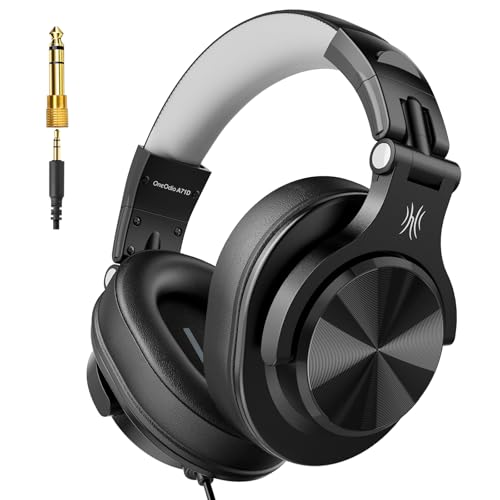
Best for. Guitarists needing a robust, all-purpose monitoring headphone with a long, flexible cable setup.
Why selected. 40 mm drivers deliver a balanced sound with solid bass, and the single-sided monitoring design helps with cueing guitars alongside other instruments during home recording.
Caution. The design emphasizes durability; if you prefer ultra-lightweight wear for long sessions, compare with lighter models.
Buying Guide: Key Purchase Considerations
What matters most for guitar work?
Accuracy, comfort, and isolation. Look for headphones that deliver a faithful guitar tone with clear midrange for string details, comfortable padding for long sessions, and sufficient isolation to avoid bleed into a microphone during recording.
Closed-back vs open-back
Closed-back models reduce sound bleed and improve isolation, which is useful in home studios and practice rooms. Open-back designs offer a more natural, spacious sound but bleed more energy, making them less ideal for recording with microphones in the same room.
Wired vs wireless
Wired models typically provide lower latency and consistent response, which helps when playing along with tracks or recording. Wireless models offer freedom of movement but can introduce latency and occasional interference for critical tasks.
Single-sided monitoring
Single-ear monitoring can be helpful for guitarists who need to hear themselves and other tracks simultaneously. Consider this if you frequently cue microphones or blend guitar parts with a live drummer.
Comfort and durability
For long practice or recording sessions, choose headphones with soft, breathable padding and a sturdy headband. Detachable or replaceable cables are a plus for longevity.
Frequency response and driver size
Look for a balanced response around 20 Hz to 20 kHz. 40 mm to 50 mm drivers commonly deliver sufficient bass and clear mids for guitar work without excessive coloration.
Practical setup tips
- Pair headphones with a quality audio interface for accurate guitar tone through your amp simulators or DAW.
- Use a short, high-quality cable to reduce signal loss in the signal chain.
- Test with your guitar’s pickup type (single-coil vs humbucker) to ensure the headphones reveal intended tone.
FAQ
- Q: Are closed-back headphones better for guitar recording? A: Yes, they provide better isolation to prevent bleed into microphones.
- Q: Do I need an amp sim or audio interface with these headphones? A: An interface helps deliver cleaner, more accurate guitar monitoring when recording or direct-monitoring.
- Q: Can I use these for practice with a metronome or backing tracks? A: Absolutely; most models offer solid detail and comfort for extended practice.
- Q: Which is best for long sessions? A: Models with soft padding and adjustable headbands, such as the ones listed, tend to be more comfortable over hours.
- Q: Should I pick single-ear monitoring for guitar work? A: If you need to hear other cues or communicate with others while playing, single-ear monitoring can be advantageous.