Get clear, reliable helmet audio with models designed for motorcyclists. This guide highlights five top choices that balance sound quality, battery life, weather resistance, and ease of use. Whether you’re a daily rider, weekend explorer, or extreme weather commuter, these selections help you hear GPS prompts, music, and phone calls without distraction. Each pick is tailored for different rider needs—from ultra-thin, glove-friendly controls to rugged, all-weather intercoms.
| Product | Best For | Key Advantage |
|---|---|---|
| FEYA Helmet Speakers | Daily riders needing long battery life | 20-hour operation, large 1000 mAh battery |
| Cardo Spirit Motorcycle Headset | Any-brand interoperability | Universal connectivity, OTA updates, waterproof |
| JZAQ Motorcycle Bluetooth Headset | Durable, all-weather use | IPX7 waterproof, 60-hour play/talk potential |
| Fodsports FX-S | Two-rider intercoms | BT 5.4, 1000 m range, IP67 waterproof |
| Syphon SoundPro | Ultra-thin fit with big sound | 9.6 mm thin, glove-friendly controls, strong audio |
FEYA Motorcycle Helmet Speakers: Long Battery Life

Best for solo riders who want extended use between charges. These helmet speakers support streaming music, GPS prompts, and hands-free calls with dual-device compatibility. The 1000 mAh battery delivers up to 20 hours of active use and 18 months of standby, reducing charging needs on long trips. The 40 mm graphene diaphragm provides clear sound, while dual-mic noise reduction helps minimize wind and engine noise on calls.
- Best for riders who prioritize long battery life and clear calls on multi-hour trips.
- Limitations: Not designed to pair with other helmet brands; intended for a single user per system.
Cardo Spirit: Universal Bluetooth Compatibility

Better for riders who want easy cross-brand connectivity and automatic updates. Cardo Spirit offers OTA software updates via the Cardo Connect App and connects with any brand of headset. Its waterproof build stands up to rain and varying weather conditions. The emphasis is on seamless pairing and ongoing software improvements, making it a practical choice for riders who value compatibility over brand loyalty.
- Best for riders who value universal compatibility and easy maintenance.
- Limitation: May require occasional app setup to access OTA features.
JZAQ Motorcycle Bluetooth Headset: Durable and High Play Time
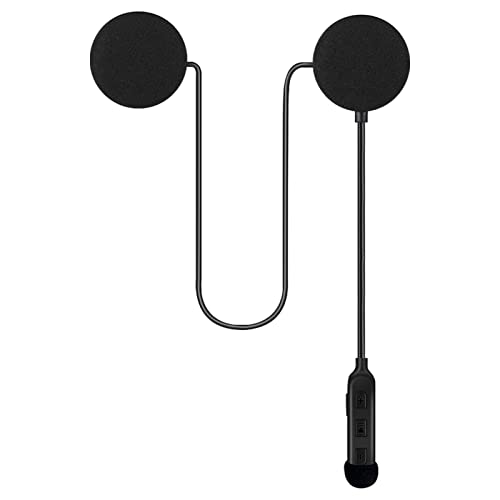
Primarily suited for riders who need long play and talking times combined with solid weather resistance. The JZAQ headset supports automatic call answering and two-device connections, with a 900 mAh battery offering substantial runtime. IPX7 waterproofing helps protect against rain and snow. The trade-off may be a larger footprint in some helmet configurations, which can affect fit for very slim interiors.
- Best for riders seeking long-endurance performance and robust waterproofing.
- Limitation: Larger device may require helmet depth; verify fit before purchase.
Fodsports FX-S: 2-Way Intercom for Rides

Designed for two-rider intercoms with stable Bluetooth 5.4 performance and a broad operating range. It features HD 40 mm speakers and IP67 waterproofing, making it suitable for diverse weather conditions. Battery life supports extended rides, and Type-C fast charging helps minimize downtime. It’s a strong choice for couples or ride groups looking for synchronized communication.
- Best for duo or small group riding with reliable intercom functionality.
- Limitation: Intercom distance and line-of-sight can impact performance in challenging terrain.
Syphon SoundPro: Ultra-Thin Bravo For Helmets

Best for riders who need a slim fit without bulk while delivering strong audio output. The 9.6 mm ultra-thin speakers fit into most helmet setups and still offer powerful sound with 40 mm drivers. Glove-friendly controls simplify operation while riding. The design emphasizes comfort and audible clarity, especially for riders with snug helmet interiors.
- Best for snug helmet fits and riders who prioritize minimal bulk.
- Limitation: Ultra-thin design may limit maximum speaker volume on exceptionally loud environments.
Buying Guide: Key Considerations For Helmet Headsets
- Sound quality and wind noise: Look for models with decently sized drivers (40 mm or similar) and noise cancellation designed for wind and traffic noise.
- Battery life: For long rides, prioritize high-capacity batteries and clear indicators on your phone for remaining charge.
- Water resistance: IP ratings (IPX7 or IP67) protect against rain, splashes, and mud—important for all-weather riders.
- Connectivity: If you ride with others, choose intercom-enabled units or devices with universal compatibility.
- Fit and helmet compatibility: Ultra-thin speakers or compact units fit better in full-face or modular helmets; verify reserved space and hole depth before purchasing.
- Controls: Glove-friendly, tactile controls help avoid distractions while riding.
- Safety considerations: Ensure the device allows hands-free operation without covering essential helmet sensors or obstructing safety features.
FAQ
- What should I prioritize first: battery life or audio quality?
Answer: For long rides, prioritize battery life, then look for clear audio and effective noise suppression to hear GPS prompts and calls reliably. - Are universal-connectivity headsets worth it?
Answer: Yes if you ride with partners using different brands; universal connectivity reduces compatibility hassles and ensures easier pairing. - Do waterproof ratings matter for helmet headsets?
Answer: Yes, IPX7 or IP67 ratings help protect devices from rain, snow, and spray, extending usable life in varying weather. - Can ultra-thin speakers provide good sound at highway speeds?
Answer: They can, especially when paired with high-quality drivers and proper helmet fit; however, check for noise-cancelling performance tailored to wind noise. - Is it better to buy a two-rider intercom or single-user headset for a solo rider?
Answer: For solo riders, a high-quality single-user headset with strong battery life is often simpler and lighter; two-rider intercoms are best for groups or pairs. - What is the typical range I should expect from motorcycle intercoms?
Answer: Ranges vary, but many modern devices offer 10–1000 meters depending on line of sight and interference; check product specs for your riding style.