Answer: These headphones are designed to deliver clear vocal detail, strong noise isolation, and long-lasting comfort—ideal for podcasters, co-hosts, and voice-over artists. The best picks here suit different needs: Sony MDR7506 and Audio-Technica ATH-M20x are traditional studio staples; Philips and FIFINE offer strong value with solid isolation; OneOdio A71 provides flexible wired/wireless options for dynamic recording setups. Below is a quick comparison to help you choose the right pair for your podcast workflow.
| Product | Best For | Why It Stands Out |
|---|---|---|
| Sony MDR7506 | Pro Podcasters And Editors | Detailed sound with strong isolation |
| Audio-Technica ATH-M20x | Entry-Level Studios | Solid tracking and reliable build |
| PHILIPS Over Ear Headphones | Home Studio And Offices | Comfortable for long sessions, versatile adapters |
| FIFINE HD8 | Budget Studio And Recording | Balanced sound with good noise isolation |
| OneOdio A71 | Hybrid Wired/Wireless Setups | Flexible connectivity and long playtime |
Sony MDR7506 Professional Large Diaphragm Headphone

Best for: Professional podcasters and editors who require precise, detailed sound for voice work. The MDR7506 uses neodymium magnets and 40 mm drivers to deliver clear highs and controlled midrange, aiding accurate vocal monitoring and post-production decisions.
Why selected: This model has a long-standing reputation for studio accuracy and reliable isolation, making it a solid reference headphones choice for podcast mixing and voiceover sessions.
Caution: The design is compact on-ears with a non-detachable cord; ensure you have a comfortable fit if wearing for extended sessions.
Audio-Technica ATH-M20x Professional Studio Monitor Headphones

Best for: Entry-level studios and home pods seeking dependable tracking and solid isolation. The ATH-M20x features 40 mm drivers with rare earth magnets and copper clad aluminum wire voice coils, tuned for enhanced low-frequency performance.
Why selected: Its reliable build and calibrated sound help ensure voices are captured clearly while reducing ambient noise, aiding consistent monitoring during recording.
Caution: Lacks some modern feature sets found on higher-end models; may require careful fit to maximize isolation during long takes.
PHILIPS Over Ear Wired Stereo Headphones
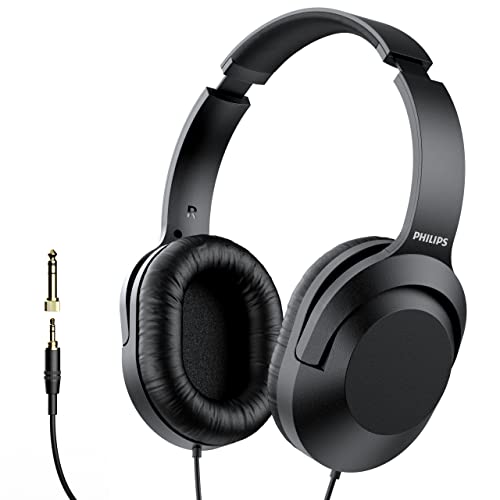
Best for: Home studios, podcasting in small spaces, and office use where comfort matters. These headphones deliver powerful 40 mm drivers with good passive noise isolation and versatile adapters for multiple devices.
Why selected: The combination of comfortable ear cushions and a cushioned headband makes long recording sessions more feasible, while the 1/8″ jack and 1/4″ adapter support a wide range of gear.
Caution: Passive isolation is solid but not as aggressive as some closed-back models, so in extremely noisy environments you may still hear some background noise.
FIFINE HD8 Wired Studio Monitor Headphone

Best for: Budget-conscious podcasters and editors needing a balanced monitor-style sound. The large 50 mm drivers deliver dynamic bass, clear mids, and accurate treble across a 20 Hz to 20 kHz range.
Why selected: The headphones provide a well-rounded profile suitable for both mixing and monitoring, with comfortable padding and a closed-back design to minimize leakage.
Caution: Weight slightly higher for long sessions; ensure proper headband comfort for extended use.
OneOdio Wired DJ Hi-Res Over-Ear Headphones

Best for: Podcasters who need single-side monitoring and flexible connections for multi-device setups. The 50 mm drivers deliver powerful bass with clear vocals, and the 90° swiveling ear cups support one-ear monitoring during edits.
Why selected: The self-adjusting headband and comfortable cushions make these suitable for long edit sessions, while the single-side monitoring is convenient for real-time cueing and recording tasks.
Caution: Some users may prefer more refined upper-frequency detail for critical vocal work; these are well-balanced but not ultra-crystal in the highest highs.
Buying Guide
What features matter most for podcasting?
- Closed-back design for isolation helps prevent bleed into mics and reduces ambient noise pickup.
- Comfort for long recording sessions, including soft cushions and adjustable headbands.
- Accurate midrange and vocal clarity to ensure natural-sounding speech.
- Detachable or long cords can improve flexibility in studio layouts.
Wired vs. Wireless for podcasting
- Wired headsets: Lower latency, consistent performance, and no battery concerns—often preferred in professional setups.
- Wireless headsets: Convenience for moving between rooms or desks, but ensure battery life meets recording sessions and check for potential latency.
What about frequency response?
A wide frequency range (roughly 20 Hz to 20 kHz) supports accurate reproduction of both voiced syllables and musical cues used during editing. Balanced response across lows, mids, and highs helps with clear vocal intelligibility.
Durability and comfort considerations
- Look for robust construction and replaceable ear cushions if you plan long-term use.
- Weight distribution and headband padding affect comfort during long sessions.
Which model should you choose?
- Best overall for studio reliability: Sony MDR7506.
- Best value for beginners: Audio-Technica ATH-M20x or FIFINE HD8.
- Best for versatile setups: OneOdio A71 with dual-mode connectivity.
Quick comparison at a glance
- Sony MDR7506: Detailed, reliable, best for vocal tracking.
- Audio-Technica ATH-M20x: Solid entry-level choice, durable build.
- PHILIPS Over Ear: Comfortable, adaptable for various devices.
- FIFINE HD8: Balanced sound, good isolation, budget-friendly.
- OneOdio A71: Hybrid wired/wireless, flexible for dynamic studios.
FAQ
- Q: Are closed-back headphones better for podcasting? A: Yes, they reduce sound leakage and minimize mic bleed for clearer recordings.
- Q: Do I need high-end headphones for podcasting? A: Not always; reliable monitoring and comfort often matter more than ultra-high fidelity.
- Q: Can I use any headphones with a USB microphone? A: Most can be used with multi-device gear via appropriate adapters; ensure impedance compatibility with your equipment.
- Q: Should I buy one headphone pair or multiple? A: A primary pair for monitoring and a secondary pair for guest or co-host listening can improve workflow.
- Q: Do wireless headphones work for live recording? A: They can, but verify latency and battery life to avoid timing issues during sessions.
- Q: How important is comfort for long sessions? A: Very important; comfortable cushions and an adjustable headband reduce fatigue and maintain focus during editing.