Answering customer requests faster starts with the right desk tools. This guide highlights practical help desk and classroom support tools that improve focus, organization, and communication. The top picks are suitable for help desk staff, teachers, and students who need clear signaling, quick attention prompts, and reliable timing. Below is a summary table of five selected products, outlining who they are best for and why they stand out.
| Product | Best For | Why It Stands Out |
|---|---|---|
| Rotating Productivity Timer 5/25/10/50 | Individuals who follow time-block methods | Preset 5/25/10/50 minutes with gravity sensing and simple flip controls |
| Helping Hands Soldering Desk Clamp | Craftsmen, hobbyists, and workshop teams | Flexible arms and a sturdy desk clamp for precise positioning |
| Mini Flip Chart Self Assessment (36/24 pieces) | Classroom teachers and group facilitators | Color-coded self-assessment signals to improve student communication |
| Calm Strips Sensory Stickers | Students and adults needing focus and anxiety relief | Textured, waterproof stickers designed for desk use and portability |
| Classroom/Service Bells (MROCO & EMDMAK) | Reception, classroom, and service environments | Clear audible alerts with durable construction for quick attention |
Rotating Productivity Timer 5/25/10/50

The Rotating Productivity Timer from OORAII is designed for time-management routines that rely on short focused work bursts and regular breaks. Best for individuals who use the 5/25 method or want quick access to preset intervals, this timer offers a gravity-sensing mode with presets for 5, 25, 10, and 50 minutes. A key feature is the ability to flip the timer to start, flip to stop, and flip to reset, reducing the setup burden during work sessions. This timer is especially suitable for students and professionals who value tactile interaction and hands-off countdowns. Limitations include a reliance on physical flipping rather than digital inputs, which may be less precise for users who prefer programmable sequences.
Best for: students and knowledge workers who practice focused blocks and need quick, physical control over timers without reprogramming each session.
Helping Hands Soldering Desk Clamp Station

This three-arm soldering station from Saycker provides flexible positioning for delicate work, with a desk clamp that fits a range of table thicknesses (5–50 mm). It is ideal for crafts, jewelry making, electronics, and small repairs where hands-free stability is essential. Best for workshop environments where precise positioning and multi-point support improve workflow. A potential limitation is that it is a specialty tool; users not engaged in detailed assembly may not benefit as much as those who need steady, adjustable assistance.
Best for: hobbyists and professionals needing a versatile third-arm setup to hold small parts during assemblies and repairs.
Chivertion Mini Flip Chart Self Assessment Signs

The Chivertion flip charts provide 36 self-assessment signs with three-color coding (red, yellow, green) to indicate needs or progress. They are compact, approximately 3.5 x 3.5 inches, and suitable for classroom desks or collaborative workspaces. These signs help students communicate needs quickly, supporting classroom management and peer responsiveness. A caution is that signs are physical cards, so durability and visibility depend on desk space and handling by younger students.
Best for: teachers and facilitators seeking a simple, visual signaling system to gauge student status and needs.
Jutom Classroom Behavior Signs

The Jutom set includes 24 pieces of four-by-four-inch mini flip charts with three-page configurations. The red, yellow, and green signs offer self-assessment prompts such as “I need help” and “I’m working fine,” designed to promote a growth mindset. The spiral-bound design and foldable structure enable quick positioning on desks. A limitation is that the signs use printed pages; readability depends on print quality and lighting in the classroom.
Best for: classrooms that want a simple, motivational signaling system to encourage self-regulation and positive behaviors.
Calm Strips Sensory Stickers

The Calm Strips from Joyful Artistry offer a set of 48 unique designs with tactile textures—classic gravel and diamond touch—for relaxation and focus. These waterproof, desk-friendly stickers are suited for kids and adults seeking sensory relief, classroom decor, or personalized touch points on notebooks and devices. A possible limitation is that some users may need to replace worn stickers over time in high-traffic environments.
Best for: individuals needing discreet, tactile prompts to reduce anxiety and improve concentration in busy environments.
MROCO Gold Hand Bell
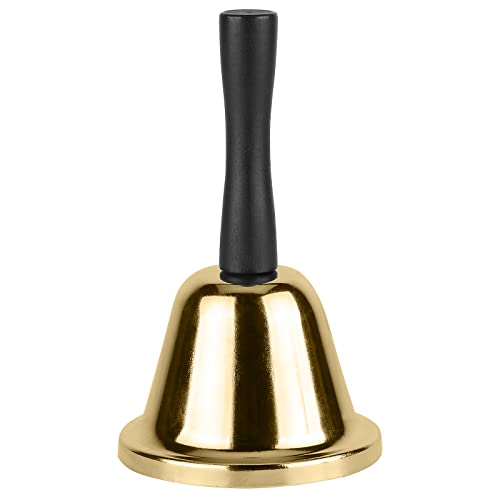
The MROCO steel hand bell offers a clear, loud ring with a wooden handle, designed for classrooms, kitchens, or service desks. Its durable steel construction makes it suitable for frequent use where quick alerts are needed. The bell is especially useful for signaling attention in busy areas. A potential caveat is that loud rings may startle sensitive users or create noise in quiet environments.
Best for: settings requiring immediate attention signals, such as classrooms, service desks, or group activities where a reliable audible cue is preferred.
EMDMAK Call Bell

The EMDMAK call bell uses a stainless steel construction for durability and a loud ringing tone that can be heard at a distance. It features a non-slip base to protect surfaces and prevent tipping, making it suitable for reception desks and classrooms. A limitation is that stainless steel bells may be heavier than plastic alternatives, potentially affecting portability in some setups.
Best for: high-traffic areas where staff need a dependable, easy-to-locate signaling device for customer or student assistance.
Buying Guide: Help Desk Tools That Improve Efficiency
- Purpose and environment: Choose tools that fit your setting—classroom signaling requires visibility and simplicity (flip charts, stickers, signs), while a help desk may benefit from timers and bells for quick attention.
- Durability and ease of use: Prefer tools with simple, robust designs. Desk clamps, metal bells, and tactile stickers tend to endure daily use in busy spaces.
- Signal clarity: Consider whether loud audio cues (bells) or visual cues (color-coded cards) better suit your audience and noise level.
- Adaptability: Tools that support multiple modes (timer with various presets, sign sets with different messages) offer greater long-term value.
- Portability and storage: Compact cards, stickers, and small timers travel well between rooms, while larger devices may stay anchored in a single workspace.
- Limitations to plan for: Some tools rely on manual interaction (flipping timers, turning signs); ensure users are comfortable with the interaction method to avoid friction.
Frequently Asked Questions
- What is a good starter tool for classroom signaling? A compact, color-coded flip chart set or self-assessment signs provides clear signals without requiring complex setup.
- Are timers useful in help desks and service desks? Yes. Timers help staff manage response blocks and improve consistency in task completion times.
- Should I choose visual signs or audible bells for signaling? It depends on the environment. Visual signs work well in quiet areas; bells are effective in noisy or large spaces where audible cues are easier to notice.
- Can these tools be used for individual work and group activities? Yes. Timers support individual focus, while signs and flip charts can guide group discussions and collaborative tasks.
- What should I consider about durability? Look for sturdy materials (stainless steel bells, metal bases, durable cardboard or laminated signs) to ensure longevity in daily use.
- Do these tools require setup time? Most are designed for quick use with minimal setup—preset timers, preprinted signs, and ready-to-use stickers reduce friction.