Answering the most common buyer question: which LED grow lights best support indoor plant growth? This guide highlights five solid options across full-spectrum, red/blue emphasis, and adjustable kits. It helps urban gardeners, apartment growers, and hobbyists choose lights that suit seedling, vegetative, and flowering stages. Below you’ll find a quick product table, detailed sections, and practical buying considerations to compare efficiency, ease of use, and versatility.
| Product | Brand | Best For | Why It Stands Out |
|---|---|---|---|
| Aokrean Grow Lights for Indoor Plants | Aokrean | Beginner to mid-level growers | Three modes, timer, soil or stand installation |
| LEOTER Grow Light for Indoor Plants | |||
| LEOTER | All stages of growth | 80 LEDs, full spectrum with red/blue options, auto timer | |
| Barrina T5 Grow Lights, 1ft | Barrina | Compact setups, multi-light arrangements | Full spectrum 5000K, easy linking, magnetic/clip install |
| VIPARSPECTRA 70W Grow Light | VIPARSPECTRA | Larger vegetative patches | High PAR, efficient heat dissipation, energy-efficient |
| RWNTAO Grow Lights, 84 LEDs | RWNTAO | Versatile spectrum control | Auto timer, 3 modes, 10 dimming levels |
Notes: All five selections emphasize full-spectrum options with practical timers and dimming controls. When choosing, consider plant type, space, and whether you prefer flexible mounting or clip-on designs.
Aokrean Grow Lights for Indoor Plants

The Aokrean unit offers three lighting modes and 10 brightness levels for flexible illumination, including white, warm white, and red mixes. It can be placed in soil or used with a stand, making it adaptable to different plant setups. It includes a timer with 3H, 9H, and 12H cycles. Best for shoppers who want a compact, adaptable light with straightforward setup. Limitation: the stand requires the pot to hold it upright, and it is not wireless.
LEOTER Grow Light for Indoor Plants
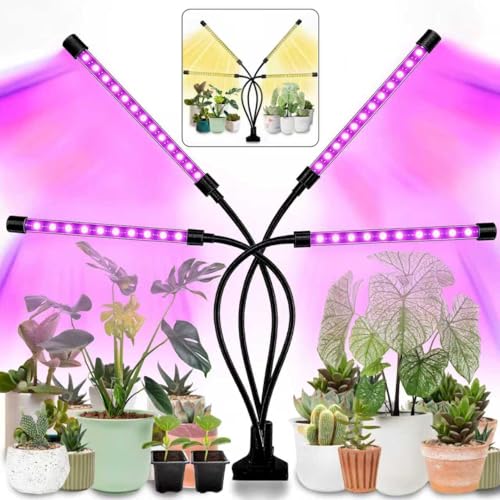
LEOTER combines 80 LEDs (32 red, 12 blue, 20 yellow, 16 white) to cover full spectrum 380-800 nm. It supports three spectral modes (full spectrum, red+blue, red+blue+full) and a circular timer with 3H/9H/12H options. It has 10 dimmable levels. Best for growers seeking a robust, all-round light with strong red/blue emphasis for flowering and fruiting. Caution: timer memory may reset when power is interrupted.
Barrina T5 Grow Lights, 1ft, 4 Packs

Barrina’s 1ft T5 lights deliver full spectrum 5000K with an emphasis on easy installation and expansion. The design uses a black aluminum housing and dark cords for a tidy look. You can link up to 16 lights in series and install with included clips or magnetic options. Best for modular, multi-plant setups and spaces where a discreet, high-coverage lighting plan is needed. Limitation: may require multiple units to cover larger beds.
VIPARSPECTRA 70W Grow Light

VIPARSPECTRA delivers a 70W, full-spectrum setup with 660nm red and broad white spectrum. It highlights energy efficiency with a heat-sink design for extended lifespan and minimal fan use. It suits a 2×2 ft vegetative area, offering high PAR with lower energy use than traditional HID. Best for growers seeking significant light output in moderate spaces. Caution: heat dissipation relies on passive cooling; ensure adequate ventilation.
RWNTAO Grow Lights, 84 LEDs

RWNTAO offers upgraded full-spectrum lighting with 5 red and 37 white LEDs per bar. It uses a 6000K spectrum, with a cycle memory timer for 3/9/12 hours. The unit provides three modes and 10 dimmable levels, supporting multiple growth stages. It is ideal for compact desks or shelves needing flexible, adjustable lighting. Limitation: data notes a specific bar arrangement and may require careful positioning for uniform coverage.
Buying Guide
What should I look for in LED grow lights?
Key factors include spectrum options (full spectrum vs. red/blue emphasis), brightness control (dimming levels), and timer features to automate cycles. Consider LED count and layout, heat management, and compatibility with your plant types and space.
How to choose by plant stage?
Seedlings benefit from balanced full-spectrum light and lower intensity. Vegetative growth responds to strong blue and white light, while flowering requires more red light. Look for lights offering adjustable channels or modes to cover all stages.
What installation style fits my space?
If you have a compact setup, clip-on or gooseneck designs with easy mounting work well. For shelves or windowsills, bar or strip lights that can link in series are convenient. Stands and soil-insert options suit potted arrangements with minimal equipment.
What are practical maintenance tips?
Place lights at an appropriate distance from plant tops to avoid scorching. Use timers to provide consistent day-length, and adjust brightness gradually as plants mature. Ensure proper ventilation to prevent heat buildup.
How many lights do I actually need?
Smaller setups may require single fixtures with adequate coverage, while larger beds benefit from multiple bars or strips spread evenly. Align light distribution with the canopy area you intend to illuminate.
Safety and durability considerations?
Choose lights with reliable housings and protective covers for moisture-prone environments. Ensure cords and clips are rated for indoor use and avoid water exposure to electrical components.
Quick FAQ
- Do these lights work without natural sunlight? Yes, all five options provide full-spectrum or targeted spectrum suitable for indoors.
- Can I use multiple lights on one plant? Yes, but ensure even coverage to prevent shadows and uneven growth.
- Is a timer essential? Generally yes; it automates day-night cycles and reduces manual tasks.
- Do I need special stands or mounts? Some units include stands or clip mechanisms; others are designed to mount to bars or shelves.
- Will brighter always mean better? Not necessarily. Match intensity to plant needs and stage to prevent light stress.