Answer: For capturing insects in sharp, detailed close-ups with a smartphone, choose a dedicated macro lens kit that offers strong magnification, stable clipping, and minimal distortion. The best picks here suit nature lovers, hobbyists, and field photographers who want crisp macro shots without bulky gear. Each option below is evaluated for how it handles tiny subjects, ease of use, and practical limitations in real-world insect photography. The list below highlights five versatile lenses that balance magnification, working distance, and image clarity for insect detail shots.
Summary of selected products
| Product | Best For | Key Benefit |
|---|---|---|
| Beysfilter 35X Macro Lens | Macro purists who want high magnification | Long working distance and bright, detailed close-ups |
| MIAO LAB 12.5X Macro + 0.45X Wide | Versatile with wide and macro options | Two-in-one versatility with travel-friendly kit |
| Xenvo Pro Lens Kit | All-around macro plus wide-angle with LED | Macro with built-in lighting for shaded subjects |
| NEEWER Basics LS-69 15x Macro | Budget-friendly macro with solid optics | Clear macro results at a low price |
| APEXEL Professional Macro Lens | Quality glass and easy clip-on design | High-resolution macro without apps |
35X Professional Upgraded Macro Lens for Smartphones
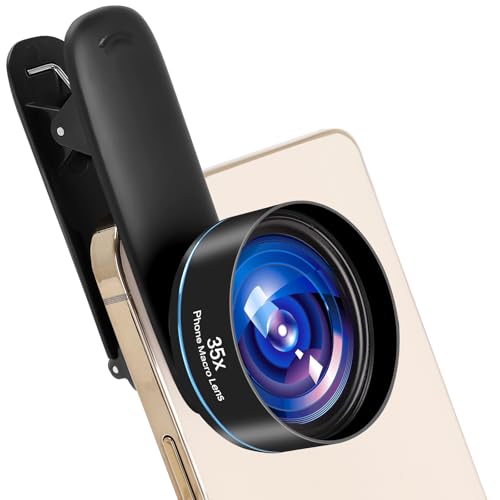
The Beysfilter macro lens offers 35x magnification with a long working distance of 45–95mm, enabling close inspection of tiny insect details without crowding or scaring subjects. Made from HD optical glass with a multi-group structure and AR+AF coatings, it minimizes distortions and ghosting for true-to-life color. Best for insect study, flowers, and jewelry close-ups where depth of field matters. A potential limitation is the need to manage a longer working distance, which may require steadier handling or a stable hold in windy outdoor settings.
MIAO LAB 2-in-1 Macro + Wide Lens Kit

The MIAO LAB kit combines a 12.5x macro with a 0.45x wide-angle lens, offering flexibility for insect photographers who want both close-up textures and broader context. The 0.45x lens helps capture habitat surroundings, which can enhance insect portraits. The macro distance ranges around 0.8–1.6 inches (2–4 cm), suitable for many small subjects. A caution: the 12.5x macro can require steady hands or a tripod for the sharpest results, especially in low light or with tiny subjects.
Xenvo Pro Lens Kit for Phone

The Xenvo Pro Lens Kit provides a TruView 0.45x wide-angle lens and Clarus 15x macro lens, with a dedicated LED light to illuminate subjects. This makes it well-suited for insects photographed in shaded outdoor areas or indoor setups. The kit includes a sturdy clip, case, and cleaning cloth. For best results, position the macro lens about half an inch from the subject and avoid attempting ultra-close focus in obstructed angles. It’s best for users wanting both macro capability and reliable lighting in one package.
APEXEL Professional Macro Photography Lens

The APEXEL macro lens uses 5 glass elements with multi-layer coatings to reduce glare and deliver HD close-ups with minimal distortion. Its large aperture and 4 cm working distance enhance subject separation and allow bright macro images in varied lighting. The kit is clip-on and does not require an app, which makes it user-friendly for quick insect captures in the field. A potential limitation is that extreme magnification can exaggerate motion blur if subjects move or wind shifts apply.
NEEWER Basics LS-69 15x Macro Lens Kit
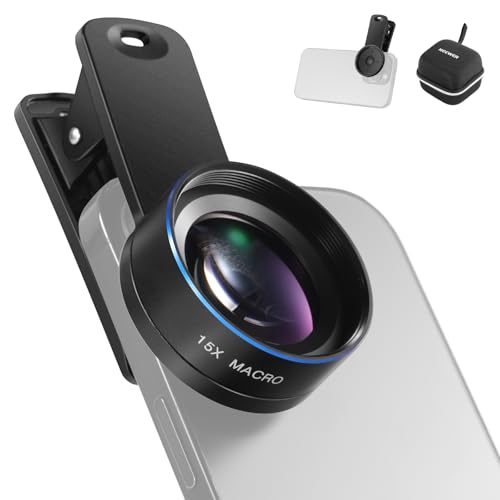
The NEEWER Basics LS-69 macro lens offers 15x magnification with a 0.8–1.6 inch (2–4 cm) working distance, enabling close inspection of insects, jewelry, and coins while maintaining a more natural depth of field. The kit uses an aluminum shell for durability and provides a simple clip-on setup for quick field use. Its straightforward design makes it a reliable budget option, though it may not deliver the extreme macro detail that higher-magnification kits provide in controlled settings.
Buying Guide
Key considerations for selecting an insect-focused macro lens
- Magnification vs. working distance: Higher magnification (e.g., 12.5x–35x) often reduces working distance, which can disturb sensitive insects. Balance magnification with a comfortable distance to minimize subject disruption.
- Image quality: Look for HD optical glass and multi-layer coatings to reduce glare and distortion. Avoid resin lenses if possible for crisper detail.
- Lighting: Built-in LEDs or external lighting help in shaded environments. A lens with lighting can improve shadow-free macro shots of tiny features.
- Clip stability: A secure clip reduces movement during shooting. Consider kits with a stable clip and optional tripod compatibility for stills.
- Compatibility: Most smartphone-compatible lenses fit common models, but verify clips and threads align with your device. Some kits are universal; others are model-specific.
- Portability and setup: For field insect photography, prioritize lightweight, easy-to-attach lenses with travel-friendly cases and minimal setup steps.
FAQ
- What is the best macro lens for insects on a smartphone?
- Do macro lenses require a tripod?
- Will macro lenses work with all smartphones?
- Is higher magnification always better for insect detail?
- Can macro lenses cause color fringing?
- Do macro lenses require apps?
There is no single best option; lenses with 12.5x–15x magnification strike a balance between detail and working distance for many insects. Kits like MIAO LAB and Xenvo Pro are commonly recommended for field use.
Not always, but a small tripod or stable surface helps when working with high magnification to reduce motion blur, especially in outdoor light.
Many are designed to be universal, but clipping mechanisms and lens threads vary. Check compatibility notes in the product listing.
Higher magnification reveals micro details but reduces working distance and can increase depth-of-field challenges. Start with moderate magnification and adjust as needed.
Some lower-cost lenses may exhibit chromatic aberration. Look for lenses with coatings and glass elements that minimize color fringing for sharper edges.
Most listed here do not require dedicated apps; they clip on and use the phone’s native camera controls.