Looking for a magnetic loop antenna that delivers strong reception across multiple bands without complicated tuning? This guide highlights five top picks that balance ease of use, compact design, and solid performance for both shortwave listeners and amateur radio enthusiasts. The selected models cover indoor and outdoor use, offer active or passive operation, and suit different listening environments. Read on to find which loop antenna best matches your goals, whether you’re a casual hobbyist, a DX chaser, or a portable operator.
Buyer at a glance: the table below shows the five recommended magnetic loop antennas, their key strengths, and the ideal user group.
| Product | Best For | Notes |
|---|---|---|
| GA800 Loop Antenna (GOOZEEZOO) | Indoor shortwave listening & hobby HAMs | Wide frequency range; low-noise; no tuning required; includes multiple feed lines |
| WV-601 Passive Loop Antenna (GOOZEEZOO) | Outdoor or portable HAM setups | No power needed; UV and water resistant; broad compatibility |
| MLA-30 Loop Antenna (HAON) | SDR and HAM receivers; urban environments | Active loop with built-in LNA; 0.5–30MHz coverage |
| YouLoop Magnetic Antenna Kit (NWANSI) | Portable HF/VHF listening | Compact, 250 mW, low-loss BALUN, no tuning |
| GOOZEEZOO K-480WLA | Multiband shortwave to VHF use | 0.5–500MHz, multi-band filtering, enhanced SNR |
GA800 Loop Antenna by GOOZEEZOO
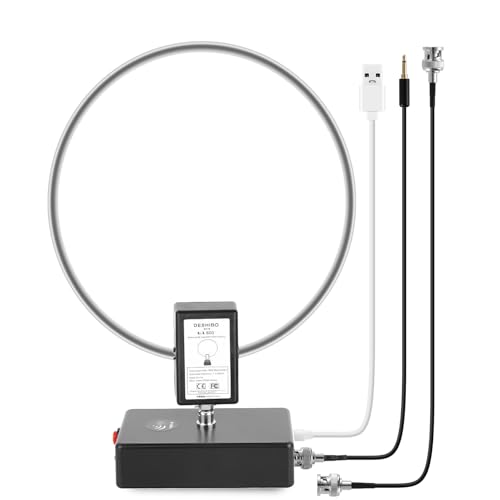
The GA800 is an active indoor shortwave antenna designed for straightforward setup and broad reception. It covers both low and mid bands, including LW, MW, SW, FM, and V/U aviation bands. It requires power for SW and MW while FM and aviation bands benefit from turning off power to reduce noise. This model is best for listeners who want a simple plug-and-play solution without manual tuning and who operate radios that accept an active antenna input. Caution: power management is essential to reduce noise on certain bands.
Who this is best for: Casual listeners and hobby HAMs who want quick, reliable shortwave access without fiddling with tuning controls. Ideal for indoor setups where space and convenience matter.
Why it was selected: Wide frequency coverage and the no-tuning design simplify operation while maintaining strong reception. It’s especially suitable for listeners who want to compare bands quickly and listen to distant broadcasts with minimal setup.
Cautions / limitations: Some users may experience higher noise on SW with power on; follow the recommended power guidance for different bands.
GOOZEEZOO WV-601 Passive Loop Antenna

The WV-601 is a durable, passive loop designed for outdoor use and HAM applications. It does not require power, making it a reliable choice for field deployments or portable setups. Its wide compatibility with adapters allows it to pair with various receivers. The 2026 version supports UV band operations and can handle up to 10 watts for local communications, which adds versatility beyond pure reception. This model is best for operators seeking a robust, maintenance-free option with long-term outdoor exposure in mind.
Who this is best for: HAM operators who prioritize reliability, weather resistance, and ease of integration into existing rigs, especially in outdoor or portable configurations.
Why it was selected: The passive design reduces power needs and maintenance while delivering solid reception across multiple bands. Its rugged build is well suited for in-field use and long-term outdoor exposure.
Cautions / limitations: Being a passive antenna, it relies on the receiver’s amplification and may require a good external RF path for best results in noisy environments.
MLA-30 Loop Antenna Active Receiving Antenna (HAON)
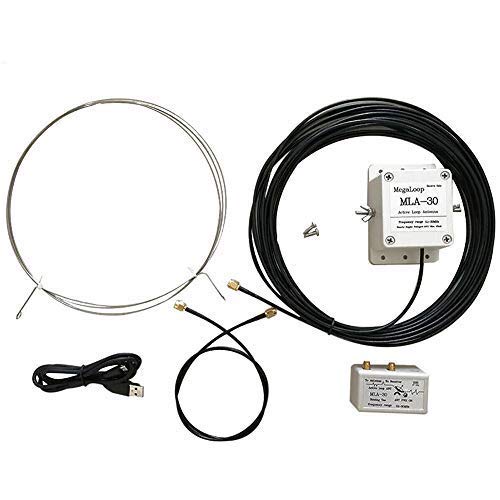
The MLA-30 is an active loop designed for shortwave listening and SDR compatibility. It covers a broad 0.5–30 MHz range and includes a built-in low-noise amplifier to improve weak signal reception. This model is best for urban environments and SDR users who need better directivity and improved signal-to-noise ratio. It works well as a compact, high-sensitivity receiving solution for both hobbyists and semi-professional setups.
Who this is best for: SDR listeners and HAM operators who need reliable performance in urban environments with strong interference.
Why it was selected: The built-in LNA provides a notable boost to weak signals, offering a clear advantage over some passive counterparts in challenging RF conditions.
Cautions / limitations: Higher gain means more potential for picking up local interference; proper placement and orientation are essential to maximize reception.
YouLoop Magnetic Antenna Kit (NWANSI)

The YouLoop kit provides a compact, portable solution for HF and VHF bands with a 250 mW maximum power and a 0.28 dB BALUN. It is designed for quick setup and easy transport, making it well suited for field operations, travel, and on-the-go listening. This passive design excels in situations that require minimal setup time while delivering stable reception on multiple bands.
Who this is best for: Portable operators and travelers who want a lightweight, no-fuss antenna that delivers reasonable performance on HF/VHF without power needs.
Why it was selected: The low-loss BALUN helps preserve signal quality in compact form factor solutions, balancing portability with performance for light-duty field use.
Cautions / limitations: Performance may be limited in very challenging RF environments; placement and orientation matter for best results.
GOOZEEZOO K-480WLA Active Loop Antenna

The K-480WLA is a fourth-generation active loop with a broad 0.5–500MHz range and amplifier capability up to 1GHz. It features a reinforced all-aluminum main control box and gold-plated SMA connectors for shielding and durability. The antenna includes multi-band filters (six-band low-pass and band-pass) to suppress interference and isolate target signals. Its wide frequency range makes it a strong candidate for multi-band listening and DX chasing in urban settings.
Who this is best for: DXers and multi-band listeners who need strong isolation from interference and broad band coverage across MW, SW, FM, AIR, and UHF/VHF bands.
Why it was selected: Advanced filtering and wide frequency range deliver clean signal performance, with adjustable gain for dialing in the best balance between signal and noise.
Cautions / limitations: The setup may require more space and careful mounting to maximize directional advantages and minimize local noise sources.
Buying Guide
What to consider when choosing a magnetic loop antenna:
- Frequency coverage: If your listening focuses on shortwave, MW, and FM, prioritize models with 0.5–30MHz or broader ranges. For VHF/UHF interest, look for multiband loops offering up to 500MHz or higher.
- Active vs passive: Active loops (with built-in LNA) improve weak-signal reception but may amplify noise in strong environments. Passive loops are simpler and power-free but rely on a receiver with adequate gain.
- Indoor vs outdoor use: Indoor loops are compact and convenient, while outdoor or UV-resistant models are better for field work and long-term outdoor deployments.
- Power considerations: Some active loops require power for SW/MW bands; others are fully passive. Check power recommendations to optimize noise performance.
- Impedance and connectors: Common 50-ohm impedance and connectors like BNC, SMA, or adapters affect compatibility with your radio gear.
- Size and mounting: Larger loops often provide better directivity and gain, but space constraints may limit placement in apartments or small rooms.
FAQ
- Q: Do magnetic loop antennas require tuning? A: Some models are designed to be plug-and-play (no tuning required), while others benefit from orientation and simple adjustments.
- Q: Which is better for urban environments, active or passive loops? A: Active loops improve reception on weak signals, but in high-noise areas a passive loop with good RF path can be more stable if the receiver provides gain.
- Q: Can I use a magnetic loop for VHF/UHF? A: Yes, many loops cover up to 500MHz or higher, making them suitable for VHF/UHF listening and monitoring.
- Q: How important is the transmitter power in the loop’s performance? A: For passive loops, no power is involved; for active loops, power affects sensitivity and noise depending on the band in use.
- Q: Do I need a special receiver to use these antennas? A: Most work with standard HF/VHF receivers, SDRs, or ham radios, but check impedance compatibility and required adapters.
- Q: Is a larger loop always better? A: Larger loops can provide higher gain and better directivity but require more space and careful placement.