If you’re shopping for a reliable mechanical sewing machine, this guide helps you pick options that suit different needs—from beginner-friendly models to heavy-duty workhorses. The top picks below are chosen for straightforward operation, sturdy frames, and a range of stitch options. This overview targets hobby sewers, DIY crafters, and small-project enthusiasts seeking dependable, easy-to-maintain machines.
Summary of selected products
| Product | Brand | Stitches | Best For |
|---|---|---|---|
| Brother XM2701 | Brother | 27 built-in stitches | Beginner to intermediate projects |
| Brother FB1757X | Brother | 17 built-in stitches | Simple projects and quick repairs |
| SINGER 4411 | SINGER | 69 stitch applications | Heavy-duty and versatile tasks |
| Janome 1522DG | Janome | 22 stitches | Beginner with a stylish look and solid frame |
| Brother XM3700 | Brother | 37 built-in stitches | Versatile everyday sewing and crafts |
Note: The table highlights key differences to help you compare at a glance. For deeper details, read each product section below.
Brother XM2701: A Solid Beginner Machine

The XM2701 offers 27 built-in stitches, including decorative, blind hem, zigzag, and stretch options, plus an auto-size buttonhole. An automatic needle threader and jam-resistant drop-in top bobbin simplify setup, making it a practical pick for beginners and intermediate users alike. Six included feet and a 3-piece needle set expand capabilities for hems, zippers, and basic repairs.
Best for: First-time sewers and hobbyists who want a broad stitch library without complexity. Choose this if you want a versatile machine that stays straightforward during learning curves. A potential limitation is fewer high-speed capabilities compared with heavy-duty models.
Brother FB1757X: Lightweight And Easy To Use

The FB1757X is a compact mechanical machine with 17 built-in stitches and a 4-step buttonhole style, plus a reverse stitch feature for easy seam finishing. Its lightweight design makes it ideal for portable use or limited workspace setups. This model is well-suited for beginners focusing on basic garments, home projects, and simple repairs.
Best for: Casual sewists and students needing a portable, uncomplicated machine. Limitation: Fewer stitch options than longer-stitch machines, which might limit decorative or quilting projects.
SINGER 4411: Heavy-Duty Power For Tough Fabrics

The SINGER 4411 delivers 50% more power and a heavy-duty motor capable of handling denim, canvas, and leather, while offering 69 stitch applications for diverse projects. With a top speed of up to 1,100 stitches per minute, it balances strength with speed for repairs, upholstery, and fashion sewing alike. This machine suits more experienced hobbyists and those who anticipate frequent heavy fabrics.
Best for: Sewists tackling sturdy materials and diverse projects. Limitation: Heavier footprint and potentially louder operation than lighter machines.
Janome 1522DG: Sleek Design, Solid Build
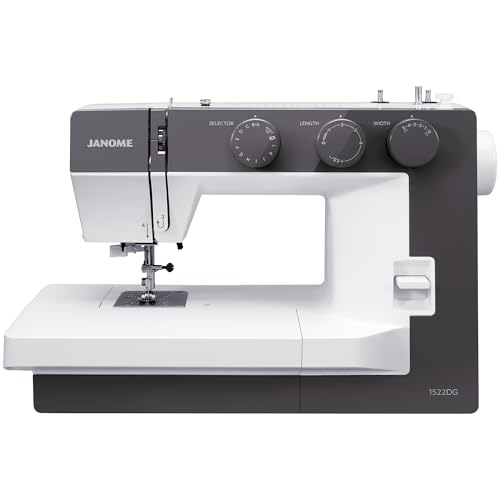
The Janome 1522DG blends aesthetics with practical features. It offers 22 stitches and a one-step buttonhole, backed by a heavy-duty metal frame for durability. An open-top accessory storage compartment and extra-wide sewing bed support organized workflows, making it a good option for beginners who want a tidy workspace and room to grow.
Best for: Beginners who value a stylish machine with sturdy construction and helpful storage. Limitation: Fewer stitches than some models aimed at quilting or decorative sewing.
Brother XM3700: Expansive Stitch Library

The XM3700 provides 37 built-in stitches and a one-step auto-size buttonhole, paired with an automatic needle threader and jam-resistant drop-in top bobbin. It ships with multiple feet, a twin needle, a manual, and an accessory pouch, offering broad capability for regular sewing, crafting, and light quilting tasks.
Best for: Sewers who want a broader stitch set without stepping into professional-grade gear. Limitation: May not match heavy-duty performance required for frequent leather or canvas work.
Buying Guide: Key Purchase Considerations
- Stitch variety vs. project needs: If you plan on decorative sewing or quilting, look for 37+ stitches or more. For simple repairs or clothing hems, 17–27 stitches may be sufficient.
- Durability and build: A metal or heavy-duty frame generally lasts longer under regular use and offers steadier operation on thick fabrics.
- Motor power and speed: Higher stitching speeds are helpful for large projects but may require more control for beginners. Consider user experience and how often you work with dense fabrics.
- Threading and bobbin systems: Automatic needle threaders and drop-in bobbins reduce setup time and jams. Confirm that the bobbin is easy to insert and remove.
- Access and maintenance: Look for machines with clear access to oil points and simple routine maintenance. A dedicated accessory compartment helps keep tools organized.
- Portability vs. workspace: If you have limited space, prefer a lightweight model. For a dedicated sewing room, a larger footprint with a robust table can be advantageous.
- Accessories: A good starter kit (feet for zipper, blind stitch, buttonhole, etc.) and a case or cover extend usability and protect the machine between uses.
Frequently Asked Questions
- What is the difference between mechanical and computerized sewing machines?
Mechanical machines use manual controls for stitches and features, while computerized models rely on digital settings. Mechanical machines are typically simpler, durable, and easier to repair. - Are heavy-duty machines necessary for beginners?
Not necessarily. Start with a machine that fits your projects; if you expect frequent thick fabrics, a heavier-duty model can prevent skipped stitches and strain. - How many stitches should a basic machine have?
A basic machine often offers 12–30 stitches; more stitches allow for a wider range of decorative and functional options. - Is a one-step buttonhole important?
Yes, it simplifies buttonhole construction and yields consistent results across garments and projects. - Do I need a machine with automatic needle threading?
It’s convenient and reduces eye strain, but not essential. If you’re comfortable threading by hand, you can opt for models without it. - What should I consider regarding maintenance?
Regular oiling, cleaning lint from the bobbin area, and following the manual’s service schedule help extend machine life.