Answering the need for crisp, studio-like voice overs, these top microphones are chosen for reliability, ease of use, and clarity across home studios and on-the-go setups. Each option targets a specific buyer: voice over artists seeking plug-and-play USB mics, podcasters needing noise reduction, creators needing wireless lavalier kits, and professionals upgrading from webcams to high-quality audio. The table below compares the five most relevant picks.
| Product | Best For | Key Benefit |
|---|---|---|
| Mini Mic Pro | On-the-go creators | Wireless, plug-and-play with iPhone/Android |
| ZealSound K66 USB Mic | PC/mac podcasting | Intelligent noise reduction mode |
| FIFINE Studio Condenser USB (T669) | Home studios | Desk mic with boom arm and pop filter |
| Logitech Blue Yeti | YouTube, streaming | Multiple pickup patterns |
| Labstandard Wireless Lavalier | Interviews, on-camera | Dual wireless mics, real-time sync |
Mini Mic Pro – Wireless Lavalier for iPhone & Android

The Mini Mic Pro is designed for voice overs and mobile creators who need crisp sound without bulky gear. It offers a plug-and-play connection for iPhone and Android devices, including USB-C and Lightning adapters. Its compact form allows clipping to a shirt or slipping into a pocket, making it ideal for field VO work, quick interviews, and social video production. Best for: on-the-go VO artists who require reliable wireless performance and minimal setup. Limitation: does not replace a high-end studio mic in quiet, controlled environments.
ZealSound K66 USB Podcast Microphone

The K66 USB mic emphasizes studio-quality sound with a cardioid capsule and a broad 40 Hz–18 kHz response. It includes wide compatibility with Windows, Mac, iPhone, iPad, and Android devices via USB-C and Lightning adaptors. A standout feature is Intelligent Noise Reduction Mode, which reduces keyboard clicks, fan noise, and background chatter for cleaner VO and podcast recordings. Best for: podcasters and VO artists who record in mixed environments and want quick, reliable cleanup. Caution: USB microphone performance may vary with input devices and software settings may affect the noise-reduction behavior.
FIFINE Studio Condenser USB Microphone Kit (T669)

This USB condenser microphone kit provides an easy plug-and-play setup for PC and laptops. It includes a desktop boom arm, shock mount, and a pop filter, helping isolate vocals from desk noise and room reflections. The cardioid condenser capsule captures front-focused sound with a wide frequency response, making it a solid choice for home studios recording voice overs, podcasts, or YouTube content. Best for: new or growing studios needing an all-in-one setup. Limitation: not compatible with Xbox; treat it as a PC/mac-oriented solution.
Logitech Creators Blue Yeti USB Microphone

The Blue Yeti stands out with four pickup patterns—cardioid, omni, bidirectional, and stereo—giving flexibility for different VO tasks, from solo voice work to interviews and group discussions. It’s a plug-and-play USB mic suitable for YouTube, streaming, podcasts, and Zoom meetings. Best for: creators who want versatile mic patterns and easy, software-free setup. Caution: higher-end features require compatible software for VO enhancements.
ZOPPLM Wireless Lavalier Microphone (2 Pack)
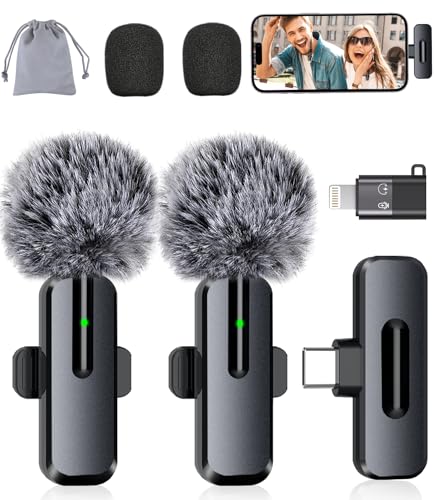
This two-pack wireless lavalier system provides studio-quality sound with high-density wind protection and DSP-based noise handling. It offers USB-C and Lightning adapters for quick smartphone or tablet integration, making it suitable for on-site VO work, interviews, or multi-speaker recordings. Best for: content creators needing two wireless mics for synchronized dialogue or multi-person VO. Caution: some users may prefer wired options for longer sessions or critical studio environments.
Buying Guide: Key Purchase Considerations
- What’s your recording environment? If you’re in a quiet room, a USB condenser mic (like FIFINE T669) can deliver clear VO. For outdoors or on-location VO, wireless lavaliers (Mini Mic Pro or ZOPPLM) reduce handling noise and distance issues.
- USB vs XLR? USB mics plug straight into computers and devices but may lack some professional routing options. XLR mics (not present in this list) offer more flexibility with mixers and audio interfaces. Consider your future setup.
- Do you need multiple pickup patterns or noise reduction? For VO-only work, cardioid or single-pattern mics are often sufficient. If you produce varied content (music, group discussions), a multi-pattern mic (Blue Yeti) provides versatility.
- Portability vs. studio quality? Wireless lavaliers prioritize portability and convenience. USB mics prioritize audio clarity and stability in controlled environments.
- Compatibility and workflow? Ensure that your device is supported (iPhone, Android, Windows, Mac) and that adapters (USB-C, Lightning) are included if you plan to switch devices.
FAQ
- What is the best mic for voice over on a budget? The FIFINE Studio Condenser USB mic with its included accessories offers solid VO quality and value for a home studio setup.
- Do USB mics require drivers? Most USB mics are plug-and-play and do not require drivers, but some advanced features may need software.
- Are wireless lavaliers reliable for VO? Yes, when using a dependable system with good wind protection and DSP noise handling, lavaliers can be highly effective for on-location VO.
- Is a microphone with multiple pickup patterns better for VO? It’s helpful if you plan to do different types of content, but for straightforward VO work, a cardioid USB mic often suffices.
- Should I choose a dynamic or condenser mic for VO? Condenser mics tend to capture more detail in controlled environments, while dynamic mics handle louder sound sources and less sensitive recordings in untreated rooms.
- Do I need a boom arm with a USB mic? A boom arm helps reduce desk noise and places the mic at an optimal distance, which is especially beneficial for long recording sessions.