Answer: Multi-zone heating control systems let you tailor climate per room or zone, saving energy and improving comfort. The top picks below are best for homeowners seeking reliable zoning with easy installation, compatibility with common thermostats, and flexible system design. The list targets different needs—from universal replacements to high-capacity mini splits—and highlights who each product is best for. The buyer’s table summarizes key details to compare quickly.
| Product | Best For | Zone Count | Note | |
|---|---|---|---|---|
| SmartZone-4X Control | Homes needing up to 20 zones; universal compatibility | 4–20 | Works with any thermostat and many HVAC systems | Universal replacement option |
| SmartZone-2 | Smaller homes or retrofit projects | 2 | Simple installation and single-stage compatibility | Good for two-zone setups |
| Fundyliue HZ311 | 24V systems needing 3 zones with LED clarity | 3 | Low-voltage safety design and easy terminal access | LED display aids troubleshooting |
| Temprium 28K Dual Zone | Three-zone mini-split projects with modern inverter tech | 3 | High efficiency with 21 SEER2; wide temperature range | Outdoor-to-indoor link; long line length |
| YITAHOME 4 Zone Mini Split | Year-round multi-room comfort with smart features | 4 | WiFi, Alexa control, and versatile modes | Quiet operation; 25 dB night mode |
SmartZone-4X Control – 4 Zone Kit

Brand: ECOJAY
Features: 4 ZONES up to 20 ZONES, Universally Compatible – Works with any system (Gas, Electric, Heat Pump), Use any thermostats – nest, ecobee, honeywell, amazon, sensi etc.
Best for: Homeowners who want broad compatibility and the option to expand zoning without changing the HVAC system itself. This kit suits retrofit projects and remodels where multiple thermostat brands may be in use.
Why selected: It offers substantial zoning flexibility and thermostat neutrality, simplifying integration with existing setups. A potential limitation is that real-world installation depends on existing wiring and control circuits.
SmartZone-2: 2-Zone Controller Kit
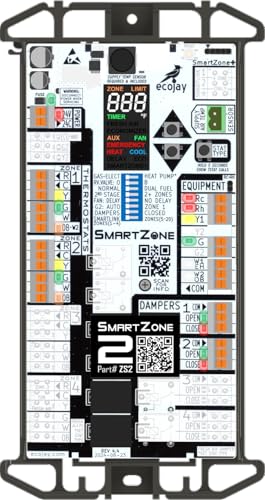
Brand: ECOJAY
Features: 2 ZONES (Supply air temperature sensor included), Single-Stage COOL, 2 Stage Heat equipment compatible, Easy to install & simple to use
Best for: Smaller homes or apartments needing two distinct temperature zones with straightforward setup. This is a good upgrade from single-zone control without overbuilding the system.
Why selected: Simplicity and compatibility with existing two-stage systems. Caution: Limited zone capacity means it’s not ideal for larger homes with many rooms.
Fundyliue HZ311 24V True Zone Panel

Brand: Fundyliue
Features: 24V True Zone Control Panel for 3 zones, Compatible with thermostats, 1H/1C, LED status display, durable push-in terminals
Best for: Users with 24V HVAC systems seeking a dedicated multi-zone control panel and clear status indicators in a compact footprint. Suitable for inverter-compatible setups.
Why selected: The kit emphasizes low-voltage safety and space efficiency. Limitation: It targets 24V systems; compatibility with older units may vary.
Temprium 28K Dual Zone Mini Split

Brand: Temprium
Features: 28K BTU Dual Zone, 21 SEER2, 3 indoor units connected to one outdoor unit, inverter, R32 refrigerant, -13°F extreme cold performance
Best for: Whole-home zoning with high efficiency and robust cold-weather performance. This setup suits mid-sized homes that require precise per-room control and energy savings.
Why selected: Strong energy efficiency and cold-weather capability. Caution: Performance depends on proper line-set sizing and outdoor unit placement.
YITAHOME 4 Zone Mini Split System

Brand: YITAHOME
Features: 4 indoor units, 4 outdoor condenser, independent room control, 20 SEER2, WiFi and Alexa compatibility, 7-in-1 modes including iFeel and 24H timer
Best for: Multi-room comfort with smart control and modern features. Ideal for homeowners seeking remote management and voice-compatible operation.
Why selected: The system bundles multiple zones with modern connectivity. Limitation: Larger initial footprint and installation complexity compared to single- or two-zone kits.
Buying Guide: Key Considerations for Multi-Zone Heating Control
- System compatibility: Check whether the controller works with your existing HVAC equipment (gas, electric, heat pump) and whether thermostats you already own can be integrated.
- Number of zones: Assess how many zones you need now and whether you may expand later. Some controllers support up to 20 zones, others are limited to three or four.
- Control methods: Consider wired sensors vs. wireless thermostats, and whether you want WiFi or smart-home compatibility (Alexa, Google Assistant).
- Energy efficiency: Look for inverter-driven outdoor units and high SEER ratings to maximize savings during heating and cooling seasons.
- Installation and space: Review wiring, wall space for controllers, and whether the system requires professional installation or is DIY-friendly.
- Temperature range and climate: Ensure the system operates effectively in your local climate, including extreme cold or hot conditions.
- Maintenance and LED/status indicators: Clear displays and accessible terminals help ongoing troubleshooting and upkeep.
FAQ
- What is a multi-zone heating control system?
A multi-zone system divides a building into separate zones with independent temperature control, improving comfort and efficiency. - Do these controllers work with any thermostat?
Many kits advertise compatibility with popular thermostats, but confirm compatibility with your specific models before purchasing. - Can I retrofit an existing HVAC system with a zoning panel?
Yes, many kits are designed for retrofit, but wiring and compatibility should be evaluated by a professional if unsure. - What is SEER2 and why does it matter?
SEER2 is a measure of cooling efficiency; higher values indicate greater energy savings over a season. - Is WiFi control necessary?
Not required, but WiFi-enabled systems offer convenient remote control and integration with smart homes. - What should I avoid when choosing a zone controller?
Avoid selecting a system that exceeds your outdoor unit’s capacity or your wall-space and wiring constraints.