Answer: This guide highlights five reliable portable charging options ideal for camping and outdoor adventures. They vary by capacity, input/output options, and built-in features to suit different campers—from minimalist hikers to gear-heavy RV travelers. The best picks balance weight, power, and practicality for outdoor use. The top choices below are selected for reliability, user safety, and usefulness in remote settings.
| Product | Capacity / Power | Best For | Notes |
|---|---|---|---|
| Jackery Explorer 300 | 292Wh | Heavy-duty camping & backcountry trips | LiFePO4 battery, multiple outputs |
| MARBERO 88Wh | 88Wh | Compact car camping & emergency backup | 8 outputs, built-in car charger |
| BLAVOR 10000mAh | 10,000mAh | Lightweight day hikes & quick charges | USB-C 20W, wireless charging |
| HOWEASY 88Wh | 88Wh | Family camping & emergency light | 3-mode LED flashlight, multiple outputs |
| ENOFLO 97.68Wh | 97.68Wh | Backpacking & weekend trips | 6 outputs, built-in LED light |
Jackery Explorer 300 Portable Power Station

The Jackery Explorer 300 provides 292Wh of LiFePO4 battery capacity with a lightweight frame. It includes two AC outlets, a 100W USB-C PD port, two USB-A ports, and a 12V car port, enabling charging of laptops, cameras, drones, and other devices. This model is best for campers who need robust off-grid power for longer trips or for powering essential devices concurrently. It is suited for hikers and road-trippers who prioritize reliability and a durable battery system. Caution: Heavier than ultra-compact options, so plan for transport to campsites with gear.
MARBERO 88Wh Portable Power Station
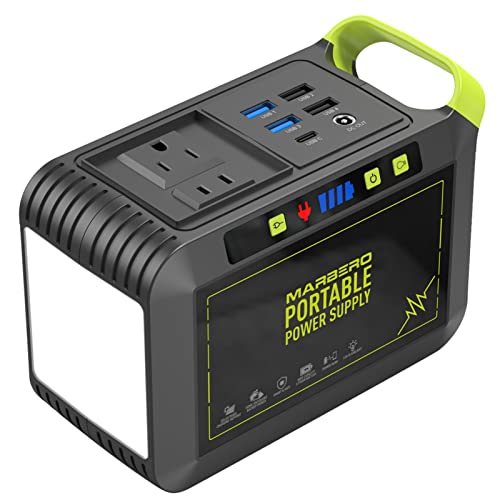
The MARBERO 88Wh power station emphasizes efficient charging and a compact design, measuring about the size of a basic DSLR and weighing light enough for easy transport. With eight output ports, including USB-C PD and USB-A, it can power multiple devices simultaneously. It is particularly well-suited for short camping trips, RV trips, or backyard backups where space is a premium. Best for campers who want a flexible de facto power strip substitute. Limitation: Lacks as much battery capacity as larger models for long-term off-grid use.
BLAVOR 10000mAh Solar Power Bank with USB-C

This BLAVOR model offers a real-rated 10,000mAh capacity with USB-C input/output and 20W fast charging. It can charge three devices at once and includes a dual flashlight feature, which is useful for late-night camping tasks. It’s best for light-pack travelers who want reliable on-the-go charging with wireless charging support. Caution: Smaller capacity means fewer full-device charges on extended trips without solar recharge.
BLAVOR 20,000mAh Solar Power Bank With Built-In Cables
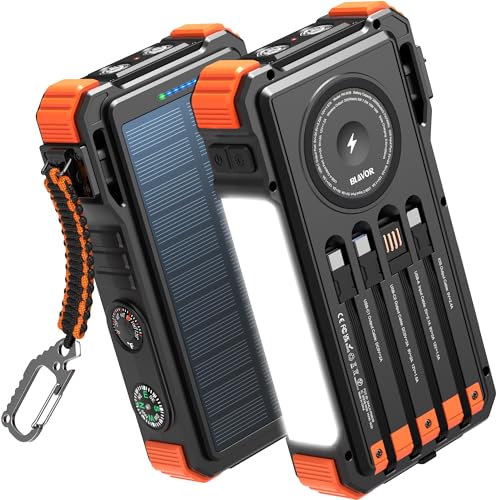
This BLAVOR charger expands capacity to 20,000mAh and comes with built-in cables plus a wireless charging area for phones and Apple Watch. It supports simultaneous charging, including USB-C, USB-A, and iOS connectors. It’s ideal for campers who want to charge multiple devices and wearable tech, along with a dedicated wireless pad for convenience. Limitation: Heavier and bulkier than smaller power banks, which may affect packing efficiency for ultralight hikers.
HOWEASY 88Wh Portable Power Station

The HOWEASY 88Wh unit focuses on practical outdoor use with eight output ports, including two AC sockets and USB-C, plus a 6A DC port. An LED display shows remaining power, aiding trip planning. It’s a good pick for weekend campers who need to run lights, a small cooler, or a fan. Caution: The 88Wh capacity means you’ll want to prioritize essential devices to maximize runtime on longer adventures.
Buying Guide: How to Choose a Camping Power Bank
What capacity do you need?
Capacity should align with your devices and trip length. For short trips, 88-100Wh units handle phones and small devices. For longer trips or power-hungry devices, aim for 292Wh+ or a solar generator with higher capacity.
What outputs matter?
Look for a mix of USB-C PD, USB-A, AC outlets (if needed), and car ports. USB-C PD enables faster charging for laptops and newer phones.
Is weight or size a priority?
Backpacking favors lighter, compact options; car camping tolerates larger units with more ports and higher capacity.
Do you need solar charging?
Solar-capable models provide off-grid charging in sunny conditions. Check for built-in solar panels or compatibility with portable solar panels.
What safety features should you expect?
Look for overcharge, short-circuit, and temperature protection, as well as battery chemistry like LiFePO4 for longer life and safety in varied conditions.
Durability and weather resistance
Rugged shells and protective seals help with outdoor use. Consider splash resistance or a dedicated protective case for harsh environments.
Usage scenarios
Choose based on your typical camping style: ultralight backpacking requires smaller packs and modest capacity; RV or car campers benefit from larger, multi-port units that can power more devices at once.
What about price vs. value?
Higher-capacity models cost more, but they reduce frequent recharges and can power more devices. Balance cost with trip length and device needs.
FAQ
- How long does a camping power bank typically last during a weekend trip? Answer: Runtime depends on capacity and devices charged; higher capacity units last longer between charges.
- Can USB-C PD charge laptops in these power banks? Answer: Some models provide a USB-C PD port capable of charging many laptops, check the rated wattage for compatibility.
- Is LiFePO4 safer than standard lithium for camping power banks? Answer: LiFePO4 offers longer cycle life and thermal stability, which can be safer for extended outdoor use.
- Should I choose a solar panel-compatible model if I camp in the backcountry? Answer: Yes, solar compatibility extends off-grid charging options, especially on multi-day trips.
- Do these power banks support wireless charging? Answer: Some models include wireless charging; verify if your devices support wireless charging and if the bank has a built-in pad.
- What’s a practical rule of thumb for charging during camping trips? Answer: Charge essential devices first (phone, GPS, light) and plan recharging around solar availability or vehicle charging when possible.