Looking for a compact, travel-friendly keyboard piano that’s easy to learn on and suited for practice anywhere? This guide highlights five portable keyboard pianos that balance size, features, and beginner-friendly design. Ideal buyers include students, travelers, apartment dwellers, and parents buying for kids who want a practical, entry-level instrument. The selection below prioritizes 61-key layouts and compact designs, plus foldable or lightweight options for easy transport.
Product Comparison At A Glance
| Product | Keys / Type | Best For | Notes |
|---|---|---|---|
| RockJam RJ361 | 61 keys | Beginners needing learning features | Compact with 200 sounds & rhythms; record/playback |
| RockJam RJ5061 Kit | 61 keys | Complete starter sets | Includes stand, bench, headphones, stickers |
| Rhymo Folding Piano Keyboard | 61 keys foldable | Travelers and performers | Ultra-portable with 128-note polyphony |
| JIKADA 61 Key Keyboard | 61 keys | Home practice with teaching modes | Three teaching modes, LED display |
| Alesis Melody 32 | 32 keys | Total portability and quick sessions | Small, battery/USB powered, built-in songs |
RockJam RJ361 61 Key Compact Keyboard Piano for Beginners
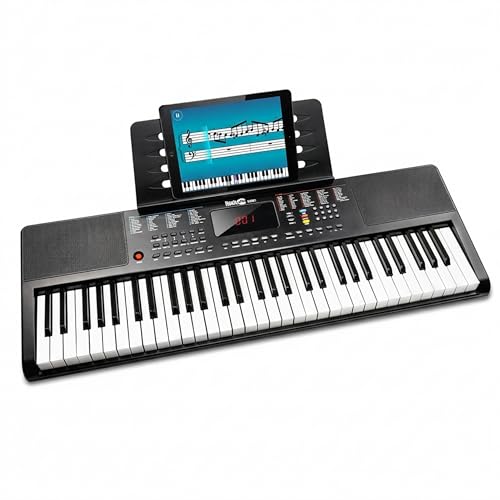
The RockJam RJ361 is a compact 61-key keyboard designed for beginners who need space efficiency. It offers 200 sounds and 200 rhythms, expanding practice and creative options without crowding a small room. Sustain and vibrato effects, plus a built-in recording feature, help learners review progress and refine technique. This model is best for new players who want a budget-friendly, all-in-one practice setup in a limited space. A potential limitation is the absence of heavier-duty features found on higher-end models, which is acceptable for entry-level use.
RockJam RJ5061 61 Key Keyboard Piano Kit with Stand, Bench & Headphones

The RockJam RJ5061 kit is a complete starter package for beginners who want a ready-to-play setup. Equipped with a stand, bench, headphones, and note stickers, it supports guided learning and comfortable practice. The device includes pitch bend and an LED panel with 200 rhythms and 200 tones, along with demo songs. Choose this if you want an all-in-one, classroom-style solution and don’t mind a larger footprint than a bare keyboard. A note: accessories add bulk compared to solo keyboards.
Rhymo Folding Piano Keyboard, 61 Keys

The Rhymo folding 61-key keyboard emphasizes ultra-portability with a compact foldable design and a padded gig bag. It uses a studio-grade audio engine with 128-note polyphony and 128 timbres, offering solid sound for practice and light stage use. Best for travelers, students, or performers who need a lightweight, easily transported instrument. A caution: foldable designs may feel less sturdy than rigid keyboards in frequent heavy-use environments.
JIKADA 61 Key Portable Electronic Keyboard Piano

The JIKADA 61-key keyboard combines practice-friendly features with teaching modes and a visible LCD status display. It supports audio input/output, microphone, and headphone jacks, enabling singing and playing without disturbing others. With 255 tones and 255 rhythms, it offers diverse sounds for creative exploration. This model suits learners who prefer structured lessons and simple, guided practice. Limitation: the feature set can be overwhelming for absolute beginners who just want a single-voice practice keyboard.
Alesis Melody 32 Mini Piano Keyboard

The Alesis Melody 32 is a compact, portable option for riders and beginners who value immediate, simple play. It features 32 mini keys, built-in speakers, and 300 voices across various instrument sounds. The keyboard includes practice-friendly features like a headphone jack and built-in 40 demo songs plus an accompaniment mode. Best for quick sessions and travel, but its smaller key count may feel limiting for players aiming to develop piano technique on a full-size keyboard.
Buying Guide: What To Look For In A Portable Keyboard Piano
Should you prioritize key count or portability?
61 keys strike a balance between a familiar playing surface and compact size. For travel or dorm room use, 61-key models offer adequate range for beginner pieces, scales, and simple arrangements without the bulk of an 88-key instrument.
Is built-in learning content important?
For beginners, keyboards with lessons, teach modes, or bundled accessories can accelerate progress. Look for teaching modes, demonstrated lessons, and guided note systems to support steady practice routines.
What about sound quality and polyphony?
128-note polyphony is a common threshold that prevents note drop during complex passages. Look for keyboards that advertise multiple timbres or built-in rhythms to keep practice engaging, especially for kids or casual players.
What accessories matter for beginners?
Stands, benches, headphones, and music-note stickers can improve posture and focus. Kits that include these items reduce setup effort and promote a more complete learning environment.
Which features help with portability?
Foldable designs, lightweight materials, carry bags, and battery or USB power options enhance portability. Consider how often you’ll transport the keyboard and where you’ll practice to determine the ideal form factor.
What should you avoid for basic use?
Avoid oversized desks or heavy models if you travel frequently. Also, avoid keyboards with steep learning curves or too many complex settings that can overwhelm beginners.
Frequently Asked Questions
- What is the smallest portable keyboard suitable for beginners? A compact 32-key or 61-key model is typically ideal for entry-level learners and casual play.
- Do portable keyboards include built-in songs? Many do, including demo songs or accompaniment rhythms to support practice routines.
- Is 61 keys enough to learn piano technique? Yes for basic skills, scales, and learning pieces; many beginners eventually move to 88-key keyboards for full technique development.
- Are folding keyboards durable for travel? Folding designs save space and are portable, but check build quality and materials to ensure durability during frequent moves.
- Should I buy a kit with stand and bench? If you want a ready-to-use setup, a kit is convenient; otherwise, a standalone keyboard with a portable stand may be sufficient.
- What is polyphony and why does it matter? Polyphony is the number of notes that can sound simultaneously. Higher polyphony reduces note drop in complex passages.
For aspiring players seeking a practical, portable option, the five highlighted models provide varied approaches—from bundled beginner kits to foldable travel keyboards—while keeping the focus on ease of use, portability, and learning support. Choose the model that best aligns with your space, practice habits, and whether you value built-in learning features, bundled accessories, or ultra-lightweight portability.