Looking for reliable off-grid power for camping, travel, or emergency backup? This guide selects five top portable power stations that balance capacity, weight, and versatility. Each pick targets clear buyer needs—from ultra-light hiking to home backup and camping setups—so you can choose with confidence.
The following table highlights key details to compare at a glance. Columns indicate capacity, output, weight, and ideal use case for quick decision-making.
| Product | Capacity | Output | Weight | Best For |
|---|---|---|---|---|
| Jackery Explorer 300 | 292Wh | 300W | 7.5 lb | Lightweight camping, CPAP off-grid |
| Anker SOLIX S2000 | 2010Wh | 3000W peak | 35.7 lb | Home backup, heavy loads |
| Jackery Explorer 1000 v2 | 1070Wh | 1500W | 23.8 lb | Outdoor trips with higher power needs |
| ALLWEI Portable Power Station 300W | 256Wh | 300W | ~6 lb | Budget camping, basic devices |
| Anker SOLIX C1000 Gen 2 | 1024Wh | 2000W | ~ | Compact home backup, versatile devices |
Jackery Explorer 300 Portable Power Station, 292Wh

The Jackery Explorer 300 delivers 292Wh with a 300W rated output and 600W peak. It has 2 AC outlets, a 100W USB-C PD port, 2 USB-A ports, and a 120W car port. Its LiFePO4 chemistry offers durability and longevity; over 4,000 charge cycles maintain capacity well into years of use. The unit weighs about 7.5 lbs and includes a comfortable integrated handle, making it ideal for hikers, campers, and CPAP users who need portable, off-grid electricity. Best for: ultralight backpackers or campers who need reliable, multi-device charging without added bulk.
Limitation: The compact size means lower total capacity, so plan for shorter trips or fewer high-draw devices. Consider pairing with solar panels for extended stays.
Anker SOLIX S2000 Portable Power Station, 2,010Wh

The Anker SOLIX S2000 focuses on home backup and higher-demand scenarios. It uses a 2,010Wh capacity with a 3,000W peak output. A key advantage is its long-lived 15-year lifespan from its 314Ah LiFePO4 battery and up to 35 hours of fridge operation under idle conditions. It’s described as compact for its class, at 35.7 lbs and a form factor smaller than many 2kWh options. Best for: situations needing substantial, reliable power for longer periods, such as a home backup or remote work setup during outages.
Limitation: Heavier than portable models; not ideal for ultralight backpacking. Consider your carrying capacity and space when choosing this for travel.
Jackery Explorer 1000 v2 Portable Power Station

The Explorer 1000 v2 provides 1,070Wh capacity with a 1,500W continuous output and a 3,000W surge. It weighs about 23.8 lbs, with a foldable handle for easier transport. Notable features include fast charging via Jackery’s app, achieving 0–100% in approximately one hour under emergency charging, and a long lifespan with LiFePO4 cells that can retain a high portion of capacity after thousands of cycles. Best for: campers and RV users who need substantial power without the bulk of larger models, plus the option for quick top-ups in emergencies.
Limitation: While powerful, it may still feel heavy for strict hikers or backpackers who prioritize ultra-lightweight gear.
ALLWEI Portable Power Station 300W, 256Wh
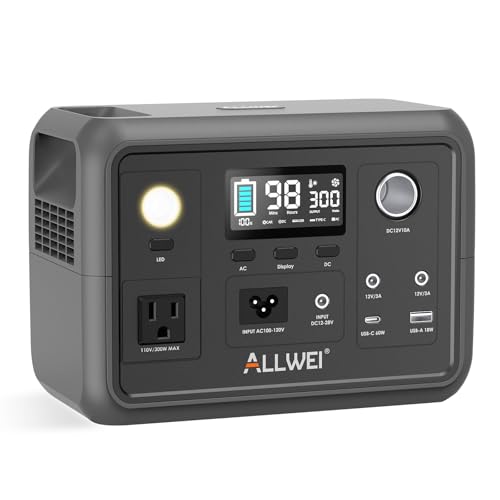
ALLWEI’s 256Wh unit provides 300W continuous power with a 600W peak, and a 6-port output including AC, DC, USB-A, and USB-C PD. It uses LiFePO4 chemistry for up to roughly 3,000 cycles and includes a robust BMS with multi-layer protection. It’s designed for road trips, home backup, and small outdoor adventures, allowing pass-through charging for simultaneous device and station charging. Best for: budget-conscious buyers who need a compact, versatile option for phones, laptops, and small appliances.
Limitation: The 256Wh capacity limits operation time for higher-draw devices or longer outages; pairing with solar panels can extend use in offline conditions.
Anker SOLIX C1000 Gen 2 Portable Power Station

The SOLIX C1000 Gen 2 emphasizes fast recharging with HyperFlash at up to 1,600W, enabling rapid turnaround during outages or trips. It delivers 2,000W continuous output (3,000W peak) and a 1,024Wh capacity for powering multiple devices. Its compact, portable design improves usability in tight spaces, such as RVs or camping setups, while maintaining strong performance for emergency power. Best for: users who want a capable, fast-recharging unit that remains manageable to move between rooms or vehicles.
Limitation: The exact weight is not listed here; ensure your carrying capacity aligns with the unit’s weight when considering backpack or vehicle-based use.
Buying Guide
What capacity do you actually need?
Consider your essential devices and how long you need them powered. Higher Wh (watt-hours) means longer runtimes but more weight. For casual camping, 256–1070Wh may suffice; for home backup, 1,000–2,000Wh can cover more appliances during outages.
How important is fast charging?
If you frequently experience outages or have limited time between uses, models with rapid recharge (like HyperFlash-enabled units) save downtime. Note charging speed can depend on input power and temperature.
Weight vs. power trade-offs
For hikers and campers, weight matters more than raw power. For home backup or RV use, heavier units with higher capacity may be justified. LiFePO4 chemistry improves lifespan and safety, especially with frequent cycles.
Port selection and device compatibility
Look for a mix of AC outlets, USB-C PD, USB-A, and car ports. If you rely on laptops or camera gear, USB-C PD at 60W or more is beneficial. Ensure total continuous output meets your devices’ combined demand.
Longevity and cycles
LiFePO4-based models offer longer cycle life. If you expect daily use or long-term ownership, prioritize capacity and cycle life data to maximize value over time.
Maintenance and safety features
Protective features like multi-layer BMS, short-circuit protection, over-voltage protection, and pass-through charging improve safety when powering multiple devices. Regularly inspect cables and ports for wear.
FAQ
- How long does a portable power station typically last on a full charge? Duration depends on capacity and device load. Smaller units may power essentials for hours; larger units can cover days for multiple devices.
- Can I use a portable power station for a CPAP machine? Yes, many units can run CPAP devices, but check your CPAP’s wattage and the power station’s continuous output rating.
- Is LiFePO4 better than Li-ion for these devices? LiFePO4 offers longer cycle life, improved safety, and more stable performance over time, which helps with frequent charging cycles.
- What’s the best option for a light backpacking trip? A compact unit with 200–300Wh and under 10 pounds is typically ideal for minimal device charging.
- Do these require solar panels? Solar panels are optional. Some models pair well with solar panels for off-grid use, extending runtime during extended trips or outages.