Answered: if you’re building or upgrading a home or project studio, a professional audio interface is essential for high-quality mic and instrument capture, low-latency monitoring, and reliable audio routing. This guide focuses on five standout models that balance sound quality, versatility, and workflow for engineers, podcasters, and musicians. The recommended picks cover compact two-channel setups to multi-channel hubs, so you can choose based on your gear list, room, and future expansion needs. See the quick product table below for a fast comparison.
Summary table of selected products:
- Focusrite Scarlett 4i4 4th Gen USB-C — Studio hub for mics, guitars, and MIDI with extensive I/O.
- Focusrite Scarlett 18i16 4th Gen USB-C — Large I/O with 18 inputs and 16 outputs for complex setups.
- Universal Audio Volt 276 USB — Vintage UA preamp character with integrated processing workflow.
- Solid State Logic 2 MKII Plus USB-C — Bus-powered, compact 2×4 with pro-grade preamps.
- Focusrite Scarlett 2i2 4th Gen USB-C — Everyday two-in, two-out solution with Auto Gain and Clip Safe.
Focusrite Scarlett 4i4 4th Gen USB-C Audio Interface

The Scarlett 4i4 4th Gen is a multi-input USB-C interface designed as a compact studio hub. It includes two mic preamps, two Hi-Z instrument inputs, four line inputs, four line outputs, and MIDI I/O. With a 120dB dynamic range and Focusrite’s 4th Gen converters, it aims for studio-grade sound in a desktop footprint. This model is best for projects that need reliable microphone and instrument routing, plus some outboard gear or MIDI devices. Caution: larger setups may outgrow the I/O count without adding a patchbay or expansion gear.
Best for: small bands, podcasters with multiple mics, and home studios needing a central hub without sacrificing sound quality.
Why selected: It offers a balanced combination of preamps, I/O, and software integration for everyday production, with clear scalability for future gear.
Limitation: Not the top choice if you require more than four analog inputs without additional expansion. Consider the 18i16 or a larger system if you anticipate frequent multi-mic sessions.
Focusrite Scarlett 18i16 4th Gen USB-C Audio Interface

The Scarlett 18i16 4th Gen targets larger project studios and live workstations. It supplies 18 inputs and 16 outputs, including four mic preamps, Hi-Z, multiple line and ADAT options, plus MIDI I/O. Its 24-bit/192kHz converters with a 122dB dynamic range promise detailed, transparent recordings. This model shines in complex sessions with bands, orchestras, or podcast studios needing direct access to multiple analog sources and external gear. Caution: The depth and power needs are greater; ensure your workspace accommodates the extra back-panel connections.
Best for: multi-microphone ensembles, hybrid music production, and studios requiring extensive routing and expandability.
Why selected: It balances high input count and flexible routing with studio-grade conversion, enabling more elaborate signal paths without external mixers.
Limitation: The larger footprint may be less convenient for tiny desks or mobile setups.
Focusrite Scarlett 2i2 4th Gen USB-C Audio Interface
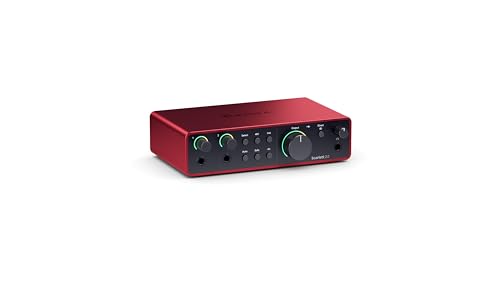
The Scarlett 2i2 4th Gen is a compact, two-input interface designed for solo producers and small home studios. It includes two high-quality mic preamps, instrument inputs, and robust software options, all in a USB-C package. The Auto Gain feature helps beginners set levels, while Clip Safe protects against distortion. With the same 120dB dynamic range as other Scarletts, it delivers studio-grade recordings in a smaller footprint. Choose this if you want a simple, reliable setup with room to grow into more complex workflows later.
Best for: solo artists, podcasters, and beginners who want an easy, reliable starting point with upgrade potential.
Why selected: The combination of simplicity, built-in gain management, and strong conversion makes it a smart first-choice for focused recording tasks.
Limitation: Limited I/O for large sessions; consider larger Focusrite models or an external mixer if you expect many inputs simultaneously.
Solid State Logic 2 MKII Plus USB-C Audio Interface 2×4
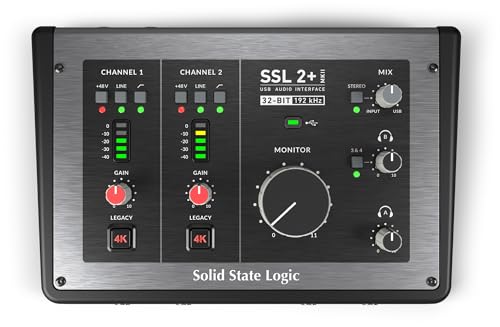
The Solid State Logic 2 MKII Plus is a compact 2×4 USB-C interface designed for professional workflows with bus-powered convenience. It provides two XLR mic preamps and two instrument/line inputs, plus 4 line outputs and MIDI I/O. The 32-Bit/192 kHz AD/DA converters and SSL’s legacy 4K analog enhancement aim to deliver a clean, punchy, studio-ready sound character. This model suits users seeking SSL’s sonic identity in a small footprint. Caution: SSL’s characteristic sound may be less neutral than some studio-standard interfaces, depending on your mix goals.
Best for: engineers seeking SSL coloration in a compact format, podcast setups with reliable monitoring, and mobile studios needing road-ready gear.
Why selected: It offers SSL’s distinctive preamps and a proven workflow in a space-efficient package, ideal for critical vocal work and precise monitoring.
Limitation: Limited number of mic preamps if you record many sources at once; plan extra channels via external gear if needed.
Universal Audio Volt 276 USB Audio Interface

The Universal Audio Volt 276 USB delivers classic UA preamp warmth plus built-in processing workflows that complement their LUNA DAW. It emphasizes analog character with vintage-mode preamps and an integrated compressor inspired by famous hardware. This interface is well-suited for vocalists and instrumentalists who value a recognizable, musical color and a straightforward editing process. A potential limitation is the need for compatible software workflows to maximize the built-in processing features.
Best for: vocalists and creators who want UA’s preamp character and a simplified analog-style signal path.
Why selected: It provides a distinct tonal option within a compact, USB-powered form factor, pairing hardware warmth with modern workflow.
Limitation: The built-in processing is most beneficial when used with compatible software workflows, so users should align their DAW and plugin setup accordingly.
Buying Guide: Key Considerations for a Professional Audio Interface
- Input/Output needs: Count your microphones, instruments, and line-level sources. If you plan large sessions, prioritize multi-channel I/O (like 18i16) or consider expandability.
- Preamp quality and sound: Preamps affect gain, noise, and tonal character. Brand-driven choices (Focusrite, SSL, Universal Audio) reflect different sonic footprints.
- Latency and monitoring: Look for direct monitoring and low-latency drivers to avoid feedback loops during recording and playback.
- Connectivity and power: USB-C interfaces offer straightforward power and data paths. Bus-powered options are portable, but ensure your computer can sustain power needs for all devices.
- Software and workflow: Bundled software, Air mode, or analog-emulation options can influence your tracking approach. Consider compatibility with your DAW and any required plug-ins.
- Future expansion: If you anticipate more inputs later, choose interfaces with expansion options (ADAT, MIDI I/O, extra line/mic inputs) or plan a modular setup with a mixer or a second interface.
FAQ
- What is a professional audio interface? It is a hardware device that converts analog audio signals to digital data and provides mic preamps, instrument inputs, and monitoring for recording and playback in a studio environment.
- Should I buy a two-channel or multi-channel interface? Two-channel interfaces are ideal for solo artists and essential setups. Multi-channel models suit bands, podcasts with multiple mics, and complex routing needs.
- What is the benefit of USB-C interfaces? USB-C offers faster data transfer, power delivery, and wider compatibility with modern computers and peripherals.
- Is built-in DSP processing important? DSP can offload effects like compression and EQ in real time. It’s helpful for solo performers or small studios aiming for a clean mix without heavy CPU use.
- Do I need ADAT or MIDI on my interface? If you plan to expand with digital drums, synths, or additional preamps, ADAT and MIDI I/O enable seamless integration without adding a separate mixer.
- Which brand offers the best value for beginner studios? Focusrite units deliver a strong balance of price, features, and software integration, while Universal Audio and SSL provide distinct sonic characters for more specialized needs.