Find the right record cleaning machine to keep your vinyl collection sounding its best. This guide highlights five top options that suit varied needs—from hands-on, budget-friendly kits to advanced ultrasonic cleaners for deep, chemical-free cleaning. Whether you’re a casual listener or a serious collector, these picks help minimize clicks, pops, and static while preserving grooves. The best choices balance gentle handling, effective dirt removal, and ease of use for different record sizes and thicknesses.
Who should consider these picks?
– Casual collectors: simple, affordable kits that clean one or two records at a time.
– Enthusiasts seeking deeper cleans: ultrasonic or professional-style machines for thorough restoration.
– Vinyl preservationists: low-chemical or alcohol-free solutions that minimize surface wear.
– Space-conscious buyers: compact units with easy storage and quick dry cycles.
Below is a quick reference table of the selected products and what makes each stand out.
| Product | Brand | Best For |
|---|---|---|
| HumminGuru EZ Record Washer | HumminGuru | Manual, hands-on cleaning with soft brushes; good for diverse thicknesses |
| VEVOR Sonic Cleaner 6L Ultrasonic Vinyl Cleaner | VEVOR | Small to medium batches; adjustable temperature for versatile cleaning |
| Spin-Clean Record Washer Kit | SPIN CLEAN | Budget-friendly dual-sided cleaning without power |
| HumminGuru Ultrasonic Vinyl Record Cleaner HG01 | HumminGuru | Advanced ultrasonic, auto dry cycle, eco-friendly water use |
| VEVOR Ultrasonic Vinyl Record Cleaner 6L | VEVOR | Industrial-grade ultrasonic cleaning with heater and timer |
HumminGuru EZ Record Washer
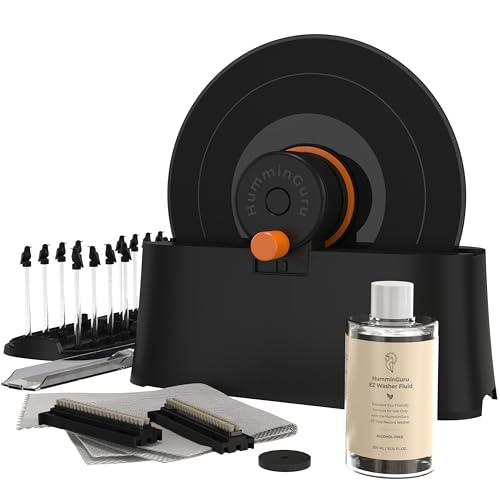
The HumminGuru EZ Record Washer uses a waterproof record clamp and soft brushes for a gentle, controlled clean. It supports 1–3 mm thick records and uses a dry-handling design to reduce fingerprints and scratches. The included goat-hair brushes paired with an alcohol-free solution provide a safe cleansing action that helps lift dust and residue from grooves.
Best for: Casual to mid-level users who want a manual, hands-on approach with reliable protection for labels and surfaces. The key advantage is dry-handling during cleaning, which minimizes direct contact. Caution: Ensure the clamp is properly seated to avoid leakage during wet cleaning.
VEVOR Sonic Cleaner 6L Ultrasonic Vinyl Cleaner

This ultrasonic cleaner uses 40 kHz with three 180W transducers to clean up to six records at a time. A stainless steel tank, a dry rack, and adjustable temperature and timer offer a flexible cleaning setup for home store use. The unit is designed for efficient, non-contact cleaning that reduces greasy residues without direct handling of records.
Best for: Buyers cleaning multiple records in one session and who want precise temperature control and automation. Limitation: Larger, heavier units require more space and power, which may not suit small setups.
Spin-Clean Record Washer Kit
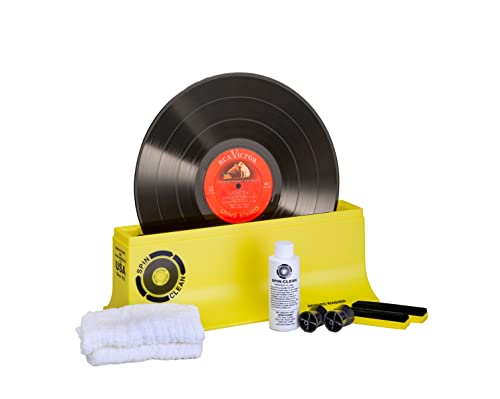
Spin-Clean offers a dual-sided, hand-crank cleaning system that operates without power. The kit includes snap-in rollers and wedge-fit brushes designed to stay in place for efficient cleaning. It also includes lint-free drying cloths, making it a quiet, economical option for households with limited space.
Best for: Budget-conscious users who prefer a simple, low-maintenance approach. Choose this if you want a quieter, mechanically driven method. Caution: Cleaning effectiveness may depend on manual effort and operator speed.
HumminGuru Ultrasonic Vinyl Record Cleaner HG01
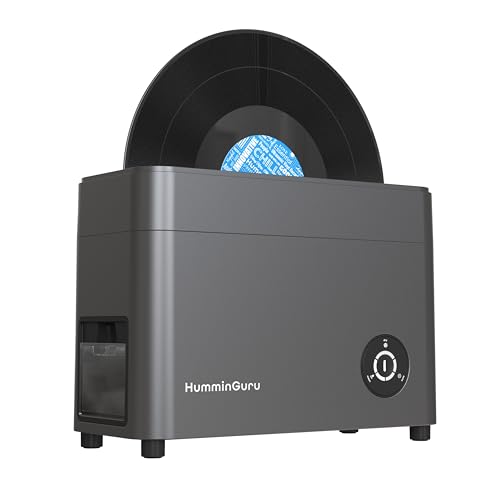
The HG01 uses high-precision 40 kHz ultrasonic waves with two transducers and a closed-loop stainless steel basin. It emphasizes deep-groove dirt removal with minimal risk to records and includes auto clean and dry cycles to minimize handling and exposure to dust during drying.
Best for: Audiophiles seeking advanced ultrasonic cleaning with automated dry cycles and sustainable water use. Limitation: The unit’s cycle complexity may require a short learning curve for optimal results.
VEVOR Ultrasonic Vinyl Record Cleaner 6L

VEVOR’s 6L ultrasonic cleaner provides 180W ultrasonic power with a 300W heater and a SUS304 stainless steel tank. It includes a mechanical knob control for timer and temperature, plus a basket to reduce item collisions. It’s designed for steady, efficient cleaning of 7″–12″ records.
Best for: Users who want a robust, adjustable ultrasonic system with straightforward control panels. Limitation: Heavier build and more technical operation may require careful setup and supervision.
Buying Guide
What cleaning method fits your vinyl goals?
Manual washers like the Spin-Clean deliver straightforward operation and low cost, ideal for casual collectors. Ultrasonic cleaners excel at deep cleaning with minimal handling, suitable for avid collectors and those restoring older or heavily soiled records. Consider how often you clean, the number of records you maintain, and whether you prefer dry cycles or water-based cleaning.
What size and capacity matter?
Smaller units handle 1–4 records per cycle; larger 6L systems can process more at once but require more space. If you have a sizeable collection, plan for a cleaner with a drying rack or auto-dry cycle to minimize handling time.
Are materials and safety important?
Look for non-corrosive, food-grade or purpose-made cleaning fluids and soft brushes that won’t scratch grooves. Ultrasonic cleaners with sealed basins and low 10 mm proximity distances minimize contact with the record surface, reducing potential wear. Ensure the unit uses safe cleaning solutions and allows for easy water reuse or disposal.
What about maintenance and longevity?
Stainless steel tanks and robust transducers indicate longer life and better corrosion resistance. Automatic features (auto-clean, auto-dry) save time, while modular brushes and rollers simplify maintenance and replacement.
What’s a realistic budget and workflow?
Manual kits are typically more affordable and quiet, with low ongoing costs. Ultrasonic models vary widely in price but promise deeper cleaning and reuse of water. For a balanced setup, pairing a manual kit with a compact ultrasonic unit can cover most cleaning needs without a large upfront investment.
FAQ
What is the safest way to clean records without causing damage?
Choose a system with soft brushes, non-abrasive fluids, and minimal direct contact during cleaning. Ultrasonic cleaners with proper temperature and proximity settings are designed to minimize damage.
Can cleaning fluid affect sound quality?
Yes. Alcohol-based fluids can leave residues; alcohol-free or purpose-made solutions reduce the likelihood of surface buildup that could affect playback.
Is a drying cycle necessary?
Drying cycles prevent residual moisture from attracting dust and static. Auto-dry features are convenient for hands-off completion.
How many records can I clean per session?
That depends on the unit’s capacity. Ultrasonic cleaners typically handle 4–6 records per run, while manual kits clean one or two at a time.
Are ultrasonic cleaners safe for 78 RPM records?
Yes, if the unit supports larger sizes and uses appropriate cycles. Always verify compatibility with 33, 45, and 78 RPM records before cleaning.