If you’re pursuing weight loss, a reliable scale that tracks body weight and composition can help you stay accountable. This guide spotlights five scales suited to American households, explaining who each model is best for and why. It highlights features like body fat tracking, BMI, and app integration to support daily decisions. The top picks emphasize accuracy, ease of use, and data access, helping you choose the right tool for your fitness journey.
| Product | Best For | Key Feature |
|---|---|---|
| Etekcity Smart Scale for Body Weight, Body Fat and BMI | Tech-savvy dieters seeking app coaching | VeSync app with personalized plans |
| Etekcity Upgraded Smart Scale for Body Weight Fat and BMI | People who want detailed metrics with coach-like guidance | VeSync app guidance, multi-metric analysis |
| RENPHO Smart Scale for Body Weight, BMI & Body Fat | Families needing wide capacity | 7 metrics on VA display, Bluetooth sync |
| GE Smart Scale for Body Weight, 14 Metrics | Users who want many data points | Large 5mm tempered glass, 14 metrics |
| Users who value visuals and RGB indicators | 5″ LED display, RGB breathing lights |
Etekcity Smart Scale for Body Weight, Body Fat and BMI

This scale targets tech-oriented buyers who want a comprehensive view of body composition. It supports body weight, fat, and BMI readings with high-precision sensors. The accompanying VeSync app provides personalized diet and exercise guidance, making it a good fit for users who prefer a coach-like digital assistant. Caution: as with many smart scales, accuracy improves with stable placement on a hard surface and consistent measurement timing.
Best for: Fitness-minded individuals who want app-driven plans and precise fat and BMI data.
Why selected: Combines accurate measurements with a coaching app, aiding daily progress tracking.
Limitation: Requires proactive app usage for full value; data syncing depends on device compatibility.
Etekcity Digital Body Weight Bathroom Scale, 6mm Tempered Glass, 400 lbs
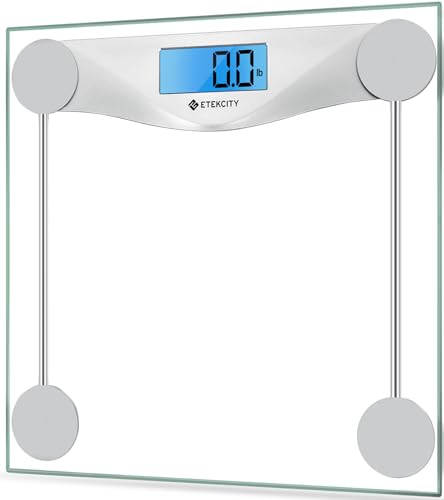
This model is ideal for buyers who want a straightforward, reliable scale without app connectivity. It emphasizes dependable performance with a simple display and two-unit option (lb/kg). Its neutral design fits most spaces. Caution: fewer advanced metrics means less insight into body composition beyond weight.
Best for: Those who need a reliable, no-frills weight scale with easy unit switching.
Why selected: Demonstrates dependable accuracy and broad usability in bathrooms or bedrooms.
Limitation: Lacks comprehensive body composition metrics beyond weight.
GE Smart Scale for Body Weight, BMI, Body Fat, Muscle Mass

The GE model is designed for users who want a broad set of metrics in a single glance. It reports weight, BMI, body fat, muscle mass, and additional indicators like visceral fat and bone mass on a large 5.3″ display. The scale supports up to 400 lb and features a tempered glass platform with an anti-slip surface. Caution: some users may find the larger feature set requires more data interpretation over time.
Best for: Users who prefer a wide array of metrics to guide weight loss decisions.
Why selected: It combines a large display with multiple health indicators for a fuller picture.
Limitation: Higher data volume may require more effort to interpret trends.
Ovutek Smart Digital Scale for Body Weight, Body Fat and BMI
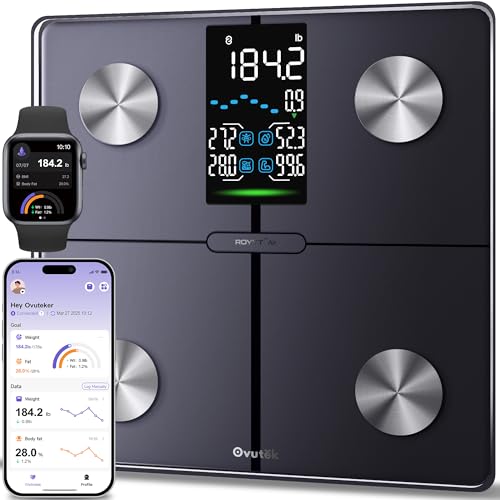
Ovutek targets buyers who appreciate visual feedback and goal tracking. It offers 14 health metrics via an app, with RGB LED indicators and weekly weight trends on the display. The scale uses high-precision sensors and supports 0.05 lb increments. Caution: data privacy practices should be reviewed to ensure alignment with personal preferences.
Best for: Users who enjoy visual indicators and a colorful interface while tracking multiple metrics.
Why selected: Combines precise measurement with engaging visuals and app sync for ongoing motivation.
Buying Guide: Key Considerations For Choosing A Weight-Loss Scale
- Accuracy and precision: Look for scales with small increment steps (e.g., 0.05 lb or 0.1 lb) for meaningful progress tracking.
- Body composition metrics: Decide which metrics matter to you—weight, BMI, body fat, muscle mass, water, bone mass, or visceral fat.
- Display readability: A large, clear display helps daily readings, especially for older users or low-light homes.
- App integration: If you want guided plans or data syncing with health apps, consider models with VeSync, RENPHO Health, or similar ecosystems.
- Capacity and platform size: Choose a scale with adequate weight capacity and a platform size that suits your body type and bathroom space.
- Data privacy: Review how the scale stores and transmits data, especially if syncing with third-party apps.
- Design and placement: A slim, stylish scale with a non-slip surface tends to blend better with bathroom or bedroom decor.
Frequently Asked Questions
- Do smart scales really help with weight loss? Yes. They provide ongoing data trends that support consistent monitoring and goal adjustment when paired with a plan.
- Which metric is most important on a scale? Weight is the primary metric for weight loss, but body composition metrics like body fat and muscle mass offer deeper progress context.
- How many times should I weigh myself? For best trend insights, weigh at the same time daily or a few times per week and track changes over weeks.
- Are there privacy concerns with smart scales? Some scales store data locally or sync to apps. Review the manufacturer’s data privacy statements before use.
- Can scales be inaccurate? Surface stability, batteries, and user placement affect accuracy. Use on a flat, hard surface and calibrate as needed.
- Do these scales require subscriptions? Most do not require ongoing subscriptions; some offer optional app features or coaching plans.