If you need reliable fabric scissors for cutting fabric with clean, accurate edges, these five options are top choices for different buyers. This guide helps tailors, students, crafters, and hobbyists pick the right pair for their projects. The best picks cover heavy-duty leather cutting, multi-layer fabrics, and everyday sewing tasks. Below you’ll find a quick product table, then detailed sections to compare features, ergonomics, and suitability.
| Product | Best For | Key Benefit |
|---|---|---|
| Fabric Scissors Professional – 8″ (Wteehn) | Professional sewists and studios | Sharp blade, 45° cut angle, adjustable bolt |
| LIVINGO Premium Tailor Scissors – 9.5″ | General sewing and crafts | Titanium coating, high-density steel, rust resistance |
| Fiskars RazorEdge Fabric Scissors – 8″ | Frequent fabric cutters | Ultra-sharp blades with smooth cutting action |
| Proshear Fabric Scissors – 10″ | Professional dressmaking and tailoring | High carbon steel, ergonomic design |
| SINGER Fabric Scissors – 8.5″ | Students and hobby sewers | Comfort grip, versatile for right/left-handed use |
Fabric Scissors Professional, 8″ Heavy Duty for Fabric Cutting

Best for professional sewing tasks. This pair uses galvanized manganese and hand-forged craftsmanship for hardness, durability, and rust resistance. The blade angle is 45°, designed for smooth, precise cuts and reduced fatigue with an adjustable bolt lock for accuracy. Ergonomic aluminum handle wrapped in plastic provides a non-slip grip. This is ideal for dressmakers and studio work where thick fabrics or multiple layers must be cut cleanly in a single pass.
Who it’s for: best for professional tailors, studio sewists, and artists who require consistent, clean results on dense fabrics or leather. Caution: heavier weight and premium components may be less suited for casual, occasional use or light fabric tasks.
LIVINGO Premium Tailor Scissors – 9.5 Inch
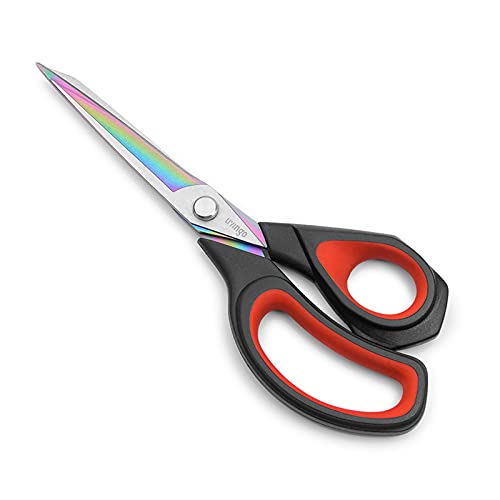
Best for versatile sewing and crafts. Forged stainless steel with a titanium coating delivers three times the hardness of typical stainless blades and smoother cuts. Capable of cutting more than 16 layers, these scissors suit sewing, quilting, and alterations. The coated blades resist rust and adhesives, making them a robust all-purpose tool for studios and home use.
Who it’s for: ideal for quilters, dressmakers, and craft enthusiasts who need durable, all-purpose shears. Better for: extended projects where blade longevity matters. Caution: titanium coating may show scratches with rough handling; handle care is advised.
Fiskars RazorEdge Fabric Scissors – 8”

Best for consistently clean cuts with a premium edge. RazorEdge blades are ultra-sharp stainless steel with a precisely honed edge for tip-to-tip cuts. The pivot design supports exceptionally smooth performance through fabric, and the ergonomic loops fit most hands for comfortable control during long sessions.
Who it’s for: ideal for everyday sewers and professionals seeking reliable, precise performance. Caution: may be sharper than beginner needs; use with care to maintain edge.
Proshear Fabric Scissors – 10 Inch

Best for heavy-duty tailoring and leather work. Made of high carbon steel for edge retention and the ability to cut multiple layers cleanly. The bent handle helps hold materials flat for stable, tabletop cuts. Ergonomic, rubberized handles reduce fatigue, making it suitable for extended sewing sessions.
Who it’s for: choose this if you regularly cut leather, denim, or thick fabrics. Caution: heavier weight may feel less nimble for delicate fabrics.
SINGER Fabric Scissors – 8.5″

Best for students and casual sewers. With rubberized comfort grip and a versatile 8.5-inch blade, these scissors accommodate right- or left-handed use. They’re designed to handle a wide range of fabrics, making them an accessible choice for home projects and classroom use.
Who it’s for: ideal for beginners, students, and hobbyists seeking a reliable, easy-to-handle pair. Caution: blade performance may vary with very thick or dense materials.
Buying Guide
What to consider when buying scissors for fabric cutting:
- Material and hardness: High carbon steel blades stay sharper longer and handle tough materials better than standard stainless steel.
- Blade design: A bent or offset handle can keep fabric flat and reduce fraying on long cuts; a 45° angle may improve comfort and control.
- Weight and balance: Heavier blades feel sturdier on thick fabrics but may cause fatigue; ergonomic grips help during lengthy projects.
- Coatings and rust resistance: Titanium or other coatings improve durability and resist adhesives and glue residue.
- Intended use: Leather, denim, and multiple-layer fabrics require heavier-duty shears; delicate fabrics benefit from finer blades.
- Left/right-handed use: Ensure the design accommodates your dominant hand for smoother operation.
Frequently Asked Questions
What makes fabric scissors different from kitchen shears?
Fabric scissors are designed for fabric fibers, with sharper, longer-lasting blades and a balance that reduces fabric fraying. Kitchen shears are built for tougher materials and multi-purpose tasks.
How do I maintain sharp fabric scissors?
Keep blades clean, avoid cutting hard materials like metal, and periodically hone or sharpen as recommended for the blade type. Store with blade closed and in a protective sheath if possible.
Can I use heavy-duty fabric scissors for leather?
Yes, many heavy-duty fabric scissors handle leather, but some leather cuts may require specialized leather shears for best results.
Are left-handed scissors necessary?
Left-handed scissors are not mandatory but can improve control and comfort for left-handed users. Choose accordingly.
What blade length should I choose for general sewing?
8 to 9.5 inches covers most general sewing tasks; longer blades excel with large patterns and thicker fabrics.