Answering the buyer’s search for a reliable self-inflating sleeping pad, this guide highlights five strong options and explains who each is best for. These mats combine built-in inflation or quick pumping with foam support and compact packing. Ideal buyers include car campers, backpackers needing balance between cushion and weight, and multi-night campers seeking easy setup after a long day. The table below compares the five picks on key traits to help you decide at a glance.
| Product | Best For | Key Benefit |
|---|---|---|
| OGERY Self-Inflating Sleeping Pad with Built-in Foot Pump | Car campers and casual hikers | 3″ high-density foam with foot pump for easy firmness control |
| FUN PAC Camping Sleeping Pad | Lightweight backpackers | Ultralight, built-in pillow, quick 30–60s inflation |
| Coleman Self-Inflating Sleeping Pad with Pillow | Budget-conscious campers | No pump needed, includes head pillow for restful sleep |
| QGB Memory Foam Camping Sleeping Pad | Backpacking with premium comfort | High-density memory foam, folds compactly, fast self-inflation |
| Gear Doctors Oxylus 4.3 R-Value Pad | All-season enthusiasts | Hybrid foam with self-inflation, strong warmth and durability |
OGERY Self-Inflating Pad With Foot Pump

The OGERY pad combines a 3″ high-density foam core with a hybrid foam-and-air structure. It self-inflates after opening the valve and adds a built-in foot pump to fine-tune firmness. This design minimizes sink-in for side sleepers while still supporting back and stomach positions. Best for: car campers who want stable support without the fuss of extra pumps. Limitation: larger dimensions may be bulky for ultra-light backpackers.
FUN PAC Camping Sleeping Pad With Built-In Foot Pump

The FUN PAC pad emphasizes ultralight design with a built-in pillow and a 30–60 second inflation time. It measures up to 78 x 27 x 8 inches, providing extra ground clearance and comfort for back or side sleepers. Best for: backpackers who need compact packing and quick setup. Limitation: the ultra-light build may feel less cushy on very uneven terrain.
Coleman Self-Inflating Sleeping Pad With Pillow
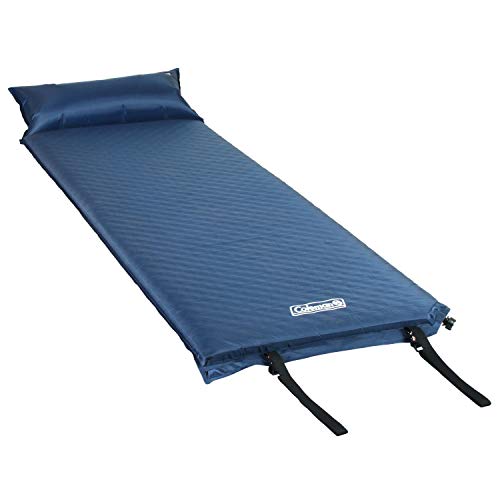
Coleman offers a budget-friendly option with no external pump required and an integrated pillow for head support. The pad’s self-inflating mechanism is straightforward, making it a solid choice for family trips or guest use. Best for: campers seeking simplicity and affordability. Limitation: fewer high-end comfort features compared to premium foam hybrids.
QGB Memory Foam Camping Sleeping Pad

This pad blends high-density memory foam with a folding design that becomes compact for storage. It self-inflates in about 10 seconds and can be further topped off with a foot pump as needed. Best for: campers who want cloud-like comfort and a compact foldable form. Limitation: heavier and bulkier than ultralight mats when fully packed.
Gear Doctors Oxylus 4.3 R-Value Pad
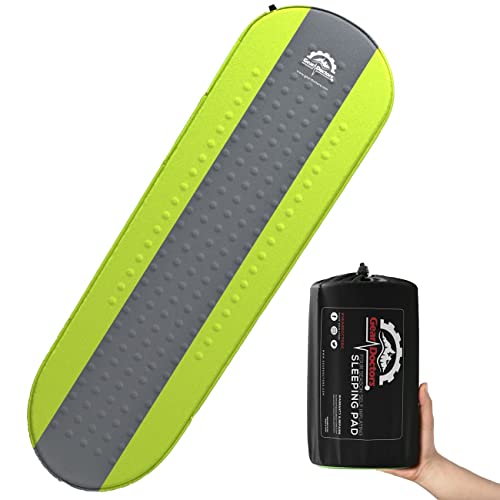
The Oxylus pad uses a 4.3 R-value insulated core, combining foam and self-inflation for warmth in varied conditions. It features a compact pack size and a lightweight frame, designed for beginners to seasoned hikers. Best for: those needing reliable warmth and a robust build. Limitation: may be heavier than minimal ultralight options.
Buying Guide
What to consider when choosing a self-inflating sleeping pad:
- Thickness and support: Higher thickness often means more cushioning. Consider your sleeping position to avoid excessive sink-in for side sleepers or a hard surface for back sleepers.
- Inflation method: Mats with built-in foot pumps or quick self-inflation save time. If you dislike blowing air or using a separate pump, pick models with integrated pumps.
- Weight and packed size: Backpackers should prioritize lighter, more compact options. Car campers may accept a heavier pad for extra comfort.
- Warmth rating: For cold nights, select pads with higher R-value or insulating foam layers. This reduces heat loss to the ground.
- Durability and surface: Look for abrasion-resistant fabrics and non-slip bases to stay stable on tents, car trunks, or cots.
Practical comparisons
- Best for quick setup: FUN PAC and OGERY models with fast self-inflation and built-in pumps.
- Best for premium comfort: QGB Memory Foam and Gear Doctors Oxylus offer higher cushioning and warmth.
- Best for budget: Coleman provides a cost-conscious option with a pillow included.
Shape and coverage considerations
Most pads listed are rectangular to maximize surface area. If you need extra width for side sleepers, consider your shoulder and hip clearance. For tighter packs, foldable memory-foam designs can reduce volume but might add weight.
Maintenance tips
- Keep valve areas clean to prevent leaks.
- Dry pads after use to avoid mildew and odor.
- Inspect for wear at seams or fabric patches before long trips.
FAQs
- Do self-inflating pads require a pump? Some do, some don’t. Pads with built-in pumps offer adjustable firmness without external devices.
- Are memory-foam pads heavier? Yes, memory-foam cores add weight but improve contour and warmth.
- Can I use these pads with a sleeping bag? Yes, they work well under standard sleeping bags for ground insulation.
- How compact are they when packed? Packing size varies; ultralight models compress more but may sacrifice some cushioning.
- What is the best pad for side sleepers? Look for 2–3 inch thickness with memory foam or dual-layer foam for even weight distribution.
- Are these pads durable for rough ground? Models with abrasion-resistant shells and non-slip bases tend to endure longer on uneven terrain.