Looking for the best spring reverb pedal to expand your guitar’s ambience? This guide highlights five solid options across classic analog, digital, and compact mini formats. Each pick targets different players: beginners seeking simple controls, touring players needing durable construction, and tone purists chasing authentic spring textures. The following summary table helps you compare core traits at a glance.
| Product | Type | Best For | Notable Feature |
|---|---|---|---|
| LokFy Spring Reverb Mini Guitar Effect Pedal True Bypass | Mini Analog | Budget buyers and beginners | Two knobs: MIX and DWELL |
| AZOR AP311 Spring Reverb Guitar Effect Pedal | Analog Mini | Durable, portable setups | Aluminum-alloy case with true bypass |
| Donner Reverb Guitar Pedal | Digital (7 modes) | Versatile tones | Seven modes including Spring |
| BOSS RV-6 Reverb Guitar Pedal | Digital Studio-grade | Pro-level tone and reliability | Studio-grade algorithms |
| J. Rockett Audio Designs Tour Series BOING | Spring Reverb | Live performance clarity | Simplified live-friendly design |
LokFy Spring Reverb Mini Guitar Effect Pedal

The LokFy pedal is a compact analog spring reverb with two core controls: MIX and DWELL. It suits players who want a simple, plug-and-play effect without extra bells and whistles. Best for beginners or players seeking a straightforward reverb texture for practice or small gigs. The LED indicator helps confirm when the effect is engaged, ensuring quick on/off visibility on dark stages.
Why chosen: Its small footprint fits tight pedalboards while delivering recognizable spring tones. It’s a practical choice for players who value tactile, uncomplicated control. A potential limitation is fewer parameters to tailor complex reverb tails beyond dry/wet balance and decay.
AZOR AP311 Spring Reverb Guitar Effect Pedal
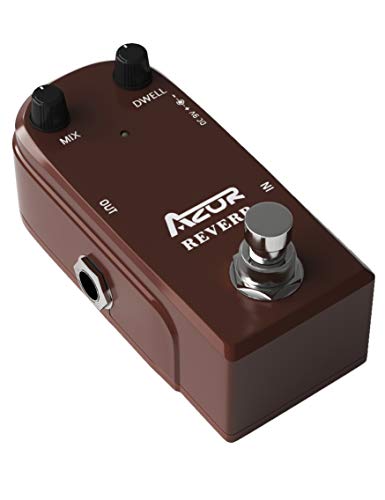
The AZOR AP311 emphasizes a classic spring reverb voice with durable, aluminum-alloy construction and true bypass. This mini pedal is ideal for players who want vintage-inspired tone in a portable format and a clean, transparent signal when the effect is off. The aluminum case adds stability for travel or road use, reducing the risk of chassis flex that can affect tone.
Best for: players who value a traditional spring vibe in a compact body. Choose this if you want a sturdy, lightweight option with a timeless aesthetic. Limitation: as a mini pedal, it offers basic control—no extended parameter suite for experimental textures.
Donner Reverb Guitar Pedal

The Donner Reverb offers seven modes, including Spring, Room, Hall, and Plate, in a whole aluminum-alloy chassis. It uses a true bypass design to retain your tone when the pedal is off, while Digital Circuit Design often yields consistent sounds across gear setups. Best for players who want broad reverb palettes in a single, affordable unit, suitable for practice rooms and small stages.
Best for: players seeking versatile reverb options without carrying multiple pedals. Better for: those who value a robust build. Limitation: some players may prefer a purely analog spring for a more vintage edge, which this digital-based unit may approximate but not replicate exactly.
BOSS RV-6 Reverb Guitar Pedal

The BOSS RV-6 stands out with studio-grade algorithms and a straightforward control layout. It’s designed for players who want a broad, lush reverb sound with precise shaping without sacrificing platform stability on stage. The compact design helps keep pedalboards neat, and the tone remains clear across gain stages and playing dynamics.
Best for: professional players seeking dependable, high-quality reverb. Choose this if you perform often and need reliable performance in varied venues. Limitation: more sophisticated sounds may require deeper tweaking, which can take time for new users to master.
J. Rockett Audio Designs Tour Series BOING

The Tour Series BOING focuses on live-friendly spring behavior designed to cut through a mix with atmosphere. It emphasizes ease of use in performance environments, pairing a spring-era voice with a compact, reliable chassis. Best for players who need a dedicated spring texture with minimal complexity during gigs.
Caution: While tailored for live settings, the pedal’s specific spring identity may vary from vintage amplifiers; expect a modern, stylized reverb rather than an exact vintage replica.
Buying Guide: How to Choose a Spring Reverb Pedal
- Sound Type: Do you want a vintage spring tone (often modeled in analog or hybrid pedals) or a modern/digital reverb with broader textures?
- Size and Construction: Mini pedals save space but may offer fewer controls. Full-sized units can provide deeper parameter access and more durable housings for touring.
- Bypass and Tone:** True bypass preserves your guitar’s signal when the pedal is off. If tone transparency is essential, verify bypass type.
- Controls You’ll Use: Look for MIX, DWELL (or DECAY), PRE-DELAYS, and EQ if you want shaping beyond a simple on/off reverb.
- Durability for Travel: Aluminum-alloy enclosures are more robust for road use; consider this if you’re frequently traveling.
- Intended Use: Studio, rehearsal, or live gigs may require different features, such as consistent tone across venues or fast, intuitive control layouts.
- Budget vs. Versatility: A single-pedal solution with multiple modes is convenient, but dedicated pedals can deliver higher fidelity for specific textures.
FAQ
- What is a spring reverb pedal best used for? It adds a classic springy bounce to your guitar tone, suitable for surf, indie, jazz, and blues textures.
- Should I buy a mini or full-size spring reverb pedal? Mini pedals save space and are budget-friendly; full-size pedals often provide more control and durability.
- Is true bypass important? True bypass preserves your guitar’s tone when the pedal is off; it’s generally preferred for clean signals.
- Can digital reverbs imitate spring sounds? Yes, many digital or hybrid pedals model spring textures, but some players seek the organic feel of true analog spring.
- What’s the difference between these brands? Differences include tone character, build quality, and control layouts. BOSS tends to emphasize studio-grade quality, while boutique lines focus on specific tonal quirks.
- What should I consider for live use? Prioritize clarity, durability, reliable bypass, and a quick-access control set for stage adjustments.